How to treat rose leaf blight? Detailed prevention and control methods
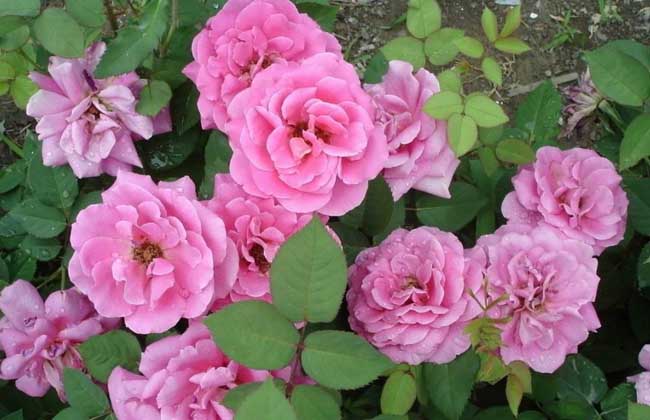
Leaf blight is one of the common diseases of roses. Infected roses first develop lesions at the tip or edge of the leaves. As the disease progresses, the lesions grow from small to large and become irregular in shape, with the color changing from reddish-brown to grayish-brown. Eventually, the lesions merge into large dead patches. In severe cases, the disease can cause the death of the rose plant. Let's take a look below at the prevention and control methods for rose leaf blight!
Damage symptoms
Rose leaf blight often causes the leaves of nursery and potted roses to dry up and fall off. The pathogen mostly invades from the leaf tip or leaf margin, initially appearing as small yellow spots, which then rapidly expand inward into large irregular patches. Severely affected leaves dry up over 2/3 of their area, the diseased parts lose chlorophyll and turn yellow, then turn brown, dry up and fall off. Sometimes sparse small black dots appear on the leaf surface.
Occurrence pattern
The leaf blight pathogen belongs to the Coelomycetes, order Sphaeropsidales. The small black dots on the leaf surface are the pathogen's pycnidia. The pycnidia are spherical or nearly spherical, light brown, with an ostiole at the top. They are initially embedded in the leaf tissue, then break through the epidermis and become exposed, producing numerous conidia inside to carry out infection and damage. The disease is most severe during high temperature and high humidity from July to September.
Prevention and control methods
1. Agricultural control: Remove diseased leaves both above ground and below ground to eliminate overwintering pathogens. If diseased leaves are promptly removed during the disease period, the spread of the disease can be effectively controlled.
2. Chemical control: During the disease period, spray with 75% chlorothalonil at 600-800 times dilution or 25% carbendazim at 500 times dilution.