What are the control methods for rose powdery mildew?
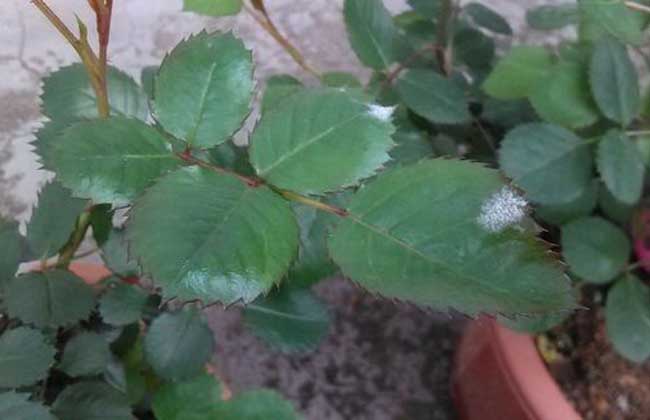
Rose powdery mildew is a fungal disease that harms roses, Rosaceae plants and other flowers. It first infects in mid-to-late May, spreads in June and July, and after being affected, a layer of white powdery substance grows on the leaf surface and young shoots. In severe cases, the leaves turn yellow and fall off, seriously affecting plant growth and flowering. Let's take a look at the control methods for rose powdery mildew together below!
Damage symptoms
Powdery mildew damages the leaves, young shoots, flower buds and pedicels of roses. After young leaves are infected, the leaves wrinkle, curl and become deformed, sometimes turning purplish red. After old leaves are infected, nearly circular, water-soaked, chlorotic yellow spots appear on the leaf surface, with no obvious boundary from healthy tissue. There is a white substance at the diseased spots on the back of the leaves. In severe cases, the leaves wither and fall off. The affected parts of young shoots and pedicels swell slightly, and their tips bend toward the ground. After flower buds are infected, they cannot open, or the flower shape is deformed. The surface of the affected parts is covered with a white powdery layer, which is the typical feature of powdery mildew.
Occurrence pattern
Powdery mildew is generally prone to occur in warm, dry or humid environments, while rainfall is not conducive to the occurrence of the disease. Applying too much nitrogen fertilizer, or when the soil lacks calcium or potassium fertilizer, makes the disease more likely to occur. If plants are too dense and ventilation and light transmission are poor, the disease is severe. Drastic temperature changes, overly dry soil in flower pots, etc., reduce the turgor pressure of host cells, all of which will weaken the disease resistance of plants and favor the occurrence of the disease.
Control methods
1. Strengthen cultivation management, pay attention to soil moisture and water in time. When cultivating in a greenhouse, ventilation should be increased so that humidity does not become too high. Fertilize reasonably; nitrogen fertilizer should not be excessive, and potassium and calcium fertilizers should be appropriately increased to enhance plant growth. Maintaining robust plants itself resists the invasion of miscellaneous bacteria from cultivation techniques in nature.
2. Prune and shape in a timely manner, remove diseased shoots and diseased leaves, and improve ventilation and light transmission conditions between plants. For indoor potted roses, they should be placed in a well-ventilated place with sufficient light. Pruning and destroying all dead diseased branches and shoots in early spring can reduce sources of infection. Diseased leaves in the early stage should be removed as early as possible.
3. When using chemical control, spraying should be thorough and comprehensive to protect young and tender parts. During the peak growth period of new shoots and the rainy season, the number of sprayings should be increased. In the early stage of the disease, choose 15% Fenjinning wettable powder 1500 times solution, or 20% Fenxiuning emulsifiable concentrate 2000 times solution, or 50% Duoliu suspension 300 times solution, or 50% Thiophanate-methyl wettable powder 800 times solution and 75% Baijunqing wettable powder 600 times solution, etc., spraying once every 7-10 days, spraying 2-3 times continuously.