Detailed Explanation of Lupine Planting Methods and Techniques
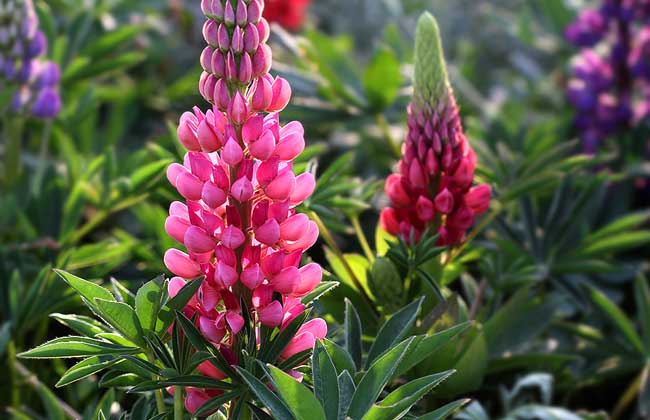
Lupine, also known as many-leaved lupine, lupin flower, etc., is an annual herbaceous plant of the genus Lupinus in the Fabaceae family, native to North America, mostly growing in sandy temperate regions. There are many horticultural cultivars with brilliant and colorful flowers, suitable for mass planting or group planting in ribbon flower beds, and also a good material for cut flower production. Let's take a look at the lupine planting methods below!
Growth Habits of Lupine
Lupine is relatively cold-tolerant (above -5°C), prefers cool climates and sunny locations, dislikes heat, slightly shade-tolerant, requires fertile, well-drained sandy soil, has a well-developed taproot with few fibrous roots, and does not tolerate transplanting. It has a well-developed root system, is drought-tolerant, and is best suited to sandy soil; its ability to utilize sparingly soluble phosphorus in phosphates is also relatively strong. It can still grow in rainy, waterlogged areas and in acidic soils where other plants struggle to grow, but calcareous soils or poor drainage often lead to poor growth. It can tolerate temperatures of 0°C, but freezes to death when temperatures drop below -4°C, and extreme summer heat also inhibits growth.
Propagation Methods of Lupine
1. Sowing: Lupine is mostly propagated by sowing in production; both spring and autumn sowing are possible. Under natural conditions, autumn sowing flowers earlier and grows better than spring sowing. Sow from September to mid-October, and the flowering period is from April to June of the following year.
2. Cuttings: For lupine cutting propagation, cut sprouting branches from the rhizome in spring, cut them into 8-10 cm lengths, preferably with a bit of rhizome attached, and insert them in a cold frame.
Lupine Planting Methods
1. Soil: Lupine has a deep root system and few root nodules. It requires deep, fertile, loose, well-drained, acidic sandy loam soil. Plants grow poorly in neutral and slightly alkaline soils.
2. Transplanting: The lupine seedling stage lasts 30 to 35 days. After the true leaves have fully unfolded, transplant and divide the seedlings. Retain the original soil when transplanting to help the seedlings recover.
3. Temperature: For autumn-sown lupine, corresponding cold protection measures should be taken during overwintering. The temperature should preferably be above 5°C to avoid frost damage to the leaves, which would affect early vegetative growth and ornamental effect.
4. Fertilizing: Lupine starts topdressing from March, generally once a week with 20% water-soluble fertilizer (such as Peters Professional), or once every two weeks when growth is good, until stem elongation stops.
5. Repotting: During lupine cultivation, 1 to 2 repottings should be carried out depending on growth conditions. Tall bucket pots are best for satisfying the growth needs of the taproot system, and a reasonable planting and placement density should be determined.
6. Pests and Diseases: During cultivation, lupine is prone to leaf spot, powdery mildew, rust, basal rot, etc. When disease occurrence is mild, promptly remove diseased leaves. At the early stage of disease, promptly spray fungicide once every 7 to 10 days; spraying continuously 2 to 3 times can control the occurrence and spread of the disease.