How to grow Pachyphytum oviferum well? Detailed care guide
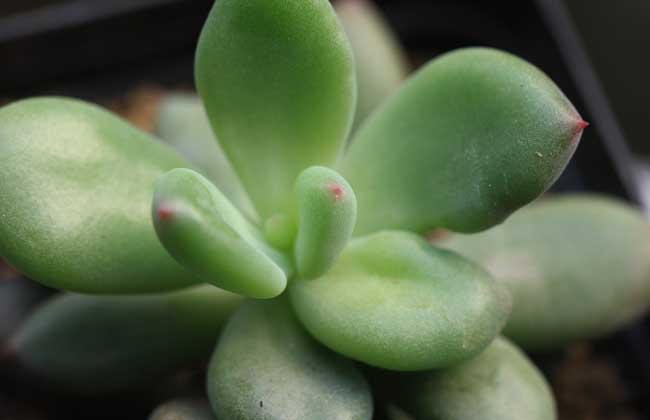
Pachyphytum oviferum, also known as white beauty, copper hammer grass, fat sky and so on, is a perennial succulent herbaceous plant of the genus Pachyphytum in the Crassulaceae family, native to San Luis Potosi in central Mexico. It has been introduced and cultivated in China and is a common potted ornamental succulent. Its flowers open in early summer and it has extremely high ornamental value. Let us take a look below at how to grow Pachyphytum oviferum well!
Growing habits of Pachyphytum oviferum
Pachyphytum oviferum is a tropical plant that likes sunlight and tolerates drought. It is slightly tolerant of partial shade and not cold-hardy. It is suitable for growing in a sunny, cool and dry environment, and dislikes damp shade and hot, stuffy conditions. The minimum temperature in winter must be above 10 degrees. It requires well-drained soil, preferably a mix of sandy soil and small gravel. It likes a warm, dry environment with plenty of light, has strong drought tolerance, and requires loose, well-drained sandy loam. It grows well under warm winter and cool summer climate conditions, and is not tolerant of hot, humid summer weather.
Propagation methods of Pachyphytum oviferum
The main propagation methods of Pachyphytum oviferum are sowing and division, beheading, and leaf cuttings. Leaf cuttings are very easy to root; generally you just toss them on the soil surface and leave them alone, and they will naturally sprout roots and small leaves, becoming independent little Pachyphytum oviferum plants. After beheading, it tends to grow side branches. If you never behead it and keep growing it, the old stem of the plant will grow very long before it starts to branch. For a prettier look, you should behead it when it has grown to a certain size so that side buds sprout; only then will the plant look beautiful as a cluster.
How to grow Pachyphytum oviferum well?
1. Environment: For Pachyphytum oviferum, choose loose, fertile, well-drained sandy loam as the growing medium. It can be kept year-round indoors by a south-facing window or on a south-facing balcony with plenty of sunlight. If placed outdoors, be careful to avoid rain, so that the white powder on the leaf surface does not fall off, which would affect its ornamental value and health. Note, however, that it should be properly shaded in summer.
2. Summer: In summer, when temperatures are high, the plant of Pachyphytum oviferum is in a dormant or semi-dormant state, growing slowly or completely stopping. Ventilation should be strengthened, and it needs bright light without strong direct sunlight. Reduce watering appropriately; just keep the root system from drying out due to excessive dryness, in order to prevent the plant from rotting caused by stuffy heat and humidity.
3. Winter: In winter, Pachyphytum oviferum requires cool conditions for growing, and it is best to maintain a room temperature of around 10°C. There is no need to water too much; just keep the potting soil slightly moist. Do not fertilize either, and give it plenty of sunlight. When the temperature is below 3 degrees, gradually reduce water. Below 0 degrees, keep the potting soil dry, and try to keep it no lower than minus 3 degrees.
4. Spring and autumn: Spring and autumn are the main growing seasons for Pachyphytum oviferum. Keep the potting soil moist but not waterlogged. If the potting soil is too dry, the lower leaves of the plant will wither and fall off, while waterlogged potting soil will cause root rot. Apply a decomposed, dilute nitrogen fertilizer or compound fertilizer once every 20 to 30 days. Also, at the start of spring, watering should be increased gradually, otherwise root rot may occur.
5. Repotting: Repot once every 1 to 2 years in spring. The potting soil should be loose, fertile and well-drained. You can use a mix of 2 parts leaf mold, 1 part garden soil, and 3 parts coarse sand or vermiculite, mixed with a small amount of bone meal. To separate the plant from contact with the soil surface and for better aeration, you can spread clean granular river sand or pumice on top, with river sand sized 3 to 5 mm.