Dahlia cultivation methods and precautions explained in detail
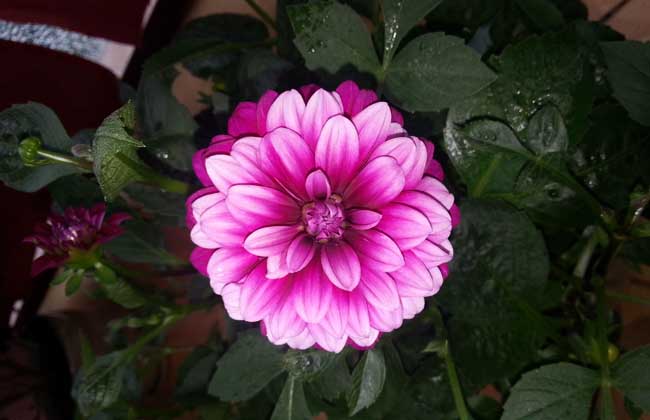
Dahlia is an excellent ground cover plant, also known as little dahlia, xiaolihua, etc. It is a perennial bulbous herbaceous plant of the genus Dahlia in the Asteraceae family. The plant is low-growing with a long flowering period, representing hope and longing. It can be used in flower beds, flower borders, and other places, and can also be grown in pots for ornamental purposes or used as cut flowers, with extremely high ornamental value. Let us take a look at the cultivation methods of dahlia below!
Dahlia growth habits
Dahlia likes sunlight and prefers a mild climate. The optimal growth temperature is 10-25°C. It fears both heat and cold; at 0°C the tuberous roots freeze. In areas with high summer temperatures and abundant rain, plant growth stalls and enters a semi-dormant state. It is neither tolerant of drought nor of waterlogging, and dislikes heavy clay soil; after waterlogging, the tuberous roots rot. It requires loose, fertile, well-drained sandy loam soil, and should not be planted in low-lying waterlogged areas.
Dahlia propagation methods
1. Bulb division: The underground parts of dahlia include bulbs, corms, tubers, and tuberous roots. After growing underground for one year, these bulbs, corms, tubers, and tuberous roots produce small bulbs around them. Simply separate these small bulbs and plant them. The operation is simple and management is convenient. Just note that when planting, do not plant the small bulbs too deep; generally the thickness of the covering soil should not exceed one times the bulb diameter.
2. Division: Dahlia division is best done in early spring after the soil thaws. Remove the mother plant from the pot, shake off excess potting soil, separate the tangled root system as much as possible, and cut it into two or more plants with a sharp knife. Each divided plant must have a considerable amount of roots, and its leaves should be properly trimmed to help it survive.
3. Cuttage: After the terminal buds, axillary buds, and foot buds of dahlia sprout, they can all be cut for rooting. Foot bud seedlings have vigorous growth and strong resistance to pests and diseases. Generally, in early March, plant the tubers in a sand pot, keep moist, and place at room temperature above 15°C to force sprouting. When the foot buds grow 2 true leaves, snap them off from the tuberous roots, insert them into plain sand to force rooting, spray water 2-3 times daily, and roots will form in just over 20 days.
Dahlia cultivation methods
1. Potting: The potting soil for dahlia is prepared with 5 parts garden soil, 3 parts fine sand or furnace slag, and 2 parts composted manure. Broken tiles should be added to the bottom of the pot as a drainage layer. Use a 10 cm pot for seedlings. After the seedlings recover, water once with dilute cake fertilizer solution. Before the seedlings reach 20 cm in height and before flower buds appear, repot twice, adding new leaf mold each time and filling the edges of the pot.
2. Light: Dahlia likes sunlight. Sufficient light is beneficial to the growth of dahlia. Ensure 6-10 hours of light daily. If shaded for a long time with insufficient light, growth will be poor, with fewer flowers and susceptibility to disease.
3. Temperature: Dahlia likes cool conditions and fears heat. In northern China, the temperature is more suitable, and it will bloom from summer to autumn. In the Yangtze River basin, where summer temperatures are high, it enters a semi-dormant state, so leaf shading and water spraying for cooling must be carried out.
4. Watering: Dahlia has luxuriant branches and leaves and consumes a lot of water. If water is lacking and light is strong, at best the leaf edges scorch, and at worst the leaves drop. If there is too much water, the tuberous roots easily rot, so the potting soil should be neither dry nor wet. During the flowering period, watering should be more in summer and less in spring and autumn. On cloudy and rainy days, prevent water accumulation by propping up the flower pot. Before harvesting the tubers in early autumn, water less or not at all.
5. Fertilizing: Dahlia likes fertilizer. In addition to applying sufficient base fertilizer, during the growing period except midsummer, apply 10% cake fertilizer solution every 10-15 days. After flower buds appear, apply 1-3% potassium dihydrogen phosphate to promote bright flower colors.
6. Pruning for plant shape: When cultivating a single-stem dahlia, remove side buds and keep the main branch. For pot cultivation, control the height. Remove all axillary buds starting from the base, picking them off as they grow, leaving only one flower on the terminal bud. When cultivating a four-stem dahlia, when the seedlings are 10-15 cm tall, pinch off the top leaving 2 nodes at the base to form 4 side branches, with each side branch keeping only one terminal bud, which can produce 4 flowers.
7. Pruning: If you want dahlia to bloom on National Day, you can carry out renewal pruning after flowering in early July. First twist and break the branches to be cut, leaving about 20 cm in height, and cut after they wilt. After cutting, control water appropriately and pinch according to cultivation requirements. Generally, with careful cultivation for 2 months, it can bloom on National Day.
Dahlia pest and disease control
1. Powdery mildew
[Damage] Powdery mildew damages leaves, pedicels, and flower buds. Initially, nearly circular white powdery spots appear, expanding into mottled white powdery layers. Leaves become distorted and withered. The pathogen overwinters in diseased plant debris and spreads through airflow. The disease is severe from September to October.
[Control] In the early stage of the disease, use 2% antimycin 120 water agent at 100-200 times dilution or 40% sulfur-carbendazim suspension at 800 times dilution, spraying once every 10 days for 2-3 consecutive sprays.
2. Brown spot disease
[Damage] After leaves are infected, light yellow small spots first appear, expand and sink, and finally form nearly circular spots with a grayish-white center and dark brown edges, with concentric rings, 1-5 mm in diameter, with light black mold-like substances on the surface. The pathogen overwinters in diseased leaf debris. The disease is severe from June to August.
[Control] Use 1% Bordeaux mixture or 75% chlorothalonil at 600 times dilution for control.
3. Viral disease
[Damage] Symptoms include mosaic, chlorosis, and dwarfing. The pathogens are dahlia mosaic virus, cucumber mosaic virus, tomato spotted wilt virus, tobacco streak virus, etc. Leafhoppers and aphids transmit the virus.
[Control] For control, select virus-free propagation materials and control virus-transmitting insects.
4. Dahlia stem borer moth
[Damage] Larvae are light yellow or light red. It occurs 2-3 generations per year. The larval damage period is from June to August.
[Control] Spray 50% fenitrothion at 1000 times dilution. If insects bore into the stem, inject omethoate at 100-200 times dilution.