How to Grow Sweet Alyssum
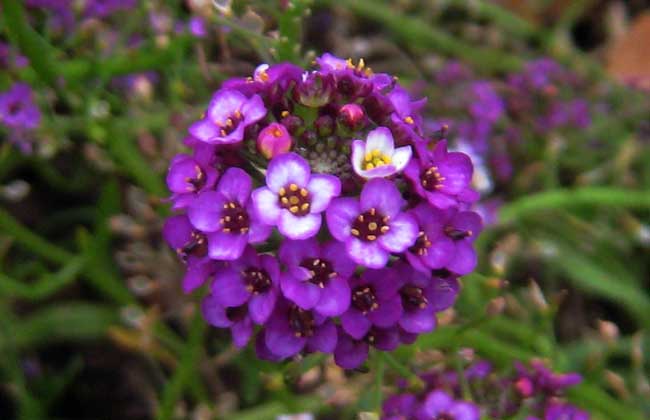
Sweet alyssum, also known as madwort, little white flower, and jade butterfly ball, is a perennial herbaceous plant of the genus Lobularia in the Brassicaceae family. Its base becomes woody, but whether grown as an annual or a biennial, cultivated plants do not become woody. It grows in a trailing manner and has a pleasant delicate fragrance. It is also suitable for planting at the edges of rock gardens and walls, and can be grown in pots or used as ground cover. Let us take a look at how to grow sweet alyssum!
Growth Habits of Sweet Alyssum
Sweet alyssum is native to Europe and West Asia. It prefers cool conditions and dislikes intense heat. It requires ample sunlight, tolerates slight shade, prefers loose soil, dislikes waterlogging, and is relatively tolerant of drought and poor soil. It likes a cool climate, dislikes extreme heat, and withstands frost and cold. It prefers a relatively dry air environment; prolonged rainy days make it susceptible to infection by pathogens. It fears rain exposure, so the leaves should be kept dry at night. The most suitable relative air humidity is 40-60%.
Propagation Methods of Sweet Alyssum
Sweet alyssum can be propagated by seeds or cuttings, but seed propagation is generally more common. In northern regions, spring sowing is mostly used, typically sowing seeds in greenhouses in March. Sweet alyssum seeds germinate faster than ordinary flower seeds, and seedlings emerge uniformly. The optimum germination temperature is 20°C, with emergence in about 5 days. When 3-4 true leaves appear, transplant into pots, and they bloom in June. When the hot summer arrives, growth becomes poor and flowering is sparse. At this time, cut off the spent flowering branches, strengthen fertilizer and water management, and they will bloom again in autumn. In North China and southern regions, autumn sowing is mostly used, overwintering in cold frames under protection, then potting up or transplanting in March of the following year, and blooming in April.
How to Grow Sweet Alyssum
1. Substrate: For potting sweet alyssum, one of the following substrates can be used: garden soil : cinder = 3:1, or garden soil : medium-coarse river sand : sawdust (mushroom residue) = 4:1:2, or one of paddy soil, pond mud, or leaf mold, or peat : perlite : ceramsite = 2:2:1, or peat : cinder : ceramsite = 2:2:1, or sawdust : vermiculite : medium-coarse river sand = 2:2:1. After potting, water thoroughly once and place in a slightly shaded environment for one week of care.
2. Potting: When potting sweet alyssum seedlings, first place a 2-2 cm thick layer of coarse-grained substrate or ceramsite at the bottom of the pot as a drainage layer. On top of that, spread a layer of fully decomposed organic fertilizer as base fertilizer, about 1-2 cm thick, then cover with another layer of substrate about 1-2 cm thick. Then place the plant in, so as to separate the fertilizer from the roots and avoid burning the roots.
3. Transplanting: When transplanting sweet alyssum seedlings, first dig the planting holes. At the bottom of each planting hole, spread a layer of organic fertilizer as bottom fertilizer (base fertilizer), about 4-6 cm thick, then cover with a layer of soil and place the seedling in, so as to separate the fertilizer from the roots and avoid burning the roots. After placing the seedling, backfill the soil to cover the roots, firm the soil with your foot, and water thoroughly once.
Growing and Caring for Sweet Alyssum
1. Temperature: Sweet alyssum is not very demanding about winter temperatures; as long as it is not exposed to frost, it can overwinter safely. It dies when temperatures exceed 30°C in late spring and early summer. The most suitable growing temperature is 15-25°C. In late autumn, winter, and early spring, since temperatures are not very high, it should be given direct sunlight to help with photosynthesis and the formation of flower buds, blooming, and seed setting. In summer, if high-temperature weather occurs, it needs to be shaded from about 50% of sunlight.
2. Fertilizer and Water: Like other herbaceous flowers, sweet alyssum has relatively high fertilizer and water requirements, but it is most vulnerable to indiscriminate fertilizing, concentrated fertilizer, and one-sided application of nitrogen, phosphorus, or potassium fertilizers. It is necessary to follow the two fertilizing (watering) principles of applying dilute fertilizer frequently, using small amounts with more frequent applications, providing complete nutrition, and alternating between dry and wet -- when dry, dry it out thoroughly; do not water if not dry, and water thoroughly when watering. Also, after fertilizing, keep the leaves and flowers dry at night.
3. Autumn: After the sown sweet alyssum seedlings have been potted and have recovered for a period, fertilizer and water management should be quickly stepped up. Fertilizer and water management follows the cycle of Hyponex → Hyponex → clear water → Hyponex → Hyponex → clear water, with an interval of about 1-3 days. On sunny days or during high temperatures, the interval is shorter; on rainy days or during low temperatures, the interval is longer or no watering is done.
4. Winter: Although sweet alyssum continues to grow in winter, the relatively low temperatures slow its growth rate, and its fertilizer and water requirements are not high -- it may even be necessary to restrict fertilizer and water. Fertilizer and water management follows the cycle of Hyponex → clear water → clear water → Hyponex → clear water → clear water, with an interval of about 4-7 days. Watering should be done as much as possible at noon on sunny days when temperatures are relatively high.
5. Spring: After temperatures rise in spring, sweet alyssum quickly resumes growth and gradually enters the flower bud differentiation and flowering stages, with high fertilizer and water requirements. Fertilizer and water management follows the cycle of Hyponex → clear water → Hyponex → clear water, with an interval of about 2-4 days. After entering the seed-setting stage, stop fertilizer application.
6. Pinching: Before flowering, sweet alyssum is generally pinched twice to encourage more flowering branches to sprout. One to two weeks after potting, or when the seedlings are 6-10 cm tall and have more than six leaves, remove the growing tips, keeping the lower 3-4 leaves, to encourage branching. Three to five weeks after the first pinching, or when the side branches grow to 6-8 cm long, perform the second pinching, that is, remove the growing tips of the side branches, keeping the lower 4 leaves of each side branch.