How to grow cyclamen from seed? A detailed guide to planting methods and techniques
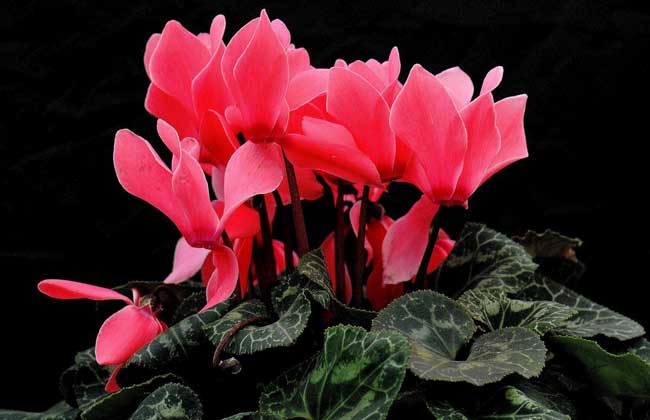
Cyclamen, also known as radish begonia, rabbit ear flower, rabbit flower, yipinguan, bonfire flower, fan-petal lotus and so on, is a perennial herbaceous plant of the genus Cyclamen in the primrose family. It is suitable for growing in indoor flower pots, and in winter it needs to be grown in a greenhouse. Some cultivated varieties have a rich fragrance, while others have a faint or no fragrance. Let's take a look below at how to grow cyclamen from seed!
Growth habits
Cyclamen likes warmth and fears heat; it grows best in a cool environment and in fertile, humus-rich sandy loam. It is relatively cold-tolerant and can withstand low temperatures of 0°C without freezing. Autumn to the spring of the following year is its growing season, in summer it is semi-dormant, and in winter the suitable growing temperature is between 12-16°C. When promoting flowering, it should not exceed 18-22°C. Above 0°C the plant will enter dormancy, and above 35°C the plant is prone to rot and death. In winter it can tolerate low temperatures, but below 5°C growth is slow, flower color is dull, and flowering is sparse. Supplementing carbon dioxide gas in winter can promote growth and flowering. During the growing period it requires a humid air environment and sufficient sunlight.
Seed treatment
Cyclamen seeds can only be obtained after artificial pollination. The seeds generally mature in May and should be harvested promptly. The seeds are relatively large, with a thousand-grain weight of about 10 grams, and the usual germination rate is 85-95%. To promote seed germination, the seeds can be soaked before sowing to speed up sprouting. Soak the seeds in cold water for 24 hours, or in warm water at 30°C for 2-3 hours, then wash off the sticky substance on the seed surface, wrap them in a wet cloth to promote sprouting, and keep them at 25°C for 1-2 days. Once the seeds show slight signs of sprouting, they can be taken out and sown.
Sowing method
Cyclamen is generally sown in September-October, and an ordinary flower pot can be used for sowing. The sowing soil should preferably be humus-rich sandy loam, and it can only be used after being sifted through a fine sieve. When sowing, first put the soil in the pot, sprinkle it thoroughly with water using a watering can, and after the water has completely seeped down, immediately sow the seeds in the pot at a spacing of 1-1.5 cm. After sowing, cover with 0.5 cm of soil, and cover with glass or plastic film to keep in moisture, placing it in a semi-shaded spot at 20-22°C. When the pot soil is slightly dry, use the soaking method to soak it thoroughly so that the pot soil stays moist at all times. Under normal conditions, seedlings can emerge in about 20 days.
Seedling management
1. Transplanting seedlings: After the cyclamen seedlings' leaves have fully unfolded, the first seedling transplanting can be carried out. An ordinary flower pot can still be used for transplanting, with the same soil as for sowing. The spacing between seedlings should be about 3 cm. After transplanting, immediately sprinkle thoroughly with water using a watering can, and afterward just keep the seedling pot moist. When the seedlings grow 3 leaves and the small corms reach 5-6 mm in diameter, they should be promptly divided and potted up; a small pot with a 9 cm diameter can be used directly for transplanting a single plant.
2. Transplanting: After sifting, the cyclamen transplanting soil is mixed and prepared in the ratio of 2 parts leaf mold, 2 parts garden soil, 5 parts fine yellow sand, and 1 part decomposed manure powder. When transplanting, keep as much of a small soil ball as possible, and make it level with the soil surface. After transplanting, sprinkle thoroughly with water and place in a sunny spot indoors. After the seedlings resume growth, they should be watered and fertilized promptly, and generally they will bloom by the winter of the following year.