How to grow a Money Tree (Crassula ovata 'Hobbit') so it thrives? Care methods and tips shared
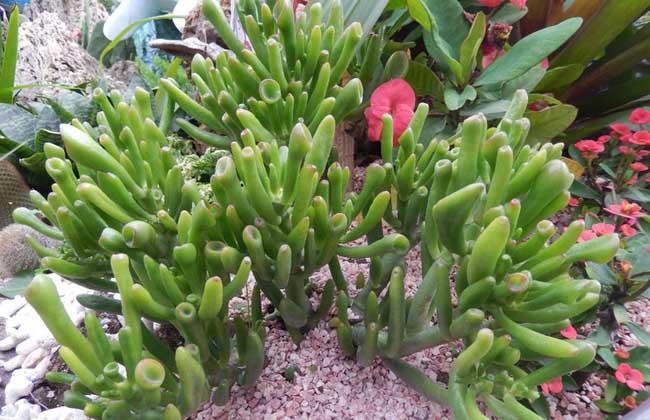
The Money Tree, also known as Crassula ovata 'Hobbit', 'Gollum', 'Horseshoe', 'Red Horseshoe' and so on, is a succulent of the genus Crassula in the family Crassulaceae. It is grown mainly for its foliage, with emerald-green leaves that stay evergreen year-round. It is mostly used as a decorative piece in offices, living rooms and balconies, and a small number are used to make succulent bonsai. As an ideal small indoor foliage plant, it is a very popular quality specimen. Now let's take a look at how to grow a Money Tree well!
Growth habits of the Money Tree
The Money Tree originated in South Africa as a horticultural variety, and can now be cultivated in many parts of the world. The plant is shrub-like with many branches, the stem is distinct and round, and the surface is yellow-brown or gray-brown; in winter the edges of its cross-section turn red. It likes a warm, dry, sunny environment, tolerates drought and partial shade, and is not cold-hardy. Except during the high heat of midsummer, when it should be protected from scorching sun, it should be given plenty of light in all other seasons.
Propagation methods for the Money Tree
1. Leaf cuttings: Snap off mature, healthy tubular leaves from the middle and lower part of the plant, insert the base at a slight angle into the substrate, leaving most of the leaf exposed. The substrate can be coarse sand sterilized with boiling water. You can insert them at the edge of a flower pot, making full use of the leaves of other flowers to shade the young tubular leaves, using "dappled light" to create a natural scattered-light environment and reduce water loss from the cutting. At the same time, be sure to keep the water level above the soil surface; if it dries out, roots will not be induced.
2. Stem cuttings: Cut healthy, thick stems as cuttings, and before cutting, first remove the lower leaves. After cutting, wait for the wound to shrivel before inserting, which can effectively prevent stem rot during rooting. If the base rots, cut off the rotten part, let it dry, and then insert it. The best time for cuttings is spring and autumn, avoiding the humid, stuffy dog days and the cold, low-temperature winter.
3. Air layering: Soak a seedling block in water, then cut it partway through (not all the way through), and wrap it around the part that has aerial roots. Wrap it tightly in a dark or black plastic bag, which helps keep it warm, absorb heat, and prevent sunlight from burning the roots. Replenish water with a syringe. To prevent it from being top-heavy, you can set up a support for protection; when replenishing water later, just add a small amount of diluted liquid fertilizer. Generally, it can be separated from the mother plant in 2-3 months; separate it once you observe roots exposed outside, and daub the cut with sulfur powder, plant ash or tobacco ash.
How to grow a Money Tree well?
1. Soil: The Money Tree likes loose, breathable, light acidic soil, such as leaf mold and peat soil, or you can make your own potting mix with a slightly acidic pH. Do not use heavy soil directly for cultivation.
2. Watering: When watering the Money Tree normally, be sure the water is weakly acidic. In the summer dormant period, water less or even skip watering. During the growing season, you can spray the leaves to increase humidity, but be careful never to overwater.
3. Fertilizing: The Money Tree does not have high fertilizer requirements; applying a moderate amount of a complete-element organic fertilizer once a month is enough.
4. Light: The Money Tree needs plenty of sunlight for its leaf color to be vivid and for the plant shape to be more compact and attractive. With too little sunlight, the leaf color becomes pale and green, the leaves are loosely arranged and elongated, and the stems are very tender.
5. Repotting: The Money Tree is a medium-to-large plant; as it grows, it can be repotted once every few years, and the pot diameter can be 2-3 cun larger than the plant diameter, which promotes plant growth. The medium must be dry before watering, and a slow-release fertilizer can be applied.