What are the cultivation methods for Malus micromalus?
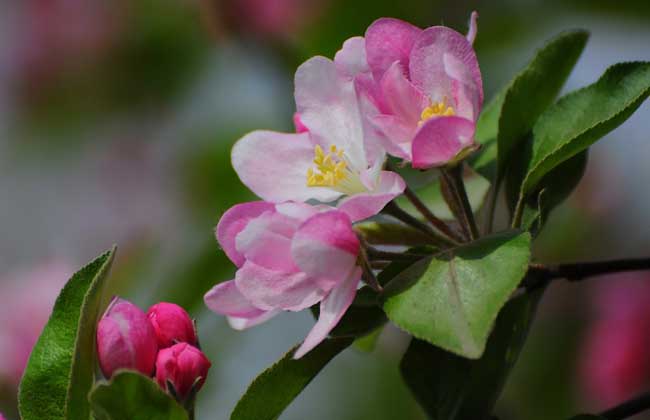
Malus micromalus is a plant endemic to China, also known as haihong, zimuhaitang, xiaoguohaitang, etc. It is a small tree plant of the genus Malus in the Rosaceae family, named because it grows in Xifu (present-day Baoji City, Shaanxi Province). Its posture is elegant, and its flowers bloom like brocade. Since ancient times, it has been a famous flower enjoyed by both refined and popular tastes, and has long been praised as the immortal among flowers, the imperial concubine of flowers, and the national beauty. Now let us take a look at the cultivation methods for Malus micromalus!
Growth Habits of Malus micromalus
Malus micromalus is produced in Liaoning, Hebei, Shanxi, Shandong, Shaanxi, Gansu, Yunnan and other places. It likes light, is cold-resistant, and is relatively drought-tolerant, but it is afraid of waterlogging. It has no strict requirements for soil, but it grows best in fertile, loose, and well-drained sandy loam. During the growth process, watering, fertilizing, and pruning should be managed comprehensively in combination.
Propagation Methods for Malus micromalus
1. Grafting: Grafting of Malus micromalus is divided into bud grafting and branch grafting, and rootstock seedlings of the same genus are mostly used as rootstock. Bud grafting of Malus micromalus is suitable in August, and branch grafting is suitable in spring.
2. Division: Division of Malus micromalus is suitable in early spring in March, before sprouting. Small seedlings will sprout around older Malus micromalus plants. Cut the small seedlings off from the mother plant together with their roots and transplant them.
3. Root burial: In early spring from February to March, cut the roots of mature Malus micromalus plants into sections about 15 cm long, place them flat and bury them in soil, cover with 7 to 8 cm of soil, water thoroughly, and then keep the soil moist regularly thereafter.
Cultivation Methods for Malus micromalus
1. Planting: Malus micromalus is generally mostly planted in the ground, and the time is preferably before sprouting in early spring or after leaf fall in early winter. Keeping the root system of the seedlings intact when leaving the nursery is the key to survival. Generally, large seedlings should be kept with a soil ball, and small seedlings should retain native soil according to the situation. After the seedlings are planted, tending and management should be strengthened, and the soil should be kept loose and fertile regularly.
2. Watering: During the growth period in spring and summer, Malus micromalus needs to be watered appropriately more. During high temperatures in midsummer, watering should be timely and sufficient. If there is a lack of water, the leaf edges are prone to drying and scorching. After the weather turns cool in autumn, gradually reduce watering. After leaf fall in winter, water even less to prevent root rot. However, because Malus micromalus is a deciduous tree species, it is not suitable to spray too much water on the branches and leaves.
3. Fertilizing: Malus micromalus likes fertilizer and can be fertilized appropriately more. Attention should be paid to using nitrogen, phosphorus, and potassium in combination. If too much nitrogen fertilizer is used, it is easy to cause lush branches and leaves but sparse flowering. After flowering in spring, nitrogen fertilizer should be mainly applied to promote the growth of branches and leaves. In summer and autumn, apply more phosphorus and potassium fertilizers to facilitate flower bud differentiation and ensure abundant flowers and bright colors. Fertilizers can include cake fertilizer, human excrement and urine, bone meal, chicken manure, fishy water, etc.
4. Pruning: Malus micromalus has strong sprouting ability and grows quickly, so attention should be paid to shaping and pruning Malus micromalus. From after leaf fall in winter to before germination in spring, messy branches such as dead branches, diseased and pest-infested branches, thin and weak branches, crossing branches, overlapping branches, and overly dense branches can be cut off. After flowering in spring, according to shaping needs, overly long branches can be appropriately shortened to promote the growth of side branches, increase the number of flower buds, and ensure abundant flowering the following year. In addition, after germination in spring, excessive, overly dense, and poorly positioned buds can be removed.
5. Diseases and pests: Attention should be paid to controlling pests such as scarab beetles, leaf roller caterpillars, aphids, bagworms, and red spiders, as well as diseases such as rot disease and red star disease. For control, diseased trees can be removed, diseased branches burned to reduce sources of pathogens, lime sulfur mixture sprayed in early spring or lime agent brushed on tree trunks, and in the early stage of disease, cuts about 0.5 cm deep in crisscross patterns can be made on the diseased spots, reaching the xylem, and then fungicide can be sprayed.