How to Grow Gladiolus? A Detailed Guide to Cultivation Methods
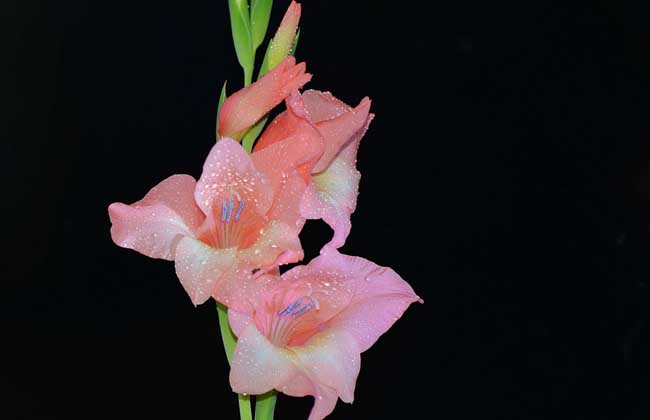
Gladiolus is also known as sword lily, gladiola, and corn flag, among other names. It is a perennial herbaceous plant of the genus Gladiolus in the iris family (Iridaceae), with extremely high ornamental value. It can be used in flower baskets, bouquets, and vase arrangements, and can also be planted in flower borders and specialized flower beds. Dwarf varieties can be grown in pots for ornamental display. Along with cut-flower roses, carnations, and gerbera daisies, it is known as one of the “Four Great Cut Flowers of the World.” Let us take a look at the cultivation methods for gladiolus below!
Growth Habits of Gladiolus
Gladiolus is a plant that loves warmth, but excessively high temperatures are unfavorable for its growth. It is not cold-tolerant. The optimal growth temperature is 20-25°C. The corms can sprout when the soil temperature is above 5°C. It is a typical long-day plant; long daylight hours promote flower bud differentiation, and insufficient light will reduce the number of flowers. However, after flower bud differentiation, short-day conditions favor bud formation and earlier flowering. The corms of summer-flowering varieties must be stored indoors over winter, and the room temperature must not be below 0°C. Fertile sandy loam soil is ideal for cultivation, with a pH not exceeding 7. It has a particular fondness for fertilizer; phosphorus fertilizer can improve flower quality, while potassium fertilizer promotes the improvement of corm quality and increases the number of cormels.
Propagation Methods for Gladiolus
1. Corm division: After one year of cultivation, one mother corm of gladiolus will produce 1-2 commercial corms and many cormels. Medium and large corms are planted by the furrow dibbling method, small corms by the furrow broadcasting method, and cormels mostly by the direct broadcasting method. Before planting, apply sufficient basal fertilizer, but be careful that the fertilizer does not come into direct contact with the corms. After sowing, pay attention to water management; do not water until the soil is dry before seedlings emerge.
2. Corm cutting: For certain rare varieties of gladiolus that need to rapidly expand their propagation coefficient, plump and full commercial corms can be cut into 2-4 pieces, each of which must retain part of the basal plate and a complete, plump bud, to be used for cormel propagation. To prevent the seed corms from rotting, the cut surfaces should be coated with charcoal powder or plant ash and planted immediately.
3. Tissue culture: Long-term asexual propagation of gladiolus leads to quite serious variety mixing and degeneration. Therefore, regular tissue culture must be carried out for virus elimination and rejuvenation. Both petals and lateral buds can be used as explants. After sterilization and inoculation, they can be placed under conditions of 25°C and 2000 lux for culture. Through induction, subculture, and rooting culture, plantlets are obtained. Continued culture of the plantlets yields test-tube cormels, and after hardening and two years of planting, the test-tube corms grow into mother corms.
Cultivation Methods for Gladiolus
1. Soil: Gladiolus prefers fertile, deep sandy soil and requires good drainage. Well-drained sandy sloping soil is most suitable, with a pH of 5.6-6.5 being ideal. It should not be planted in heavy clay soil prone to waterlogging.
2. Watering: Gladiolus is a flower that requires a fair amount of water. Timely watering and keeping the soil moist are important measures to encourage more flowering. During hot, high-temperature periods, spray mist promptly to increase humidity and lower the temperature. After rain, attention should be paid to drainage.
3. Temperature: The optimal temperature for gladiolus growth is 20-25°C during the day and 10-15°C at night. When the temperature exceeds 27°C, growth is inhibited and petals are prone to scorching. Below 10°C, growth is slow.
4. Sunlight: Gladiolus is not shade-tolerant and is a long-day plant. The most suitable condition is 16 hours of light per day. Cut-flower varieties are greatly affected by light; sufficient sunlight results in robust growth, strong stress resistance, and vivid, long-lasting flower colors. However, in hot summers, direct exposure to intense sunlight should also be avoided.
5. Fertilizing: Gladiolus is a shallow-rooted plant, so fertilizer should be applied shallowly. Fertilization should balance nitrogen, phosphorus, and potassium. Top-dressing is applied at the two-true-leaf stage (after flower bud differentiation) and at the ear-emergence stage, applying diluted manure water with urea once each time. Potassium fertilizer should be applied heavily once at the mid-stage, and nitrogen should be controlled at the late stage to prevent excessive vegetative growth that causes lodging. For plots mainly producing seed corms, additional potassium fertilizer should be the priority.
Pest and Disease Control for Gladiolus
1. Mosaic disease
[Symptoms] Mosaic disease mainly infects leaves and also infects parts such as flowers. In the early stage of the disease, chlorotic angular spots and round spots appear on the leaves. Because spot expansion is restricted by leaf veins, they are mostly polygonal, eventually turning brown. Diseased leaves become yellowed and distorted. Affected plants are stunted with short flower spikes; severely affected plants cannot produce flower spikes at all. In early summer, symptoms on new leaves are particularly obvious; in midsummer, symptoms are not obvious, showing a phenomenon of symptom masking.
[Control] Strengthen quarantine to control disease occurrence. Test corms and select virus-free corms for planting. Uniformly destroy virus-carrying corms to reduce re-infection of flowers. Promptly remove diseased plants from flower beds to prevent mutual infection. When disease occurs, spray foliage with 58% mancozeb wettable powder at 500 times dilution, or 75% chlorothalonil wettable powder or 50% carbendazim wettable powder at 1000 times dilution, once every 7 days, generally 3-4 sprays being sufficient.
2. Dry rot
[Symptoms] Dry rot mainly harms the corms, leaves, flowers, and roots of the plant. When the plant is affected, the tips of the outer leaves first begin to yellow, then it spreads to the inner leaves, and finally the plant withers.
[Control] Try to avoid continuous cropping in the same flower bed. Do not apply excessive nitrogen fertilizer; appropriately increase the use of phosphorus and potassium fertilizers. Before planting, corms can be soaked in 50% carbendazim at 500 times dilution for 30 minutes. In the early stage of disease, spray foliage with 50% zineb at 1000 times dilution once every 7 days, generally 3 sprays.
3. Leaf spot
[Symptoms] The pathogen can infect leaves and corms. After leaf infection, small brown spots appear, which gradually expand and deepen in color, ultimately causing the leaves to wither. After corm infection, the resulting plants are stunted and may even fail to flower.
[Control] Practice crop rotation; severely affected areas must be rotated to reduce the source of pathogenic seedlings. For corm treatment, corms should be dried after harvest and stored dry to prevent rot. Before planting, they can be disinfected with 50% thiram before sowing. For chemical control, spray with 75% chlorothalonil at 800 times dilution or treat with 65% zineb.
4. Scab
[Symptoms] Scab mainly harms corms and sometimes also harms leaves. After corm infection, water-soaked round lesions appear, with the color gradually deepening from gray to dark brown. The lesion edges are raised while the centers are sunken. After leaf infection, water-soaked soft rot occurs.
[Control] Use disease-resistant cultivation practices: choose a high, dry, and well-ventilated environment, pay attention to drainage, practice crop rotation, and maintain field hygiene. This disease can only be prevented, not cured; there is no specific effective chemical treatment.
5. Fusarium wilt
[Symptoms] Fusarium wilt mainly occurs on corms and sometimes also infects leaves and flowers. In the early stage, small reddish-brown spots appear, which gradually expand, become sunken and shrunken, and may even rot, after which white thread-like structures grow. After planting affected corms, mild cases show poor growth and deformed flowers, while severe cases fail to sprout or the seedlings die.
[Control] Double selection and disinfection of corms: after harvest, grade them and remove diseased corms. Soak seed corms in 0.5% formalin solution for 2 hours, rinse with warm water, dry, and refrigerate until the following spring. At planting time, carry out a second selection and disinfect with 5% carbendazim at 500 times dilution before sowing. Avoid continuous cropping.
6. Gray mold
[Symptoms] Gray mold often occurs on leaves and petals. In the early stage, small grayish-brown spots often appear, which gradually expand, and gray mold appears on the surface of the lesions.
[Control] Store corms properly and keep the environment dry. Maintain a ventilated and well-lit cultivation environment with good drainage. For chemical control, spraying with 80% zineb wettable powder at 500-700 times dilution gives good results.
7. Thrips
[Symptoms] Adult and nymph thrips generally hide in leaf axils during the day, and crawl onto the leaf surface to harm the plant on cloudy days or at night. They mainly bite and feed on the leaves, stems, and flowers of the plant, causing leaf discoloration and leaving white-gray dot-like feeding marks and oviposition marks on the corolla, which causes the petals to curl.
[Control] Spray with 40% dimethoate emulsifiable concentrate at 1000 times dilution or 80% dichlorvos emulsifiable concentrate at 300 times dilution for control.