A Complete Analysis of the Flower Language, Symbolism and Legendary Stories of Monotropa uniflora
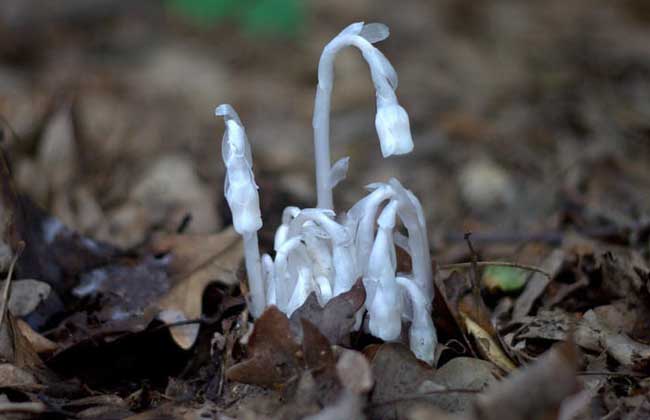
Monotropa uniflora is also known by other names such as Dream Orchid, Water Orchid Grass, Silver Key, and Flower of Death. It is not an orchid, nor is it a fungus, but a perennial herbaceous plant of the genus Monotropa in the family Pyrolaceae (Ericaceae). Because it never carries out photosynthesis and obtains nutrients from decaying plants, it is called the Flower of Death. Let us take a look below at the flower language and legends of Monotropa uniflora!
The Flower Language of Monotropa uniflora
Spirit of beauty, fragile and guileless. The meaning of the flower language varies with the color of Monotropa uniflora: white represents sincerity and harmlessness, fragile and guileless; yellow represents deep affection, thank you for your love; green represents the language of admiration, I just like you; blue represents the language of pure love, I only care about you; purple represents the language of romance, it is wonderful to have you; pink represents the language of love, love you for a lifetime.
The Habits of Monotropa uniflora
Monotropa uniflora obtains its organic nutrients entirely from the soil. The entire epidermis of its roots is covered with a dense network of hyphae of a certain fungus, and the mycelium is 1 to 2 times thicker than the epidermis itself. The tips of the small roots lie within a fungal sheath, and individual or bundled hyphae separate from the fungal sheath on all sides. This differs from parasitic fungi, because the hyphae of the latter remain only on the surface of the roots and do not invade the root tissues. Clearly, it is the hyphae that take on the task of supplying nutrients in Monotropa uniflora, and the hyphae physiologically replace the role of the root hairs of Monotropa uniflora.
The Legend of Monotropa uniflora
In nature, Monotropa uniflora is not a rarely seen “ghost”; as long as you know its habits and choose the right place and time, anyone can behold its beauty. The best season to admire Monotropa uniflora is generally around mid-April in the south, and slightly later in the north. The Monotropa uniflora seen during this period is at its most perfect. If too early, Monotropa uniflora has not yet sprouted; if too late, Monotropa uniflora gradually ages and develops brown spots, so its clear, transparent, dreamlike beauty can no longer be appreciated.
Its unique habits and wondrous appearance have led Monotropa uniflora to often appear as the Flower of Ghosts in traditional Chinese martial arts novels and legends, either deified as an immortal herb capable of bringing the dead back to life, or regarded as an evil thing with supernatural power that can kill people invisibly, and even its delicate fragrance is described as chilling. Perhaps this is the origin of its names “Ghost Grass” and “Dream Orchid”. At the same time, some people call it the flower of the underworld, or the saprophytic flower. In fact, Monotropa uniflora has neither the power to turn the tide nor the ability to harm or kill people; rather, it is a good folk remedy, a mild herb with a bland taste that can treat physical weakness and long-standing cough.