How to grow Lithops seeds? Detailed explanation of the sowing method
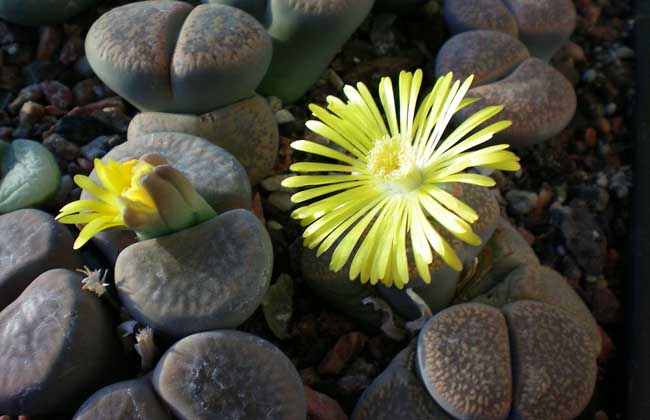
Lithops is a small perennial succulent plant of the genus Lithops in the family Aizoaceae, native to southern and southwestern Africa. It prefers a climate of warm winters and cool summers, and likes warm, dry, and sunny environments. It is afraid of low temperatures and averse to strong light. It likes ample sunlight, with an optimum growth temperature of 10-30°C. It is best grown in loose, breathable, neutral sandy loam. Let's take a look below at how to grow Lithops seeds!
Sowing time for Lithops
Lithops can easily be hand-pollinated. If two separate plants bloom at the same time, the seeds will mature after about 9 months. In China, the main sowing season is after September in autumn. Of course, it can also be sown in winter or spring. Generally, the best temperature is controlled at 12 to 15°C at night and 24 to 27°C during the day.
Potting soil mix for Lithops
1. Pot and soil selection: Use a 6-8 cm shallow pot for sowing Lithops. Either clay or plastic pots are fine. Leave a distance of 1-2 cm between the soil surface and the rim of the pot. The sowing soil should be loose, breathable, and good at retaining water. The main ingredients generally include nutrient soil, peat soil, akadama, kanuma soil, charcoal granules (for aeration), rice husk charcoal (for aeration), plant ash (containing various nutrients and trace elements), etc. The auxiliary ingredients include hard coal cinders, coarse sand, perlite, vermiculite, fine pumice, etc.
2. Soil treatment: After mixing the main and auxiliary ingredients for the Lithops potting soil, sift it. Place the larger granules at the bottom and the finer granules on top. Sprinkle a thin layer of fine granular soil about 1 mm thick on the surface. For sterilization, use a microwave on medium power and medium temperature for five minutes. You can also use boiling water to soak the pot, supplying water from the bottom of the pot until it is soaked through. Once the soil is completely moistened, you can sow. You can also use potassium permanganate for the soaking, which disinfects the seeds at the same time as sowing, though the concentration should be slightly higher.
Sowing method for Lithops
1. Sowing method: Lithops seeds are very small. When sowing, carefully and evenly scatter them on the soil surface. Do not cover them with soil. The seeds should be sown somewhat densely; never sow just a few seeds in a large pot. Sowing is best done on a sunny day. Do not sow in rainy or overcast weather. If continuous rainy weather occurs after sowing, germination will be delayed.
2. Sowing management: After sowing Lithops, you can cover the pot with a piece of glass. During high daytime temperatures, you can lift one corner, and cover it well at night. Maintain humidity at 80%. At the same time, place the pot in a warm, humid place that can receive sunlight. If the temperature is above 30°C, shade is needed. Seeds generally begin to germinate in 3 days, and some varieties' seeds may take about half a month to germinate. The germination period ends after about one month. After germination, special attention must be paid to management so they can grow well.
Seedling-stage management for Lithops
1. Light management: After Lithops seeds germinate, you can remove the glass. Newly germinated seedlings have a high demand for sunlight, so promptly move them to a place with ample but not too intense sunlight. Sunlight can help dwarf the seedlings. If light is insufficient during the germination period, the seedlings will become leggy and thin, and they will not be dwarfed back by light until at least after their first molting. At noon, when sunlight is intense, shading is needed. After the seeds germinate, the roots of the seedlings are easily exposed, so they need to be buried back into the soil promptly.
2. Fertilizer and water management: During the one-month germination period, keep the Lithops potting soil quite wet. After the seeds have germinated and come up fully, reduce moisture but be sure to keep the potting soil somewhat humid. When the potting soil is slightly moist, it is time to soak the pot. Soaking generally means soaking thoroughly, and a certain container can be used to measure the amount. Fertilizing is done 1-2 months after the seeds germinate. The fertilizer must be extremely dilute and can be applied as if watering, using the soaking method to fertilize. If you are not sure, please do not rush to fertilize; the nutrients in the soil are enough for it to grow for a period of time.
3. Molting management: About three to four months after the seeds germinate, the Lithops seedlings will begin their first molting. At this time, you can shine a flashlight on the seedlings and clearly see an obvious shadow. Then sunlight and watering need attention. Sunlight is necessary, and water should be appropriately reduced. In this way, it will not be long before the new plant absorbs the moisture of the old skin. Once the skin has completely dried up, you can water. Soon the small patterned plant can break out of the old skin like a cocoon.