How to Grow a San Pedro Cactus (Cereus, "Mountain Shadow Fist"): Even Beginners Can Learn It Easily
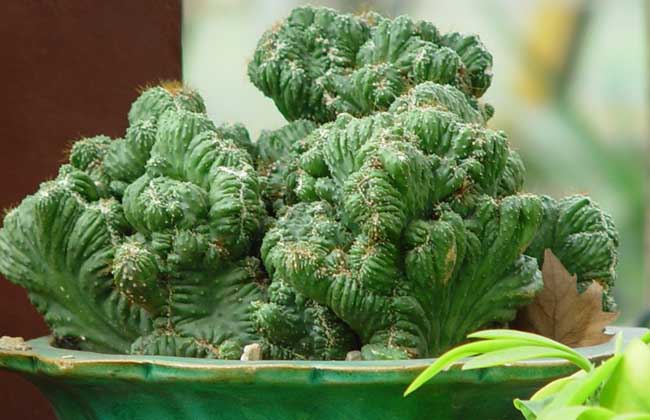
The San Pedro cactus (Cereus, "Mountain Shadow Fist") is also known as "Mountain Shadow" or "Immortal Mountain", among other names. Its form resembles a mountain yet is not a mountain, resembles stone yet is not stone. It is a living, lush, layered and overlapping, evergreen succulent of the cactus family, genus Cereus. Though it is a plant, it expresses the artistic mood of a mountain-stone bonsai. Used to decorate halls, tea tables and other places, it is elegant and refined, with a unique effect. Let's take a look together at how to grow a San Pedro cactus!
The Growth Habits of the San Pedro Cactus
The San Pedro cactus originates from the West Indies, northern South America and eastern Argentina, and is now widely found in many places. For pot cultivation, choose an airy, well-drained, lime-rich sandy soil. It is robust, prefers well-drained, moderately infertile sandy loam, and can withstand low temperatures of 5°C in winter. It does not tolerate excessively moist soil or an environment with too little light.
Propagation Methods for the San Pedro Cactus
Like other cactus plants, the San Pedro cactus is very easy to propagate and keep alive. Cutting propagation is usually used, and it can be done throughout the year, with April to May being the best time. Select a small modified stem of the San Pedro cactus, cut it off and let it dry for 1 to 2 days. Once the cut surface has dried and closed, insert it into the soil. Do not water for the time being; press the soil firm and cover the cut, and you may spray some water to keep it moist. Generally, under suitable temperature conditions (14 to 23°C), it will root in about 20 days and can then be transplanted. Cuttings taken during the plum rain season and the hot summer days will have a somewhat lower survival rate.
How to Grow a San Pedro Cactus
1. Light: The San Pedro cactus likes sunlight, is drought-tolerant, tolerates poor soil, and also tolerates shade. For pot cultivation, choose an airy, well-drained, lime-rich sandy soil.
2. Soil: The San Pedro cactus does not tolerate excessively moist soil or an environment with too little light. Water it less rather than more; water once every 3 to 5 days to keep the soil slightly dry. This slows the plant's growth and makes it thick and plump, giving it a beautiful shape.
3. Watering: Watering the San Pedro cactus should follow the principle of "alternating dry and moist", preferring dry over moist. There must not be an absolute fixed interval for watering; it should be flexibly controlled according to factors such as weather, temperature, light and ventilation. The San Pedro cactus should be restricted in both water and fertilizer, otherwise it easily suffers root rot, or grows leggy and deformed, showing a "reversion" phenomenon and growing into a columnar shape, losing its ornamental value.
4. Fertilizing: The San Pedro cactus generally does not need fertilizing. Each year when repotting, place a small amount of bone meal and organic fertilizer at the bottom of the pot as a base fertilizer. Never apply high-concentration chemical fertilizers, otherwise fertilizer burn will occur and the loss will outweigh the gain. You can also use organic fertilizers such as sesame paste residue, fermented into a liquid fertilizer and diluted, to water the potting soil.
5. Spring and Autumn: Spring and autumn are the peak growing seasons for the San Pedro cactus. Fertilizer and water management follows the cycle of Flower Treasure → clear water → Flower Treasure → clear water. The interval is about 2 to 4 days for outdoor care; the interval is shorter on sunny days or during high temperatures, and longer or skipped on rainy days or during low temperatures. For indoor care, it is 3 to 6 days.
6. Summer: During the high-temperature period in summer, the San Pedro cactus often enters a dormant state and has little demand for fertilizer and water, and may even need fertilizer and water to be restricted. Fertilizer and water management follows the cycle of Flower Treasure → clear water → clear water → Flower Treasure → clear water → clear water, with an interval of about 3 to 5 days for outdoor care. Try to water in the morning or evening when the temperature is lower. Also mist the plant frequently.
7. Winter: When overwintering the San Pedro cactus, move it indoors promptly when the outdoor temperature drops below 5°C, place it in a sunny spot, and keep the room temperature between 5 and 10°C for safe overwintering. If the temperature drops suddenly, you can cover it with a plastic bag to keep it warm.
8. Pests and Diseases: The San Pedro cactus rarely suffers from pests and diseases. Under dry, stuffy and poorly ventilated conditions, it is prone to red spider mites, so pay attention to prevention and control. You can spray with a medicinal solution, or use a knife to cut out the affected parts so that new modified stems grow again, but this will damage the beauty of the original form.