What are the cultivation methods and precautions for the areca palm?
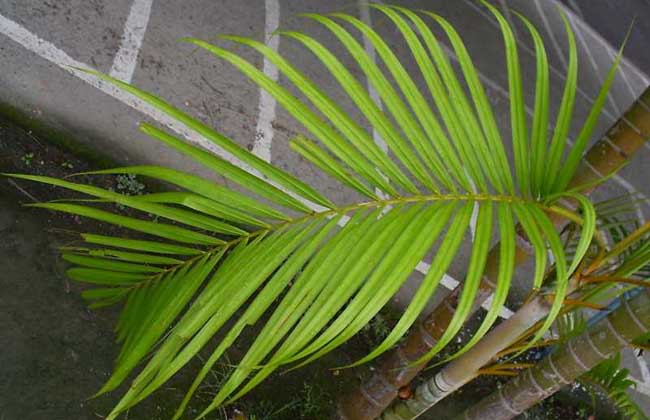
The areca palm, also known as the yellow palm, purple palm, etc., is a clumping evergreen shrub or small tree of the genus Dypsis in the palm family Arecaceae, native to the island of Madagascar in Africa. It is now commonly cultivated in some landscaping units in southern China, grown as a potted plant for indoor decoration, and used in medicine with related therapeutic effects on hematemesis, hemoptysis, hematochezia, and metrorrhagia. Let us take a look at the cultivation methods and precautions for the areca palm!
Growth habits of the areca palm
The areca palm is a tropical plant that prefers a warm, humid, semi-shaded environment. Its cold tolerance is not strong; leaves turn yellow when the temperature is below 20°C, the minimum overwintering temperature must be above 10°C, and it will freeze to death at around 5°C. Therefore, it can still be cultivated in the open ground in southern China, while in the Yangtze River basin and areas to the north it should be maintained in a greenhouse. Seedlings grow slowly, then grow rapidly afterward. It is suitable for loose, well-drained, fertile soil. Its branches and leaves are dense, it stays green all year round, and it has strong shade tolerance.
Propagation methods for the areca palm
1. Division: Division propagation of the areca palm can be done in all four seasons, usually around April in conjunction with repotting. Select plants with many tillers at the base, remove part of the old potting soil, and use a sharp knife to divide it from the connection point at the base into several clumps. The wounds need to be coated with plant ash or sulfur powder for disinfection. Generally, after 1-2 years of care it can become a potted commercial product.
2. Sowing: For areca palms from which seeds can be obtained, wash the harvested fruit clean of the flesh, soak the seeds in warm water at 35°C for two days, and then sow them. Transplant as they germinate. On sunny days, spray more water on the leaf surface. Generally, growth is slow in the juvenile stage and rapid after maturity.
Cultivation methods for the areca palm
1. Transplanting: When potting areca palm seedlings, first place a 2-3 cm thick layer of coarse-grained substrate at the bottom of the pot as a drainage layer, sprinkle a layer of fully decomposed organic fertilizer on top as a base fertilizer at a thickness of about 1-2 cm, then cover with a thin layer of substrate about 1-2 cm thick, and then place the plant in, so as to separate the fertilizer from the root system and avoid burning the roots.
2. Soil: For indoor potted areca palms, slightly acidic soil should be chosen. In the north, attention should be paid to selecting sandy loam with high humus content. Leaf mold, peat soil plus 1/3 river sand and some base fertilizer can be used to make the growing medium. The tiller buds grow relatively close to the rhizome, so when potting, plant it slightly deeper than the original planting so that new buds can root better. May to October is its vigorous growth period, and relatively sufficient water and fertilizer conditions must be provided.
3. Watering: Watering the areca palm should follow the principle of dry thoroughly, wet thoroughly according to the season. Water appropriately more in dry, hot seasons, and control watering in low-temperature rainy weather. In northern regions, especially where the water contains more salt and alkali, attention should be paid to regularly using black alum to adjust soil acidity. Normally keep the potting soil consistently moist. During high-temperature periods in summer and autumn, also keep relatively high air humidity around the plant, but never let the potting soil become waterlogged, so as to avoid root rot.
4. Fertilizing: The areca palm is generally given decomposed liquid fertilizer or compound fertilizer once every 1-2 weeks to promote vigorous plant growth and dark green leaf color. In summer, appropriately apply additional nitrogen-containing organic fertilizer; in winter, organic flower fertilizer such as sesame paste residue can be applied while maintaining the dry-wet state of the potting soil.
5. Temperature: The areca palm prefers warmth, and its optimum growth temperature is 20-35°C. If it exceeds 35°C or falls below 10°C, and cultivation management is slightly improper, its lower leaves will turn from green to yellow. In winter, good insulation and freeze protection work must be done. Generally, it can overwinter relatively safely at around 10°C. If the temperature is too low, the leaves will turn yellow, the leaf tips will dry up, and the roots will be damaged, affecting the growth of the coming year.
6. Light: The areca palm should be shaded in summer and most avoids direct sunlight. Even short-term exposure to the sun can cause the leaves to scorch yellow, and it is very difficult to recover. It prefers semi-shade, and should be shaded 50% in spring, summer, and autumn. For indoor cultivation and viewing, it should be placed in a spot with relatively strong scattered light. It can also tolerate a relatively dark environment, but it should be regularly moved outdoors to a place with better light for care, so as to facilitate recovery and maintain a relatively high ornamental state.
7. Pruning: After 2 consecutive years of leaf harvesting when cultivated as cut foliage, the plant must undergo comprehensive rejuvenation as well as necessary equipment maintenance, mainly the maintenance of shading equipment, because as the plant continues to grow, the shading equipment cannot meet the requirements of the plant's growth height, and during typhoon season the shade net is easily torn. The second matter is the rejuvenation of the plant.
8. Repotting: The areca palm is repotted once every 2-3 years in early spring; old plants can be repotted once every 3-4 years. After repotting, it should be placed in a semi-shaded place with relatively high air humidity, and dead and yellow branches and leaves should also be pruned promptly.
Control of the citrus parlatoria scale on the areca palm
1. Symptoms: 1-2 generations occur per year. Adults and nymphs attach to leaves and petioles and suck sap, affecting plant growth.
2. Control: When a small number of insects is found, they should be scraped off promptly. When the infestation is relatively large, spray 50% isocarbophos emulsifiable concentrate at 800 times dilution, preferably 2-3 times.
Control of leaf blight on the areca palm
1. Symptoms: The pathogen first infects the leaf tips and leaf margins. In the early stage of the disease, the infected areas show brown spots or streak-like patches. In the middle stage, the spots or patches gradually expand and connect with each other. In the later stage, the leaves appear grayish-white and withered.
2. Pattern: The pathogenic fungus overwinters on diseased plants or in the soil, spreads by conidia through wind, rain, and spray watering, and the pathogen invades through plant wounds. This disease is more likely in high-temperature, high-humidity, and poorly ventilated environments.
3. Control: Strengthen disease inspection, do not introduce diseased plants, strengthen ventilation, avoid rain and spray during the disease period, promptly prune the affected branches and leaves to stop continued infection, and after pruning apply Daconil ointment to the wounds for treatment. If disease occurs, spray 70% thiophanate-methyl at 800 times dilution or 75% chlorothalonil at 1000 times dilution, once every 7-10 days, continuously 3 to 4 times, which can effectively control the condition.
Control of root rot on the areca palm
1. Too dry: The areca palm prefers relatively high air humidity. When the air is too dry, it causes scorched leaf tips and scorched leaf margins. During the entire growth period, water should be sprayed on the leaf surface and the surrounding environment 3-4 times a day to increase air humidity. But after entering dormancy, watering should be stopped.
2. Too strong sunlight: The areca palm prefers a semi-shaded environment from May to September. Under direct sunlight, phenomena such as yellowing leaves and scorched leaf tips and margins will appear. During this period, it should be placed under a shade shed or under a large tree to avoid direct sunlight.
3. Potting soil too dry: During the growth period, the areca palm needs an adequate water supply. When the potting soil is dry for a long time, because the plant's growth cannot get the sufficient water it needs, the leaf tips and leaf margins will dry and scorch.
4. Potting soil too wet: It is not that as long as there is water in the potting soil, the plant can absorb and use it. When the potting soil is too wet, because the respiration of the plant roots is affected, the root system's absorption of water is thereby affected, and the plant becomes short of water internally, causing scorched leaf tips and margins.
5. Fertilizer too concentrated: Too concentrated fertilizer causes reverse osmosis in the plant root cells, causing the plant to lose water. In mild cases, it leads to scorched leaf tips and margins; in severe cases, it causes root rot and death.
Precautions for the areca palm
1. Humidity management: The areca palm likes a moist climate environment and requires the relative air humidity of the growing environment to be 70-80%. If the relative air humidity is too low, the leaf tips will dry up.
2. Temperature management: Because the areca palm is native to tropical regions and likes a high-temperature environment, it has very strict requirements for winter temperature. When it is below 10°C, growth slows and it begins to enter a semi-dormant or dormant state. When it is below 5°C, it cannot overwinter safely. In summer, it can also tolerate temperatures as high as above 35°C, but growth will be temporarily hindered. The most suitable growth temperature is 18-30°C.
3. Light management: The areca palm is not strict about light. It likes sufficient sunlight and also tolerates semi-shade, but it grows better when light is sufficient.
4. Fertilizer and water management: For potted areca palm plants, in addition to adding organic fertilizer when potting, appropriate fertilizer and water management should also be carried out during usual care.
5. Reasonable pruning: Winter pruning. When the plant enters dormancy or semi-dormancy in winter, branches that are weak, diseased or pest-infested, dead, or overly dense should be cut off.