How to grow String of Pearls? Methods for growing the succulent String of Pearls
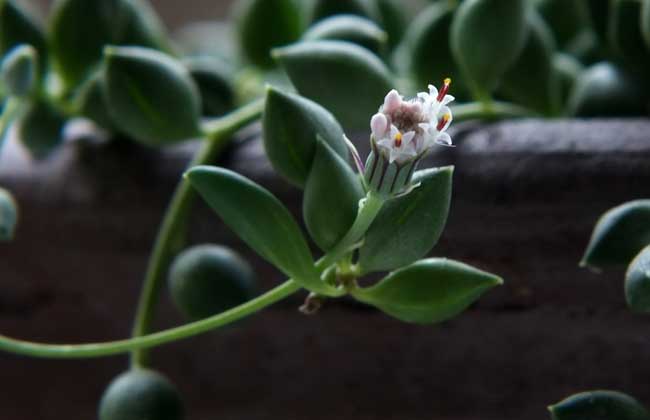
String of Pearls is a very common succulent, also known as String of Beads, Jade Beads, Green Bells, Maya Beads, etc. It gets its name because its plump, full, emerald-green oval little leaves resemble pearls. It is a plant of the genus Senecio in the Asteraceae family, and its flowering period is generally from December of the current year to January of the following year. Let us take a look at the methods for growing String of Pearls!
Growth habits of String of Pearls
String of Pearls likes soil rich in organic matter that is loose and fertile. It grows best in a warm environment with relatively high air humidity and strong diffused light. In summer, high temperature and high humidity should be avoided, otherwise the stems rot very easily and the plant dies. Potted plants can be placed in a rain-sheltered, shaded area for cultivation. After autumn begins, the plant resumes growth, so light should be increased and liquid fertilizer applied.
Propagation methods for String of Pearls
1. Cuttings: String of Pearls vines root very easily. In spring and autumn, cut several 3-5 cm long stem sections, bury half of them in sand or loose soil, and keep them moist but not waterlogged. They will root quickly and be ready for planting (about half a month in spring and autumn, while rooting is difficult in winter and summer. When the potted plant is not uniform and full enough but has grown too long, this measure can be used to remedy the situation), and they grow very quickly.
2. Layering: Bury the stems shallowly, then cover the surface with another layer of soil. Water immediately, and before long many new shoots will sprout from the soil. This method is very suitable when there are not too many stems. It is very slow at first, but once the small shoots emerge, growth becomes very rapid.
Methods for growing String of Pearls
1. Soil: String of Pearls has a very shallow root system and can be planted in a shallow pot. Generally, a piece of tile is used to cover the bottom hole, and a layer of coal cinder or coarse sand is spread on top to increase aeration and drainage (especially when commonly used plastic pots are used for planting). For the soil, it is best to use leaf mold (mix fallen leaves from trees in autumn and winter with a certain amount of crushed soil, and mix in a certain amount of sand (the ratio of soil to sand is about 1:3).
2. Watering: String of Pearls tends to rot at the roots in summer, so watering should not be too frequent, and a small spray bottle should be used for watering.
3. Temperature: String of Pearls likes warmth and humidity, is relatively cold-tolerant (when cultivated in the Jianghuai region it can tolerate low temperatures of 0°C), and is heat-tolerant. The most suitable temperature is about 20-28°C. Growth is slow at both high and low temperatures, and it is almost dormant in high-temperature environments.
4. Fertilizing: In spring and autumn, String of Pearls should be given "light fertilizer applied frequently." Spraying 1-3‰ nitrogen fertilizer and potassium dihydrogen phosphate on the leaf surface often helps make it more emerald green and plump, improving its ornamental value.
5. Pests and diseases: String of Pearls rarely has pests or diseases. Aphids in spring are one of them; remove them promptly or spray 1500 times omethoate to kill them. Mites in summer and autumn are another; 1000 times dicofol should be used to kill them. Pay attention to ventilation and increase leaf surface humidity, which can reduce mite infestation.