How do you grow Crassula to make it thrive?
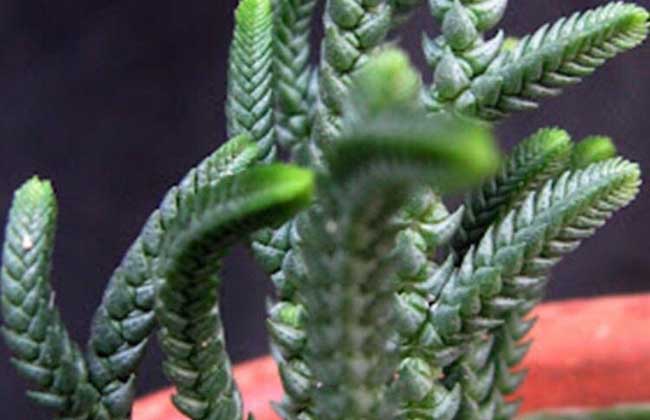
Crassula, also known as "Ruo Lu", "Jade Wood" and so on, is a perennial succulent subshrub plant of the genus Crassula in the family Crassulaceae, native to Namibia, with stems and branches usually growing vertically upward and scale-like triangular leaves. It can be used as a foliage plant arranged in an ornamental greenhouse or as a potted plant accenting a balcony, corridor or indoors. Let us take a look below at how to grow Crassula well!
Growing habits of Crassula
Crassula is native to South Africa, southern Africa, Namibia and other places, grows 30 cm tall, has thin stems that branch easily, and its stems and branches usually grow vertically upward. Its scale-like leaves are generally triangular and arranged in 4 rows on the stems and branches, very tightly packed. It likes a warm, dry and sunny environment, fears low temperatures and frost and snow, tolerates partial shade, and is not demanding about soil, with peat soil plus coarse sand being best. In winter the temperature should not be lower than 5°C.
Propagation methods for Crassula
Crassula is mainly propagated by cuttings, which can be done throughout the year, with rooting being fast in spring and autumn and the survival rate high. Select relatively neat branches with tightly arranged scale-like leaves, cut them into 12-15 cm lengths, and insert them into a sand pot. After insertion they root in about 20-25 days, and once the roots are 2-3 cm long they can be potted up.
How do you grow Crassula well?
1. Soil: For potted Crassula, choose a well-drained, loose and fairly fertile sandy loam soil. Usually repot once every 2-3 years, which can be done in spring or autumn. The potting soil should be loose and fertile with good drainage. You can use a mixed soil of 1 part leaf mold and 1 part garden soil, and 2 parts coarse sand or vermiculite, and mix in a small amount of bone meal and plant ash as base fertilizer.
2. Watering: For potted Crassula, there is no need to water too much at ordinary times; just keep the potting soil slightly moist. When watering, try to pour it into the soil. Water on the leaves will affect their appearance, and even more, do not pour it into the flower center, as this will rot the center. During the growing season, water 2-3 times a week, and during the plum rain season and high-temperature season, watering 1-2 times a week is enough.
3. Pinching: When the Crassula plant grows too tall, it needs to be pinched to reduce its height. Branches that are too numerous, too slanted or too dense should be thinned out. When placed outdoors, avoid heavy rain washing over it, otherwise the roots will be damaged and the branches will turn yellow and rot. Every 2-3 years the plant needs to be re-propagated by cuttings to renew it.
4. Fertilizing: Crassula is a fine-leaved variety among succulent plants, so apply a decomposed dilute liquid fertilizer or compound fertilizer once a month. In winter, place it indoors in a sunny spot. Above 10°C, you can continue watering and fertilizing to let it grow normally. If you restrict watering and keep the potting soil moderately dry, it can also tolerate low temperatures of 3-5°C.
5. Disease prevention: The main diseases of Crassula are brown spot disease and leaf spot disease, which can be controlled by spraying Bordeaux mixture (1:1:100) once a month. Pests include red spider mites and scale insects, which can be killed by spraying with 50% fenitrothion emulsifiable concentrate at 1000 times dilution.