What are the disadvantages of Boston ivy? These points need to be understood
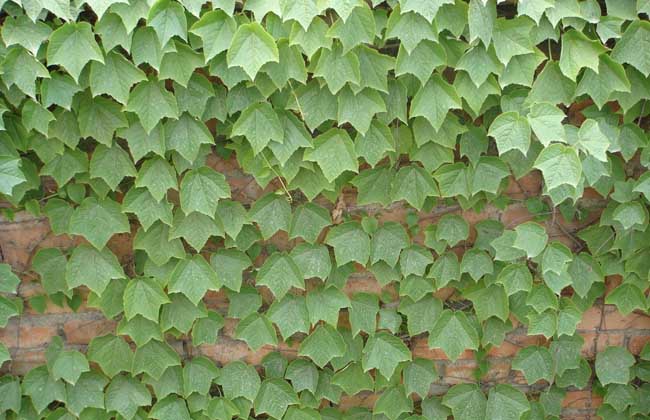
Boston ivy is one of the most widely used climbing plants for greening, also known as bindweed stone dragon, maple vine, climbing mountain tiger, red grape vine, Bashan tiger, etc. It commonly climbs on walls and rocks, not only achieving greening and beautification effects, but also playing a role in oxygen enrichment, cooling, dust reduction, and noise reduction. Now let us take a look at what disadvantages Boston ivy has!
What are the disadvantages of Boston ivy?
1. Attracting mosquitoes and insects: Boston ivy growing lush and green is not necessarily good, because sometimes it can also attract snakes. The main reason is that climbing plants can provide ideal hiding and climbing environmental conditions for snakes, so some geckos and non-venomous colubrid snakes like to dwell in the branches and leaves of Boston ivy.
2. Damaging walls: The roots of Boston ivy secrete acidic substances that corrode limestone, and their roots drill into wall cracks along the gaps, making the cracks too large, and in severe cases can cause the wall to crack and collapse. Moreover, once the wall is damaged, those snakes and insects may enter the interior through the cracks in the wall.
What are the benefits of Boston ivy?
1. Boston ivy has dense branches and leaves in summer and can be used to green house walls and park rocks, beautifying the environment.
1. The stems and leaves of Boston ivy are dense and can cover the entire wall surface of a house. It can not only block strong sunlight, but also, due to the air flow between the leaves and the wall, lower the indoor temperature.
2. As a barrier, Boston ivy can both absorb noise in the environment and adsorb flying dust.
3. The tendril-type suckers of Boston ivy can also absorb moisture from the wall, helping to make damp houses drier, while in dry seasons it can increase humidity.
4. The roots and stems of Boston ivy can be used as medicine, with effects of breaking blood stasis, activating tendons and stopping bleeding, and reducing swelling and toxins. The fruit can be used to make wine.
Advantages of Boston ivy in landscaping
1. Boston ivy has a very strong ability to attach and climb. It has adventitious roots and suckers, so it can attach very firmly to flat brick walls, cement walls, and stone slopes.
2. Boston ivy has very strong vitality, wide adaptability, and strong stress resistance. It can grow and reproduce in places with extremely thin soil layers and relatively harsh natural environments, seizing territory.
3. Boston ivy grows quickly. Under a general wall base, newly planted Boston ivy (three-year-old) can increase branch length by 2 to 3 m per year, and from the second year onward branch length can increase by another 4 to 5 m, and each plant can also grow 5 to 12 branches, showing that growth is very rapid.
4. Boston ivy has a very good covering effect. For example, on building walls and enclosure walls, no matter how tall or wide the wall is, Boston ivy can cover the entire wall surface, but it does not climb over railings or through windows.