Cultivation methods and precautions for the Norfolk Island pine
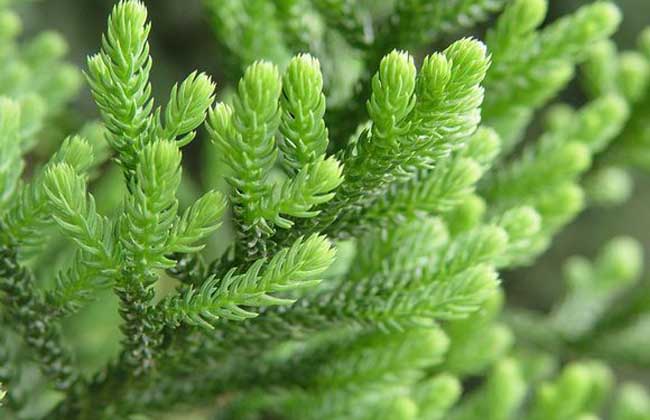
The Norfolk Island pine, also known as the Australian pine, scale-leaved Araucaria, and tower-shaped Araucaria, is a tree of the genus Araucaria in the family Araucariaceae. Together with the cedar, Japanese umbrella pine, coast redwood, and golden larch, it is known as one of the world's 5 great park tree species. It is native to the southeastern coastal regions of Oceania, and is now cultivated in open ground in courtyards in Guangdong, Fujian, Taiwan, China, Hainan, Yunnan, Guangxi and other places in China. Let us take a look together at the cultivation methods for the Norfolk Island pine!
Growth habits of the Norfolk Island pine
The Norfolk Island pine likes light, while seedlings prefer shade. It likes a warm and humid climate, and is not tolerant of drought or cold. It likes fertile soil. It grows relatively quickly, has strong sprouting ability, and is highly wind-resistant. In winter it needs ample sunlight, and in summer strong direct sun exposure should be avoided. It fears the dry, fierce winds of northern springs and the blazing sun of midsummer. It grows best under conditions of 25-30°C and relative humidity above 70%. For pot cultivation, it requires loose, fertile culture soil with high humus content and strong drainage and aeration.
Propagation methods for the Norfolk Island pine
1. Sowing: Because the seed coat of the Norfolk Island pine is hard and the germination rate is low, it is best to break the seed coat before sowing to promote germination. In addition, seedlings from sowing are susceptible to pests and diseases, so the soil used should be strictly sterilized. The seeds are best germinated in a sand bed or sown using the above-mentioned seed-shell-breaking method to increase the germination rate; generally they can germinate in about 30 days.
2. Cuttings: Propagation of the Norfolk Island pine by cuttings is relatively easy and is widely used. Cuttings are generally taken in spring and summer, but the main branch must be selected as the cutting; plants grown from side-branch cuttings are crooked and not upright. The cuttings are 10 to 15 cm long. After planting, under conditions of 18°C to 25°C and relatively high air humidity, they can root in about 4 months. If the base of the cuttings is soaked in 200 ppm indolebutyric acid for 5 hours before cutting, rooting can be promoted earlier.
Transplanting techniques for the Norfolk Island pine
1. Root protection: Norfolk Island pine seedlings have few lateral roots and fine fibrous roots, which can shrink and dry out with the slightest neglect, so protecting the seedling root system is very important. First, they should be transported with the pot and soil, and the original culture soil should be kept moist. Second, after the seedlings are purchased, they should be planted immediately. If planting cannot be done right away, they should be placed in a cool, moist place and must not be exposed to the sun, so as to protect the seedlings, especially keeping the root system fresh and alive. In addition, when winter temperatures are relatively low, the root system is prone to freezing during transport, so attention should be paid to keeping it warm.
2. Careful planting: When planting the Norfolk Island pine, the seedlings should be kept with as much original soil as possible. The planting soil should be loose and fine, and the soil at the root should not be pressed too hard. After planting, water thoroughly to settle the roots. In addition, seedlings of seed-sown Norfolk Island pine have a long taproot, so planting should be somewhat deep to prevent the root system from being exposed and to prevent lodging, which would affect survival.
3. Heat preservation: The Norfolk Island pine is not cold-tolerant. If seedlings are purchased and planted in winter or early spring, in addition to protecting against freezing during transport, heat preservation measures should also be taken after planting, such as planting in a greenhouse or covering with an arched plastic film. At the same time, the Norfolk Island pine is a shade-tolerant flowering plant, and seedlings are even more afraid of sun exposure, so they should be shaded immediately after planting.
4. Broken and damaged parts: Norfolk Island pine seedlings have tender tissues and are prone to breaking and damage. The following methods can be used for remedy. For seedlings with broken roots, they can be washed with clean water and inserted into plain sand; at a suitable temperature, they can re-root from the cut surface after 1-2 weeks, and can be planted after the root system has developed. For seedlings with broken buds or broken stems that still have leaves, they can be planted as usual, and after surviving they will sprout new buds after a certain period of time.
Cultivation methods for the Norfolk Island pine
1. Soil: The Norfolk Island pine is cultivated in Guangdong, Fujian, Hainan, Yunnan, and Guangxi in China, while in the Yangtze River basin and major cities to the north it is grown in pots and overwintered in greenhouses. For cultivation, the most suitable potting soil is prepared with 1/3 leaf mold, 1/3 garden soil, and 1/3 river sand, plus a small amount of base fertilizer.
2. Watering: The Norfolk Island pine likes a humid environment. For this reason, during dry seasons and in summer, attention should be paid to frequently spraying clean water on the leaves, which can both increase air humidity and keep the leaf color fresh and bright, and is very beneficial to its photosynthesis. During the care period, watering should be appropriate. In summer, watering should be sufficient to promptly replenish the needs of leaf transpiration and avoid drought damage. However, watering should not be excessive, which would cause water to accumulate in the pot. Usually it is best to keep the potting soil consistently moist.
3. Light: The Norfolk Island pine likes ample sunlight. In northern regions, it is generally moved in early May to a south-facing balcony or a sunny spot in the courtyard, and after summer begins, appropriate shading should be provided to avoid sun exposure. In northern regions, it should be moved indoors by late September to early October and placed in a sunny spot, with watering controlled.
4. Temperature: The Norfolk Island pine likes a warm and humid climate and is not tolerant of drought or cold. It can grow under many different temperatures, but its cold tolerance is not strong. The optimum temperature for growth is 7-24°C. If the temperature rises, the air humidity around the plant should be increased.
5. Fertilizing: The Norfolk Island pine grows relatively quickly, so during its vigorous growth season it needs frequent topdressing to supplement the nutrients required for growth. Generally, starting from the sprouting of new buds in spring, attention should be paid to applying 1-2 times per month a dilute, well-rotted cake fertilizer solution for it to absorb and use, so that it can grow robustly.
6. Pruning: The Norfolk Island pine is prone to the gradual yellowing and shedding of the lower branches and leaves, causing the whole plant to be top-heavy and affecting its appearance. Careful management and necessary pruning are required during maintenance.
7. Pests and diseases: The diseases of the Norfolk Island pine include leaf spot, branch blight, and root nodule disease. For leaf spot and branch blight, spraying with 70% thiophanate-methyl 800 times solution or 65% zineb wettable powder 500-600 times solution can be chosen for control. For canker disease, apply 40% asomate 100 times solution or potassium permanganate 1000 times solution for disinfection. For root nodule disease, soak with streptomycin 1000 times solution. The main pest is scale insects. When only a small number occur, wash the leaves with clean water; when more severe, spray with 40% omethoate emulsifiable concentrate 500-1000 times solution to kill them.