Nandina Cultivation Methods and Care Tips
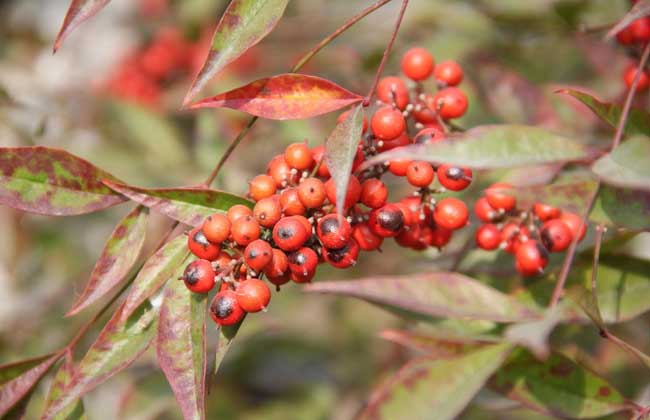
Nandina is a common woody flowering plant species in southern China, also known as red loquat, heavenly candle fruit, red wolfberry, diamond yellow, heavenly bamboo, orchid bamboo, etc. It is an evergreen small shrub of the genus Nandina in the Berberidaceae family. Because of its graceful plant form, bright fruits, and strong adaptability to the environment, it often appears in garden applications. Let's take a look at the cultivation methods of nandina below!
Nandina Growth Habits
Nandina prefers warm and humid environments, is relatively shade-tolerant, also cold-tolerant, and easy to care for. The cultivation soil requires fertile, well-drained sandy loam. It is not very strict about water requirements, being able to tolerate both moisture and drought. It relatively prefers fertilizer and can be given more phosphorus and potassium fertilizer. During the growing season, apply liquid fertilizer 1 to 2 times per month. After potted plants have been enjoyed for several years, the branches and leaves age and fall off, and they can be reshaped by pruning. Generally, leaving the main stem at about 15 cm is sufficient. Pruning in April can allow it to recover to 1 m in height by autumn, and the crown will be full.
Nandina Propagation Methods
1. Sowing: Collect seeds in autumn and sow immediately after collection. On a prepared seedbed, open furrows at a row spacing of 33 cm, about 10 cm deep, and scatter the seeds evenly. The sowing rate is 90 to 120 kg per hectare. After sowing, cover with plant ash and fine soil, and press firmly. In the second year, the seedlings grow relatively slowly, so frequent weeding, loosening of the soil, and application of dilute human and animal manure and urine are needed. Afterward, pay attention every year to intertillage, weeding, and topdressing. After 3 years of cultivation, they can be lifted from the nursery and planted out.
2. Division: In spring and autumn, dig out the clustered plants, shake off the old soil, and cut apart from the weak points where the base combines. Each division should carry 2 to 3 stems and part of the root system. At the same time, cut off some of the larger pinnately compound leaves. Plant in the ground or in pots, and after one or two years of cultivation, they can bloom and bear fruit.
Nandina Cultivation Methods
1. Soil: Nandina is suitable for slightly acidic soil, which can be prepared in a ratio of 5 parts sandy soil, 4 parts leaf mold, and 1 part manure soil. Before planting nandina, first cover the small drainage hole at the bottom of the pot with broken tile pieces. Adding a layer of charcoal is even better, as it helps drainage and sterilization.
2. Temperature: Nandina is best cared for in a semi-shaded, cool, and humid place. The suitable growth temperature is around 20°C, and the suitable temperature for flowering and fruiting is 24 to 25°C. In winter, move it into a greenhouse, generally not lower than 0°C. After Qingming Festival the following year, move it back outdoors.
3. Water: Nandina should be watered by the principle of watering when dry and stopping when wet. In dry seasons, water frequently to keep the soil moist. In summer, water once a day and spray the leaf surface 2 to 3 times to keep the leaves moist and prevent the leaf tips from scorching, which would harm its appearance. During flowering, special attention should be paid to watering so that the pot soil does not dry out, and sprinkle water on the ground to increase air humidity, so as to help increase the pollination rate. As for watering time, in summer it is best done in the morning and evening, and in winter it is best done at noon.
4. Fertilizer: During the growing season, apply thin fertilizer to nandina seedlings about once every half month. Adult nandina plants are given dry fertilizer three times a year, in May, August, and October respectively. The third application should be given when they are moved indoors for overwintering. Fertilizers such as fully fermented cake fertilizer and sesame paste residue can be used. As for the amount, the first and second applications should generally be less, and the third can be increased.
5. Humidity: Nandina prefers a humid or semi-dry climate environment and requires the relative air humidity of the growing environment to be 50 to 70%. When the relative air humidity is too low, the lower leaves yellow and fall off, and the upper leaves lose their luster. Because nandina originates from subtropical regions, it has strict requirements for winter temperature, and stops growing when the environmental temperature is below 8°C.
6. Light: Nandina has strong adaptability to light. When kept indoors, place it in a place with bright light as much as possible, such as a well-lit living room, bedroom, study, and similar places. After nandina has been kept indoors for a period (about one month), it should be moved to a shaded outdoor place (with insulation conditions in winter) for a period of care (about one month), and alternated in this way.
Nandina Cultivation Precautions
1. Potted plants should be repotted once every early spring. When repotting, remove part of the old soil and old roots, apply base fertilizer, and fill in new culture soil. At the seedling stage, it is suitable to use a mixture of 5 parts sandy soil, 4 parts leaf mold, and 1 part decomposed cake fertilizer powder. At the mature plant stage, the decomposed cake fertilizer powder can be increased to 2 parts.
2. In summer, keep nandina in a well-ventilated, shaded spot. When watering every day, spray water 1 to 2 times on the leaf surface and nearby ground to increase air humidity and lower the temperature.
3. Nandina likes moisture but fears waterlogging. During growth and development, the number of waterings should be increased or decreased according to weather changes, and each watering should not be too much. Generally, water once a day in spring and autumn, and twice a day in summer, keeping the pot soil moist. During flowering, the timing and amount of watering need to remain stable, preventing too much and too little, or alternating wet and dry, otherwise it easily causes flower and fruit drop. In winter, the plant is in a semi-dormant state, so watering should be controlled. If watered too much, it is prone to excessive growth, hindering dormancy and affecting flowering and fruiting the next year.
4. Nandina likes fertilizer. From May to September, apply dilute cake fertilizer water once every 15 to 20 days, and water with 0.2% ferrous sulfate solution about once every two months. At the seedling stage, liquid fertilizer should be applied dilute rather than concentrated (liquid fertilizer to water at 1:10). At the mature plant stage, it can be slightly more concentrated (liquid fertilizer to water at 1:8). In the rainy season, switch to dry fertilizer, once a month, about 20 to 40 grams per pot.
5. Potted nandina should be moved indoors in early to mid-October. After being brought indoors, place it where it can receive direct sunlight in the morning and evening. The room temperature only needs to be high enough that it does not freeze. Spray and wash the branches and leaves once a week with warm water to keep the leaves fresh.
6. Nandina should be pruned and shaped along with repotting, thinning out dead branches and weak slender branches from the base to encourage new branch growth. Generally, it is suitable to retain 4 to 5 branches.