How to grow verbena? Detailed explanation of cultivation methods and precautions
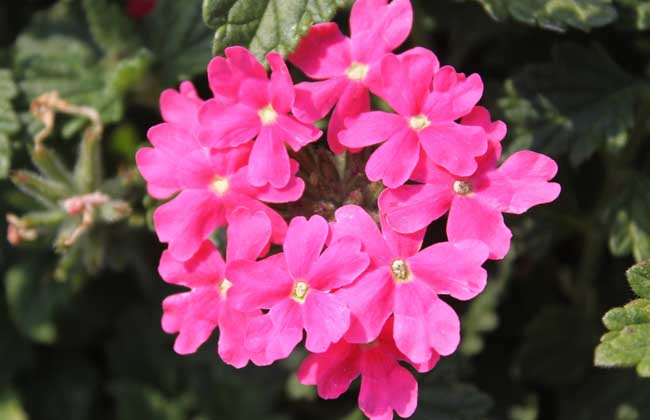
Verbena, also known as herb five-color plum, creeping verbena, creeping brocade, four-season hydrangea, etc., is a perennial herbaceous plant of the genus Verbena in the family Verbenaceae, native to South America. It can be used as flowerbed and flower border material, and can also be grown as potted flowers or planted in large areas in spaces suitable for potted ornamental display or for arranging flower terraces, garden gaps, and tree beds. Let's take a look at the cultivation methods for verbena below!
Growth habits of verbena
Verbena likes sunlight and is not tolerant of shade. It is relatively cold-tolerant, poor in shade tolerance, and not drought-tolerant. In the north, it is mostly cultivated as an annual herbaceous flower, and it can bloom normally in hot summers. It grows in sunny, loose and fertile soil, and blooms profusely. It likes a warm and humid climate, likes sun, and is not tolerant of drought. It has low requirements for soil, but in loose, fertile, and relatively moist neutral soil, it can root at each node, grow robustly, and bloom profusely. In Shanghai, in areas with a relatively warm microclimate, it can overwinter outdoors.
Propagation methods for verbena
1. Sowing: The seed germination rate of verbena is relatively low, only about 50%. Germination is very slow and uneven. At a temperature of 15-17°C, it takes 2-3 weeks to begin emerging. Sowing time is mostly in spring. After the seeds are sown, they should be placed in a dark place. Not only should the soil be kept moist, but the air should also be kept humid. When watering, do not pour directly from top to bottom. Instead, use a container such as a shallow pan filled with water 3-4 cm deep, then immerse the flowerpot in it so that water enters through the drainage hole at the bottom of the pot. After the soil is moistened, take it out, otherwise the germination rate will be even lower.
2. Cuttings: Verbena cuttings can be taken from May to June, when the temperature is around 15°C. First take slightly woody branches, cut them into 5-6 cm long sections as cuttings, and insert them into a wet sand bed. Immediately afterward, shade them. After 2-3 days, they can be exposed to a little morning and evening sunlight to promote growth. After about two weeks, new buds can emerge and roots can form. When the seedlings grow 5-6 true leaves, transplant them, and when they grow to 7-8 cm, plant them in their final position.
Cultivation methods for verbena
1. Soil: Verbena has low requirements for soil, but in loose, fertile, and relatively moist neutral soil, it can root at each node, grow robustly, and bloom profusely.
2. Watering: Because verbena has a relatively shallow root system, attention should be paid to watering in summer to prevent drought. During the maintenance period, too much or too little water is unfavorable for growth. If there is too much water, the stems become slender and leggy, and the number of flowers decreases. If there is a lack of water, the plant grows and develops poorly, and there will be premature seed setting.
3. Sunlight: Verbena needs to be maintained under shaded conditions in spring, summer, and autumn. When the temperature is relatively high, if it is placed under direct sunlight for maintenance, the leaves will noticeably become smaller, the internodes of the branches will shorten, the lower leaves will yellow and fall off, and growth will be very slow or it will enter a semi-dormant state.
4. Temperature: Verbena likes a warm climate and avoids extreme heat. In summer, when the temperature is above 34°C, growth is noticeably poor. It is not tolerant of frost and cold. In winter, when the temperature is below 4°C, it enters dormancy or dies. The most suitable growth temperature is 15-25°C. Generally, sowing is done in autumn and winter to avoid high summer temperatures.
5. Fertilizing: Like other herbaceous flowers, verbena has relatively high requirements for fertilizer and water, but the fertilizing (watering) principle of “light fertilizer applied frequently, small amounts with more applications, complete nutrition” should be followed, and after fertilizing, the leaves and flowers should be kept dry at night.
6. Pruning: Before flowering, verbena is generally pinched back twice to encourage the sprouting of more flowering branches.