Staghorn Fern: Growing Methods and Care Tips
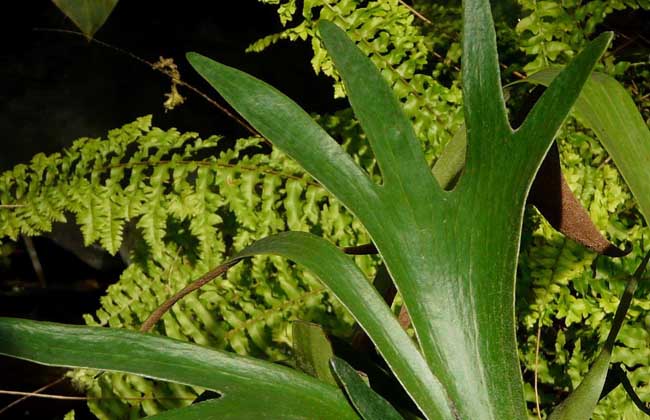
Staghorn fern, also known as elkhorn fern, deer's antler oak fern, and staghorn fern, is an epiphytic plant of the genus Platycerium in the family Polypodiaceae. It is considered the most bizarrely shaped of all ornamental ferns, unique and delightful, and is also a rare and precious gem among indoor foliage plants. It is very popular in parks, botanical gardens, shops and household windowsill decorations in Europe and America. Let's take a look at how to grow staghorn fern!
Growth Habits of Staghorn Fern
Staghorn fern prefers warm, shady and humid environments and fears direct strong light, doing best with scattered light. In winter the temperature should not drop below 5°C, and the soil should preferably be loose leaf mold. It exhibits alternation of generations, with both the sporophyte and gametophyte living independently. Its distribution area has a tropical monsoon climate, hot and rainy, with an annual average temperature of 22.6°C, a January average temperature of 15-17°C, an extreme minimum temperature not below 5°C, an extreme maximum temperature of 39.5°C, annual precipitation of about 2000 mm, and relative humidity not below 80%. It often grows epiphytically on the trunks and branches of monsoon forest trees dominated by Toona ciliata, Albizia chinensis, and Ficus benjamina, and can also grow epiphytically on tree trunks or dead standing trees at forest edges and in open woodland, using humus leaves to accumulate fallen leaves, dust and other materials as nutrients.
Division Propagation of Staghorn Fern
1. Division time: Division propagation of staghorn fern is best done in early spring (February and March) after the soil thaws. The temperature at this time is more suitable for the recovery of the staghorn fern's root system and does not affect its own absorption of nutrients. At the same time, when the staghorn fern's nutrient leaves grow too densely, division propagation can be combined with adjustment, which is beneficial to the growth and development of new sporophytes.
2. Division method: Take the mother plant out of the flower pot, shake off excess potting soil, separate the tangled root system as much as possible, and cut it open into two or more plants with a sharp knife. Each divided plant must have a considerable root system. Each of the divided young plants is a new individual.
3. Division management: After the divisions are potted, water the roots or give one thorough watering. Because its root system has been greatly damaged and its water absorption capacity is very weak, it takes about 3-4 weeks to recover and sprout new roots. Therefore, within 3-4 weeks after division, watering should be controlled to avoid root rot. However, the transpiration of its leaves is not affected, so to maintain the water balance of the leaves, the leaf surface needs to be misted 1-3 times a day. Do not apply fertilizer during this period either. After division, if sunlight is too strong, keep it in a shade shed for care.
Growing Methods for Staghorn Fern
1. Soil preparation: For growing staghorn fern, use imported peat of 5-40 mm grade that is loose and has good drainage and aeration. Crush the peat and mix it evenly with water. The standard for adding water is that after mixing, when you tightly squeeze a handful of peat, water seeps out from between your fingers. Then plant in cups. A 9 cm pot uses about 250 ml of peat per pot, and one 300-liter bag of imported peat can fill about 1200 cups.
2. Potting and planting: Old pots that are reused must be soaked in a 1000-fold potassium permanganate solution for more than half an hour, then rinsed with clean water and dried for later use. Small pots are generally planted in pots with a diameter of 12 cm. When planting, first place about 2 cm of substrate at the bottom of the cup, then move the screened seedlings into the cup. Young seedlings should not be planted too deep; it is best to keep them level with the base of the plant. The substrate should be moderately firm, filled to 9/10 of the cup, with 2 plants per pot.
3. Fertilizer and water management: Staghorn fern likes a humid climate environment and requires the relative air humidity of the growing environment to be 60-75%. During the vigorous growth period in summer, mist more water to maintain a high-humidity environment. Whether grown in pots or hanging baskets, place them in partial shade and spray fertilizer water once every ten days, and apply 1-2 times a month of dilute cake fertilizer water or a mixed nitrogen-potassium chemical fertilizer. In winter, control the amount of watering.
4. Temperature control: The optimum growth temperature for staghorn fern is 18-30°C. During the day it can also grow well in a 33-35°C environment. It fears cold and frost, and the overwintering temperature needs to be kept above 10°C. When the winter temperature drops below 4°C, it enters a dormant state. If the ambient temperature approaches 0°C, it will die from frostbite.
5. Light management: Staghorn fern fears strong light, so avoid direct strong light or dry wind. It grows well near a bright indoor window. When cultivated in a greenhouse, 50-70% of sunlight should be shaded in summer, and about 30% in winter. Although staghorn fern also has a strong ability to adapt to weak light, when light is insufficient, growth is slow and the plant becomes weak and spindly.
6. Pest and disease control: Staghorn fern commonly suffers from leaf spot disease harming the spore leaves, which can be controlled by spraying a 600-fold solution of 65% zineb wettable powder. When ventilation is poor, scale insects and whiteflies harm the spore leaves or nutrient leaves. When few in number, they can be picked off by hand or killed by spraying a 1000-fold solution of 40% omethoate emulsifiable concentrate. Some staghorn ferns are more susceptible to fungal or bacterial diseases, so attention should be paid to adjusting the ventilation environment and not overwatering.