How to Propagate Delosperma echinatum? A Detailed Guide to Common Methods
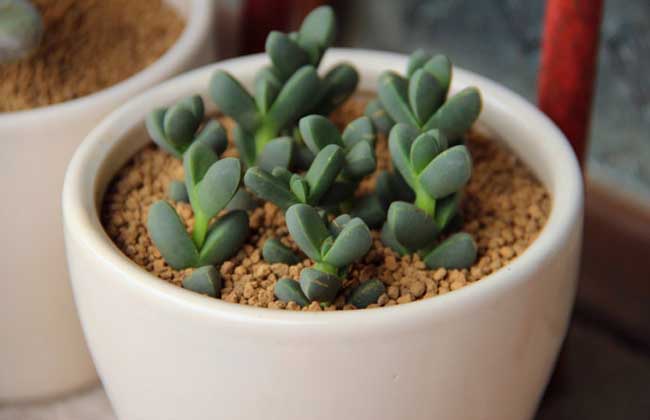
Delosperma echinatum, also known as 'Fenbo Ju', is a succulent plant of the genus Delosperma in the family Aizoaceae, native to southwestern South Africa. It prefers a warm, dry environment with plenty of sunlight, is afraid of cold, tolerates drought, fears high temperatures, and requires fertile, loose sandy loam soil. In winter, the temperature should not be lower than 15°C. Its leaf shape and color are quite attractive, giving it high ornamental value. Now let's take a look at how to propagate Delosperma echinatum!
How to Propagate Delosperma echinatum?
Propagation of Delosperma echinatum is mainly done by cuttings. After normal growth, it will gradually grow taller and branch out. Select relatively tall, older woody stems; new branches are too tender and not easy to root from cuttings. After cutting off old branches, let them dry for a few days, then they can be inserted directly into the growing medium or straight into the soil. They may not grow roots throughout the entire winter and only begin to grow in spring. Water only when completely dry, so as long as the soil is slightly loose, you can propagate by cuttings. It is not very demanding about soil. At the same time, Delosperma echinatum can also be propagated by sowing seeds.
How to Grow Delosperma echinatum?
1. Soil: For growing Delosperma echinatum, loose, breathable sandy soil is best. Of course, it does not have to be sandy soil; the same soil mix as for other succulents will work.
2. Environment: Delosperma echinatum should be kept in an environment with plenty of sunlight. If newly planted, it can be placed in a cool, ventilated spot to recover.
3. Watering: Delosperma echinatum does not need soil kept moist long-term; the soil should be kept on the dry side, so be restrained when watering. It tolerates drought and is not easy to kill by drought, but is prone to root rot from water accumulation.
4. Pests and diseases: When potted Delosperma echinatum is kept in conditions that are too humid, root-knot nematode disease often occurs, which can be controlled with 3% carbofuran granules. For pest damage, there are mealybugs, which can be sprayed with a 1500-fold dilution of 55% fenitrothion emulsifiable concentrate.
Notes on Growing Delosperma echinatum
1. If Delosperma echinatum is potted, the soil in the pot needs to drain and allow airflow. It must not hold standing water. The soil should not be too acidic; neutral is fine. The soil should not have too much humus; ordinary soil will do. The size of the pot depends on the length and size of its roots.
2. Delosperma echinatum does not like being wet nor dry. It is generally recommended not to water until the soil is dry. In summer, maintain a certain humidity and you can spray more water on the leaves.
3. For the growth of Delosperma echinatum, it is generally recommended to use partial light. In summer, because the temperature is too high, it is recommended to place it in a cool spot and keep the soil from drying out completely. In spring and autumn, growth is vigorous, so appropriate light can be given.
4. During the growing season of Delosperma echinatum, it is generally recommended to fertilize in spring and autumn, using a dilute fertilizer, once every half a month or once a month.
5. The recommended growing temperature for Delosperma echinatum is around 20°C. If it is below 15°C, it will not grow, but if it is below 5°C, it will stop growing and may even develop wrinkles. In summer, place it in a ventilated, cool spot as much as possible.