How to grow lily of the valley? These cultivation methods and precautions are worth knowing
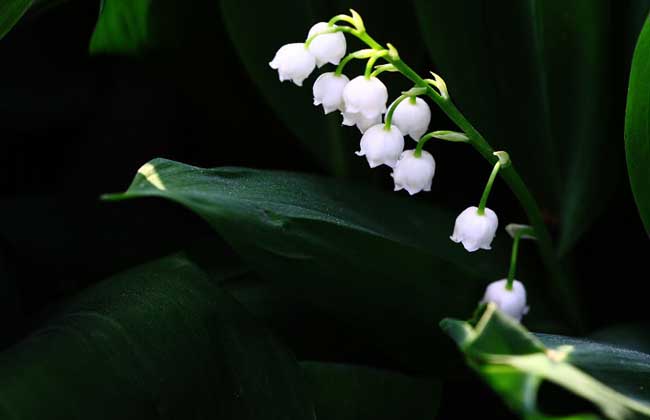
Lily of the valley is an excellent potted ornamental flower, a perennial herbaceous plant of the genus Convallaria in the family Liliaceae. The plant is short, elegant and fresh, and pleasantly fragrant. It is usually used in flower beds and flower borders, and can also be used as ground cover. Its leaves are often used as cut flower material. There are varieties with milky white, pink and variegated leaves. In autumn, its red berries are delicate and charming, very alluring. Let us take a look at the cultivation methods and precautions for lily of the valley!
Growth habits of lily of the valley
Lily of the valley prefers semi-shade and moist environments, likes coolness, avoids heat and dryness, is hardy against severe cold, and requires humus-rich loam and sandy loam. However, lily of the valley and lilac cannot be placed together, otherwise the lilac flowers will quickly wilt; if the lily of the valley is moved away, the lilac will recover. It also cannot be placed together with narcissus, otherwise both will suffer.
Propagation methods of lily of the valley
Lily of the valley is usually propagated by division, either in spring or autumn, with November being the best. Its rhizome has buds of different sizes. After the aboveground parts wither in autumn, dig up the rhizome, cut each terminal bud with a section of rhizome, and plant it to form a new plant. If breeding or introducing from distant places, seed propagation can be used, sowing in autumn and germinating the following spring.
Cultivation methods of lily of the valley
1. Soil: Lily of the valley needs loose, fertile and well-drained soil.
2. Watering: Water lily of the valley 1-2 times a day, and supplement water during the growing period according to weather conditions and soil conditions.
3. Fertilizing: Apply dilute cake fertilizer water or compound liquid fertilizer once every 10-15 days, and timely cultivate and weed after each watering and fertilizing.
4. Light: After potting, place lily of the valley in a sheltered spot, water appropriately and place in a dark place. After 10-15 days, gradually move it to a light-facing place.
5. Temperature: Keep the cultivation temperature of lily of the valley at 12-14°C. After 10-15 days, move it to sunlight for care, and raise the room temperature to 20-22°C.
6. Pruning: After lily of the valley blooms, it is advisable to cut off the stems and branches early so that nutrients are concentrated and supplied to the rhizome.
7. Repotting: After new buds sprout in early spring, remove the covering, loosen the soil, and repot once a year.
Precautions for growing lily of the valley
1. Apply fully fermented topdressing once each in early spring and late autumn. After 10-15 days, gradually move it to a light-facing place, raise the room temperature to 20°C and the bottom temperature to 22°C, and increase watering and topdressing. After 3 weeks, it can bloom.
2. In management, apply sufficient base fertilizer. After sprouting in spring, water with diluted decomposed cake fertilizer once every 7-10 days. When flower stalks appear, after flowers fade, and after autumn, apply liquid fertilizer once each.
3. Lily of the valley likes a moist soil environment and cannot tolerate drought. Frequently spray water around the environment to maintain relatively high air humidity. The water used is best soft water. After planting, water thoroughly, and pay attention to watering during drought.
4. In cultivation areas, no pests or diseases have been found in lily of the valley, so chemical control is generally not needed. If brown spot disease occurs, spray with 75% chlorothalonil wettable powder at 700 times dilution.
5. Greenhouse cultivation of lily of the valley is prone to pest and disease invasion. Commonly seen are fungal diseases such as stem rot, anthracnose and leaf spot. Regularly use copper-based fungicides for prevention and control, and strictly prohibit collecting seeds from diseased plants for propagation. Once diseased plants are found, they must be immediately destroyed and removed to prevent spread.