How to prevent and control southern blight in orchids? These methods you need to know
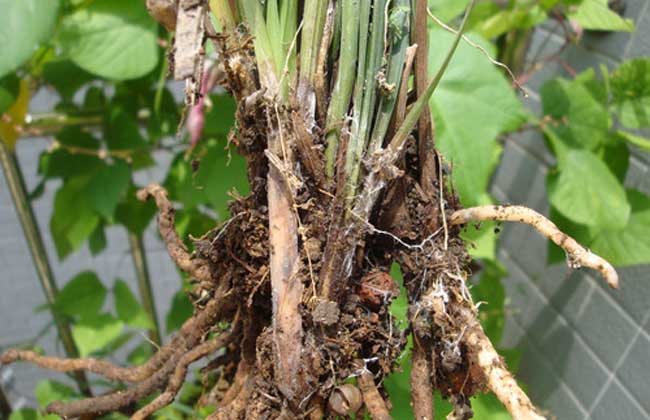
Southern blight in orchids is one of the main diseases of orchids, also known as white silk disease, sclerotium disease, etc. Its harm is second only to anthracnose, but once it occurs, the damage and losses caused will far exceed those of anthracnose. It usually begins infecting in April to May, with the peak incidence from June to August. The disease develops rapidly, causing the affected orchid plants to rot, wither and die. Let's take a look at the prevention and control methods for southern blight in orchids!
Symptoms
Southern blight starts from the stem base of the orchid plant near the ground, initially showing yellow to light brown water-soaked lesions, then turning brown to dark brown and rotting, and spreading on the rhizosphere soil surface and stem base, destroying the stem and infecting young leaves and roots, with white mycelium produced on leaf sheaths and root masses. The affected parts become water-soaked, rot and soften, turn black, until the leaves wither. The pathogen spreads to the pseudobulbs, and the sclerotia change from white to reddish brown to tea brown and necrotic. In severe cases, the entire leaf cluster of the plant dies.
Disease characteristics
The pathogen of southern blight in orchids is a fungus of the Deuteromycotina. The pathogen overwinters as sclerotia in soil, fertilizer, and undecomposed residues. In areas with higher winter temperatures, mycelium can also overwinter on undecomposed residues. The sclerotia germinate the following year, spread in the soil, and invade through the base of orchid leaves. The sclerotia have strong resistance to adverse environments and can survive in soil for several years, spreading through flowing water, irrigation water, rain splashing, and fertilization. The disease is most severe in acidic soil, and high temperature and humid weather easily induce the disease. Infection begins in April to May, with the peak incidence from June to August. The disease develops rapidly, causing the affected orchid plants to rot, wither and die.
Prevention and control methods
1. Southern blight in orchids is prone to occur when the substrate is acidic (pH less than 5.3), so mixing plant ash at a volume ratio of 1/10 into the substrate, or applying 0.3% lime water to raise the pH to around 6.5, can reduce the occurrence of southern blight, with obvious effects.
2. Disinfect the orchid substrate soil with 0.2% quintozene 500-fold solution or 50% carbendazim wettable powder 600-fold solution. You can also spray the rhizosphere and soil with quintozene 500-fold solution or 70% thiophanate-methyl wettable powder 800-fold solution, or mix 50 g of quintozene powder with 4 to 5 kg of semi-dry moist fine sandy soil and sprinkle it at the root-stem area of diseased plants, which can inhibit the spread and transmission of the disease.
3. In the rainy season from May to June in the south, soil moisture is relatively high, and southern blight is prone to occur on the pot surface. The plants should be quickly moved out of the orchid growing area for “isolation”, and the substrate should be dug open, the substrate with mycelium removed, and the diseased roots cut off. Spray with potassium permanganate solution 1000-fold for disinfection. You can also spray the root system and wounds with 70% thiophanate-methyl 1500-fold solution, and sprinkle fresh plant ash around the orchid roots, then cover with substrate to protect the roots. Water only after 2 to 3 days. If the substrate is wet, watering can be postponed for 5 to 7 days. The control effect is good.
4. When southern blight occurs in orchids, use medical chloramphenicol injection diluted 2000-fold in water and drench the diseased plants once a day for 3 consecutive times. Once the disease occurs, the diseased leaves should be cut off, ventilation conditions improved, and the whole orchid plant soaked in 10% copper sulfate solution for disinfection. Nearby orchid plants should also be comprehensively sprayed, wetting the base and pot surface, once a day for 2 consecutive times, which can control the disease with good prevention and control effects.
5. After new orchid shoots grow out of the soil surface, spray with 0.05% chloramphenicol once a week for 2 to 3 consecutive times. If the potting soil is dry, this medicine can be applied as a drench to prevent bacterial infection. You can also apply or spray aspirin 1500-fold solution, which can enhance the immunity of orchid plants and prevent pathogen invasion and spread.
6. During the new shoot elongation period and leaf expansion period of orchids, you can choose medical penicillin, streptomycin, chloramphenicol, or a penicillin mixture diluted to 2000-fold solution, drench the diseased plants, and spray comprehensively, once every 3 to 4 days for 2 consecutive times. The prevention and control effect is good.
7. After orchids develop the disease, spray 50% benomyl wettable powder 1000-fold, or 50% carbendazim wettable powder 500-fold, or 50% thiophanate wettable powder 500-fold solution, or 70% chlorothalonil wettable powder 800-fold solution, once every 7 to 10 days for 2 to 3 consecutive times. The prevention and control effect is good.
8. After orchids develop the disease, spray for control before and after cloudy or rainy weather. You can use 50% procymidone powder 500-fold, or 50% vinclozolin powder 500-fold solution, dufulin 500 to 600-fold solution, or 5% jinggangmycin aqueous solution 300-fold, spraying the stems, leaves, and pot surface. The prevention and control effect is significant.