How to Grow and Care for Kalanchoe luciae (Flapjack Kalanchoe)
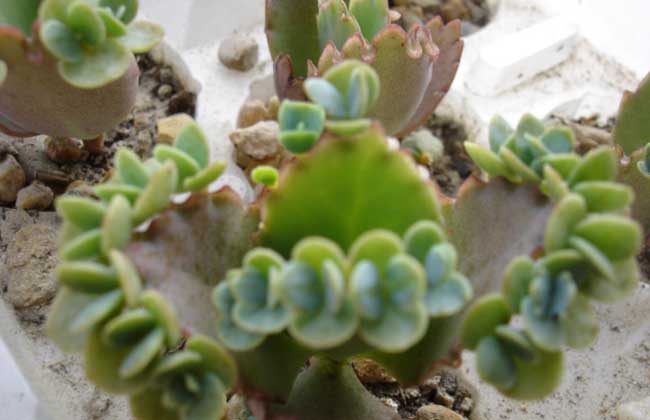
The broad-leafed Kalanchoe, also known as large-leaved Kalanchoe, is a succulent in the Crassulaceae family, genus Kalanchoe. Because of its extremely strong reproductive ability, people call it the "phoenix." Its place of origin is the tropical region of Madagascar island in Africa. As a potted plant, it is excellent material for windowsill greening, and it also adds elegance when used to accent a study or guest room. Let us take a look below at how to grow the broad-leafed Kalanchoe.
Growth Habits of the Broad-Leafed Kalanchoe
The broad-leafed Kalanchoe originated in Africa and is cultivated throughout our country; some have escaped and become wild. It likes a sunny, warm, and humid environment, is very cold-tolerant, and is suitable for growing in well-drained acidic soil. In humid air, fine aerial fibrous roots can grow on both the upper and lower surfaces, and these small plantlets are evenly arranged along the edges of the large leaves; they fall at a touch and will take root where they land.
Propagation Methods for the Broad-Leafed Kalanchoe
The broad-leafed Kalanchoe is commonly propagated by cuttings, adventitious buds, and sowing. For cuttings, May to June is best; place healthy leaves flat on a sand bed, press them tightly against the sand, and keep them moist. One week after insertion, small plantlets can grow from the notches at the leaf margins, and after they grow, cut them off and move them into pots. For stem cuttings, cut 8-10 cm long terminal branches, let them dry slightly, then insert them into a sand bed; rooting begins after 1 week, and they can be potted after 2 weeks. Propagation by adventitious buds is even simpler: peel off the larger adventitious buds growing along the leaf margins and pot them directly. The seeds of the broad-leafed Kalanchoe are very small; after sowing, do not cover them with soil. They germinate about 12-15 days after sowing, with a high germination rate.
How do you grow a broad-leafed Kalanchoe?
1. Soil: The broad-leafed Kalanchoe is suitable for growing in well-drained acidic soil. For potting, a mix of 3 parts leaf mold and 1 part sandy soil can be used as the substrate.
2. Pruning: For newly potted young plants, pinch back promptly to promote branching. For older plants, cut them back to stimulate new branch growth.
3. Repotting: When stems and leaves grow too tall, pinch back to lower the plant shape and encourage more branches. Repot and renew the soil every spring to maintain a graceful plant form.
4. Watering: During the growing season, water a little more to keep the potting soil moist, but do not let water accumulate. In autumn and winter, reduce watering, and in winter strictly control watering.
5. Fertilizing: Fertilizing does not need to be too frequent, otherwise it causes excessive growth and may cause the plant to rot. Applying fertilizer 1-2 times a month during the growing season is enough.
6. Disease prevention: For gray mold and powdery mildew, spray with a 1000-fold dilution of 70% thiophanate-methyl wettable powder. For scale insects and aphids, spray with a 1000-fold dilution of 40% dimethoate emulsifiable concentrate.