How to Grow a Ponytail Palm (Beaucarnea recurvata)? Detailed Guide to Care Methods and Precautions
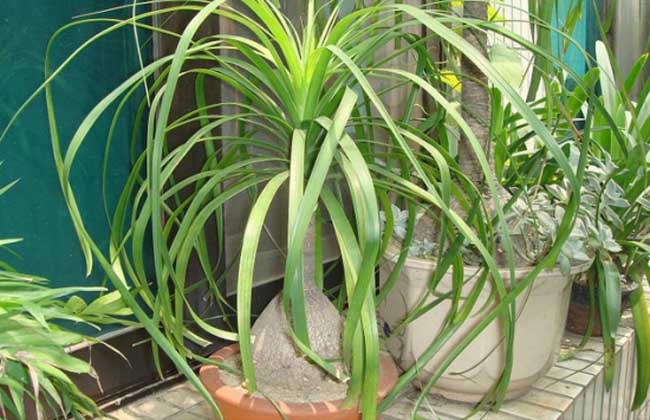
The ponytail palm, also known as the elephant-foot tree, is a tree-like succulent plant in the genus Beaucarnea of the family Ruscaceae (Asparagaceae), native to the hot, dry regions of Mexico. Grown in pots, it generally reaches 0.5 to 1.0 m in height. Because of its oddly shaped stem, with a base that is especially swollen and closely resembling a large wine bottle, plus bark that cracks into small squares and tufted, gracefully arching leaves, it has become a very unusual ornamental plant. Let us take a look at how to grow a ponytail palm!
The Ornamental Value of the Ponytail Palm
As a foliage plant grown for both its stem and leaves, the ponytail palm brings a novel and distinctive feel when used to decorate living rooms and studies, or to adorn hotels and meeting venues. It can be planted in a range of sizes for indoor decoration: small plants in exquisite pots placed on a desk or tabletop look elegant and refined, while medium and large potted plants used to furnish halls, conference rooms, reception rooms, hotels, shopping malls and similar spaces are richly tropical in character and highly rewarding to admire.
The Growth Habits of the Ponytail Palm
The ponytail palm is native to eastern Mexico and was discovered by the French in 1870. It is now widely grown around the world as an ornamental plant, extensively cultivated in the Yangtze River basin of China, and mostly grown in pots in the north. It likes warm, humid conditions and full sunlight, and is relatively drought-tolerant and cold-tolerant. The suitable temperature for growth is 16 to 28°C, and the wintering temperature is 0°C. It prefers fertile soil and grows best in sandy loam that drains and aerates well and is rich in humus.
How to Propagate the Ponytail Palm
1. Sowing: Propagation of the ponytail palm by seed is generally done in late autumn, early spring or winter. After sowing, seeds germinate in about 20 to 25 days. When the seedlings are 4 to 5 cm tall, pot them up. Seedlings grow slowly and can be displayed for viewing in the second year. After sowing, if a cold wave or low temperatures occur, the flowerpot can be wrapped in plastic film to help keep it warm and moist. Once the seedlings emerge, remove the film promptly, and let the seedlings receive sunlight before 9:30 every morning or after 3:30 in the afternoon; otherwise the ponytail palm seedlings will grow very weak and spindly.
2. Cuttings: Ponytail palm cuttings are usually taken as softwood cuttings from current-year branches in late spring and early autumn, or as hardwood cuttings from last year's branches in early spring. For softwood cuttings, when the ponytail palm is growing vigorously from late spring to early autumn, select robust current-year ponytail palm branches as cuttings. After cutting the branches off, choose the sturdy parts and cut them into sections 5 to 15 cm long, each section bearing more than 3 leaf nodes.
How to Grow a Ponytail Palm
1. Soil: The ponytail palm likes loose sandy soil and leaf mold, and tolerates drought and poor soil. For potting, choose soil with good drainage. You can mix 3 parts fertile garden soil with 1 part coal cinder, then add a small amount of soybean cake or chicken manure as a base fertilizer.
2. Sunlight: The ponytail palm likes ample sunlight but also has a certain tolerance for shade. If light is insufficient, the leaves grow thin and weak and the plant grows less robustly. In spring and autumn, place it in a spot with plenty of light; in summer, shade it appropriately, otherwise the leaf tips will scorch and the leaves will turn yellow. To prevent the plant from growing lopsided, rotate the pot 180° every 4 to 6 weeks.
3. Humidity: The ponytail palm likes a humid climate, with a relative air humidity of 70 to 80% during growth. If humidity is too low, the lower leaves will turn yellow and drop, and the upper leaves will lose their gloss.
4. Water: Because its stem can store water for use when water is scarce, the ponytail palm is especially drought-tolerant and can still grow normally without watering for half a year. When watering, aim for moist potting soil and follow the principle of preferring dry over wet. Never let water accumulate in the pot, otherwise the fleshy roots and stem rot easily. After late autumn, as temperatures drop, reduce watering to increase the plant's cold resistance.
5. Fertilizer: Spring, summer and autumn are the peak growing seasons for the ponytail palm. Apply liquid fertilizer or compound fertilizer once every 2 to 3 weeks to encourage the base to swell. When fertilizing, be sure to increase phosphorus and potassium; the ratio of nitrogen, phosphorus and potassium is 5:10:5. Stop fertilizing in winter.
6. Pests: The ponytail palm is sometimes harmed by leaf spot disease; spray Bordeaux mixture (1:1:100) once every half month. For damage by mirid bugs, whiteflies and scale insects, spray with a 1500-fold dilution of 40% omethoate emulsifiable concentrate.
7. Pruning: In winter, cut off the ponytail palm's weak, diseased, pest-damaged, dead and overly dense branches.