Yucca can grow several meters tall, and its pure white flowers are especially beautiful
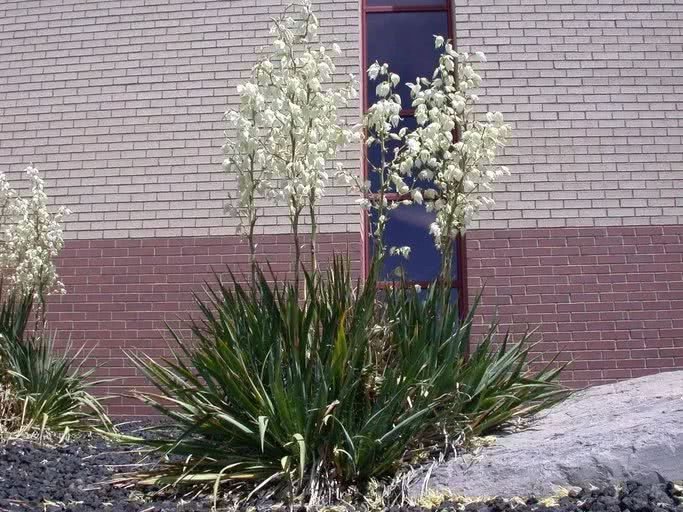
The perennial plant introduced below is the yucca, a perennial shrub that can grow very tall. There are more than 40 varieties, and it belongs to the subfamily Agavoideae. Its characteristic is that it is covered in sword-shaped leaves and can produce strings of white flowers, with each small flower shaped like a rosebud.
There are more than 40 varieties. Although they are very suitable for growing in southern regions, a very small number of varieties are also suitable for growing in the north. Most yuccas prefer a warm and humid environment year-round. As a child, I often saw yuccas growing beside rural cemeteries. When the flowers bloomed, they were covered in strings of white flowers, forming a beautiful sight.
Although they are very common in Mexico and the southern United States, they prefer a warm and dry environment year-round and can grow well in desert and arid regions.
The picture above shows the fruit of the yucca
When caring for yuccas, be sure to provide loose, well-draining sandy soil. Avoid planting them in heavy clay soil, and even more so in low-lying areas prone to water accumulation. During care, you only need to water thoroughly once at planting time; afterward, it is enough to let them absorb rainwater on their own.
In a warm and dry environment year-round, although it can produce charming white flowers, its flowers grow in strings, and the entire flower stalk is 2-3 m tall, very spectacular.
Although its ability to adapt to the environment is excellent, it can grow in coastal sand, grasslands, deserts, rocky areas and various desert climates, because it has a very thick waxy skin that can prevent water evaporation. They store water in their sturdy roots, and some yuccas store water in their thick, fleshy leaves.
Some yucca varieties continuously drop leaves during drought, which prevents water from evaporating too quickly; some yuccas have lower leaves that keep withering as the rhizome keeps growing taller. Those withered leaves can help appropriately shade it from sunlight, and the leaves can also guide dew and rainwater to the roots.
Yuccas are suitable for planting in yards and various open environments. Some varieties are also edible, including their seeds, flowers and stems. In some places in Mexico, yucca petals are picked for food, while the stems are usually extremely bitter.