How do you care for carnivorous plants? Beginners can grow them well on a windowsill or balcony with these tips
Carnivorous plants are among the most magical plants in the world, easily bringing to mind man-eating flowers. They produce traps to catch insects. Of course, don't imagine that keeping a few pots of carnivorous plants at home will wipe out all the mosquitoes in your house. Carnivorous plants secrete special fluids to attract insects, but they themselves have no effect of repelling bugs.
The most well-known is Nepenthes (tropical pitcher plant). At the tip of each leaf it grows a toilet-shaped pitcher containing special fluids that break down very small insects.
The image above is Nepenthes
The vast majority of carnivorous plants live in tropical rainforests. Some grow in swamps, while others grow in environments with plenty of light. Whichever type of carnivorous plant it is, you need to maintain a warm and humid environment year-round. The growing spot should be well ventilated and let light through, avoiding a stuffy environment, and certainly not an overly enclosed space.
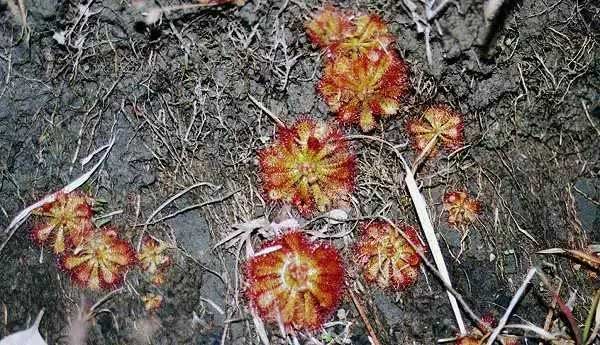
The bright and fresh sundew
Carnivorous plants must not let their soil dry out during the growing season. However, they are generally grown in sphagnum moss, also called peat moss. The sphagnum moss you buy is usually completely dry and needs to be soaked in clean water before use. It is recommended to soak it in boiling water for 5-10 minutes, which also has a certain sterilizing and disinfecting effect. After it is fully soaked, it can be used to grow carnivorous plants. There is no need to specially prepare anything else; just a container with good drainage plus some sphagnum moss is enough.
Carnivorous plants are especially suitable for placing on a balcony or a well-ventilated windowsill. Most of them are fairly small and suitable for pot cultivation. You can even plant several carnivorous plants with similar growth habits together to create an attractive combined potted display.
For carnivorous plants grown indoors, besides keeping the sphagnum moss moist, you also need to pay attention to air circulation. If they are light-loving carnivorous plants, give them more light, such as the common Venus flytrap and sundew.
The image above is a butterwort
If your home does not get much light, then you can grow some slightly shade-tolerant carnivorous plants, such as the common butterwort or bladderwort.
There are a great many varieties of carnivorous plants, and their forms and sizes all differ. You can choose varieties suitable for your own cultivation. For containers, you can choose ceramic or plastic pots with relatively large drainage holes. The growing spot should preferably have good ventilation.
The image above is a Venus flytrap
The most critical part of growing carnivorous plants is the proper use of clean water. Carnivorous plants should be grown with soft water, including common rainwater, well water, and purified water. Tap water generally needs to sit for two or three days before use, and you should avoid water containing fluorine and chlorine compounds.
In caring for carnivorous plants, besides maintaining moisture, the other key points are ventilation and keeping a warm environment year-round, avoiding freezing. During care, avoid frequent fertilizing. They are very sensitive to fertilizer and are themselves extremely tolerant of poor soil, with very little need for fertilizer.
Normally, when grown at home, do not specially catch mosquitoes to feed them. Only adult carnivorous plants need a tiny bit of insects occasionally. Their ability to digest insects is not very good, so do not fantasize about growing a few more pots to catch mosquitoes. The concentration of fertilizer given to carnivorous plants must not be too high; the concentration is generally above 1/5000.