How do you grow money tree (Zamioculcas zamiifolia) so it thrives?
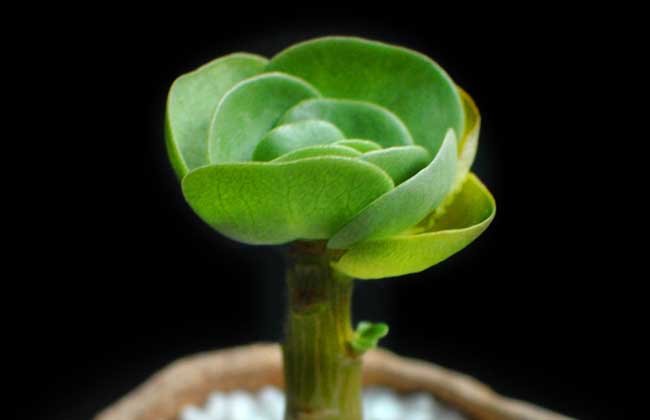
The money tree is a fine indoor foliage plant that has become popular in recent years. Also known as cloud wood, Jincheng wood, coin tree, Zamioculcas zamiifolia, and dragon-phoenix wood, it is a perennial evergreen herb of the genus Portulaca in the family Portulacaceae. It gets its name because its thick, fleshy leaves are neatly arranged and closely resemble copper coins. Its leaf shape and color are quite beautiful and it has a certain ornamental value. Let us take a look below at how to grow the money tree well!
Growth habits of the money tree
The money tree prefers a sunny, warm, and dry environment. It is drought-tolerant and averse to damp shade, cold, and waterlogged potting soil. Although it can grow normally under semi-shade and scattered light, the leaf color will fade and the internodes will stretch out, making the money tree's leaves loose and not compact, which affects its ornamental value. It is sensitive to high temperatures; when the summer temperature is too high, watering should be reduced, otherwise it may cause leaf shrinkage and leaf drop. In addition, pay attention to keeping it warm in winter, keeping it above 10°C as much as possible, otherwise it is very easy to freeze to death. It is suitable for growing at 20°C to 32°C. During the growing season, watering should follow "do not water until dry, and water thoroughly when you do".
Propagation methods for the money tree
1. Division: In April, when the outdoor temperature reaches above 18°C, take the large money tree plant out of its pot, shake off most of the old soil, pull it apart at the weak points where the tubers join, apply sulfur powder or plant ash to the wounds, and pot them separately. Note that when planting, do not bury them too deep; burying the top of the tuber 1.5-2 cm below the soil surface is enough.
2. Cuttings: The cuttings can use a single small leaf, a section of leaf rachis with 2 leaves, or a separate section of leaf rachis. In terms of rooting results, cuttings made from a leaf rachis with leaves root faster, sprout more, and more easily form larger tubers. Insert a single leaf into a mixed substrate of river sand and vermiculite. After 10-14 days, a small rooted bulbous stem will form at the base of the leaf. After 2-3 months of cultivation, it can grow into a small plant, but under normal circumstances the seedling survival rate is not high.
How to grow the money tree well?
1. Soil: The basic requirement of the money tree for the growing medium is good permeability. The basic requirement of the growing medium is good permeability. The growing medium is mostly peat, coarse sand, or washed coal cinders mixed with a small amount of garden soil, and its pH should be adjusted to between 6 and 6.5, in a slightly acidic state.
2. Temperature: When the summer temperature reaches above 35°C, the money tree grows poorly. Measures such as adding a black shade net and spraying water around the surrounding environment should be used to lower the temperature. In winter, it is best to maintain a greenhouse temperature above 10°C. If the room temperature is below 5°C, the plant is prone to cold damage and its survival may be seriously endangered. In late autumn and early winter, when the temperature drops below 8°C, it should be moved promptly to a well-lit indoor location. Throughout the overwintering period, the temperature should be kept between 8-10°C.
3. Light: The money tree likes light and also has fairly strong shade tolerance. It should be given an environment with good sunlight but also a certain degree of shade. Avoid direct strong light, especially avoiding the scorching sun after long rain and sudden clearing in late spring and early summer, and the unobstructed strong light baking for 5-6 hours around noon in summer, otherwise the newly emerging tender leaves are very easily sunburned.
4. Water: In productive cultivation of potted money trees, for plants placed in a greenhouse, when the room temperature reaches above 33°C, the plant should be sprayed with water once a day. Because this plant has strong drought tolerance, it is best to keep the potting soil slightly moist and on the dry side, but occasional excessive watering and fertilizing will not necessarily cause root rot. In winter, pay attention to spraying water on the leaf surfaces and the surrounding environment so that the relative air humidity reaches above 50%.
5. Fertilizer: The money tree is relatively fond of fertilizer. In addition to adding an appropriate amount of decomposed cake fertilizer or multi-element slow-release compound fertilizer to the growing medium, during the growing season it can be watered monthly with 2-3 applications of a mixed solution of 0.2% urea plus 0.1% monopotassium phosphate. A balanced fertilizer 20-10-20 can also be applied at a concentration of 200-250 ppm in combination with calcium nitrate. After the temperature drops below 15°C, all forms of topdressing should be stopped to avoid fertilizer damage to the roots under low-temperature conditions.
6. Repotting: The money tree should be repotted once every two years, in late spring and early summer. The potting soil should be a well-drained, breathable, slightly acidic soil. Peat, coarse sand or perlite, and furnace slag plus a small amount of garden soil and slow-release fertilizer can be used. Because its tubers are large and its root system is well developed, it is suitable for planting in a deeper flower pot. Place more stones, tile pieces, and similar items at the bottom of the pot to facilitate drainage. When planting, part of the tuber can be exposed above the soil surface, and a layer of expanded clay pellets or small stones can be spread on the pot surface to increase the ornamental effect.
Disease and pest control for the money tree
1. Freezing damage
[Harm] When the winter temperature drops below 5°C, plus damp potting soil, the plant's tender leaves are prone to collapse from freezing cold, and in severe cases the tubers may rot, making it very difficult to restore vitality.
[Control] In productive cultivation, during the overwintering period the greenhouse temperature should be maintained at no lower than 10°C, and the potting soil should be kept in a slightly dry state.
2. Sunburn
[Harm] In hot summer, or in clear weather after long rain and sudden clearing, or for potted plants that have been kept indoors for a long time and have just been moved outdoors for restorative care, direct exposure to sunlight can easily sunburn the tender fleshy leaves, causing part of the leaf to lose green and turn white, or the entire leaf to be sunburned, with the necrotic part later turning brown and black.
[Control] Avoid direct strong light, especially avoiding the scorching sun after long rain and sudden clearing in late spring and early summer, and the unobstructed strong light baking for 5-6 hours around noon in summer.
3. Brown spot disease
[Harm] Brown spot disease mostly occurs on the leaves. The lesions are nearly round, grayish brown to yellowish brown, with a slightly darker edge. This disease is prone to occur under conditions of high temperature and high humidity and poor ventilation. Control method: when a small number of diseased leaves are found, remove and destroy them promptly. At the early stage of the disease, use 50% carbendazim wettable powder at 600 times dilution or 40% chlorothalonil suspension at 500 times dilution, spraying the leaves once every 10 days, for 3-4 consecutive times, and the control effect is relatively good.
[Control] After summer begins, promptly move the plant to a semi-shaded environment. In late spring and early summer after long rain and sudden clearing, shade the potted plant as early as possible.
4. Scale insects
[Harm] In an environment with poor ventilation and insufficient light, the leaves of the money tree are easily damaged by the piercing and sucking of scale insects.
[Control] In productive cultivation, during the peak hatching period of the nymphs, spray 20% buprofezin wettable powder at 1000 times dilution, and the insecticidal effect is good.