How to Grow Coreopsis? Detailed Growing Methods and Tips
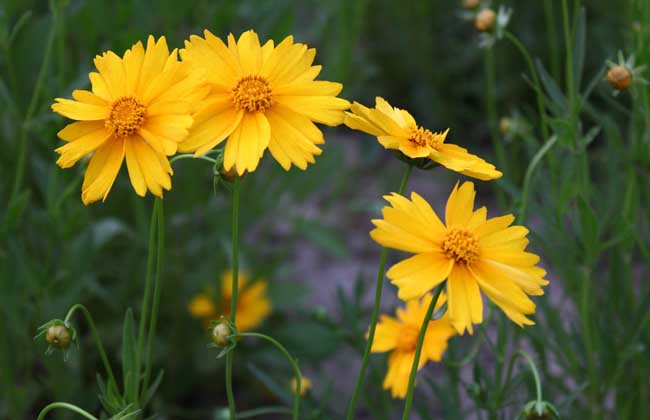
Coreopsis, also known as little cosmos, money chrysanthemum, peacock chrysanthemum and so on, is a perennial herbaceous plant of the genus Coreopsis in the Asteraceae family. It is native to the southern United States and is one of the early introduced species. It once broke out on a small scale in some areas such as Henan, and it is extremely effective as a covering material in roof greening and can also be used as a flower border material. Let us take a look at the growing methods for coreopsis below!
Growth Habits of Coreopsis
Coreopsis is native to the southern United States and prefers a warm, humid environment with plenty of sunlight. It is relatively cold-tolerant, highly drought-tolerant, and not demanding about soil. It has strong adaptability and also has relatively strong resistance to sulfur dioxide. The suitable temperature for germination is 15 to 20 degrees Celsius. It is easy to cultivate and can often reproduce on its own. In production, sowing or division is mostly used for propagation, and cuttings can also be taken in summer.
Sowing Methods for Coreopsis
1. Seedbed preparation: Coreopsis is usually sown indoors in pots in early spring. A sowing pot or wooden box with a diameter of 30 cm and a depth of 5 cm is usually chosen. Cover the drainage hole with broken tile pieces, then add coarse gravel 1/3, coarse culture soil 1/3, and sowing soil 1/3 in order. Then, use a wooden stick to firm and level the soil surface, and make the soil 1 cm below the pot rim. Use the "pot immersion method" to soak the pot soil thoroughly, then take the pot out, and sow after the water has completely seeped in.
2. Sowing method: When sowing coreopsis, open the seed bag and directly scatter the seeds evenly into the pot, or mix the seeds with fine sand and then scatter them evenly into the pot. After sowing, cover with a thin layer of fine soil, then cover the surface of the tray with glass, and then cover the glass with newspaper to reduce water evaporation.
3. Seedling management: Before the coreopsis seeds sprout, keep the soil moist, and do not let the seedbed become alternately dry and wet, or too dry or too wet. In the morning and evening, it is advisable to lift the glass for a few minutes to ventilate, and keep it covered during the day. After the seeds germinate and emerge, remove the covering promptly, gradually expose them to light, and transplant once 1 to 2 true leaves have grown.
Growing Methods for Coreopsis
1. Soil: For planting coreopsis, it is best to use loose, well-aerated soil rich in humus. Before planting coreopsis, loosen the soil. Loosening the soil after rain helps the roots of coreopsis breathe. Weed once a week during the rainy season.
2. Watering: Coreopsis is easy to cultivate. Water thoroughly once after planting, then control watering afterward to prevent the plants from growing leggy.
3. Light: Coreopsis likes direct sunlight, and in overly shady environments it tends to grow leggy. It is a short-day plant in recent indoor settings, and short-day conditions can ensure that coreopsis blooms brightly.
4. Fertilizing: Before planting coreopsis, rotten leaves can be used as base fertilizer in the soil (1 kg per sq m). When coreopsis transitions from the growth period to the flowering period, stop fertilizing, and apply topdressing after 4 flower buds have grown.
5. Pruning: When coreopsis grows to 6 cm tall, pinch once, pinch a second time when the branches are 10 cm, and promptly remove willow buds.
6. Diseases: Common diseases of coreopsis include powdery mildew and black spot, which are caused by rain exposure and miscellaneous bacteria in the soil. Chlorothalonil and thiophanate can be used alternately once every 10 days.
7. Pests: Common pests of coreopsis include aphids, cutworms, and grubs. Omethoate and fenvalerate can be used alternately once every 10 days.