How to Grow Sedum dasyphyllum to Fill a Pot? A Detailed Guide to Care Techniques
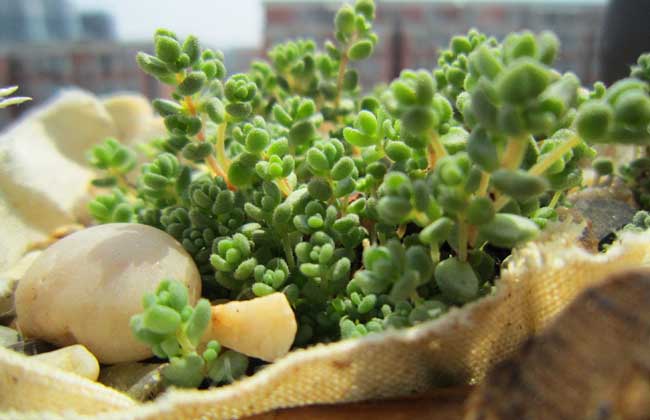
Sedum dasyphyllum is a succulent plant in the genus Sedum of the family Crassulaceae, native to the arid regions of West Asia and North Africa. The plant is extremely small but grows and multiplies quickly, forming a gray-green cushion-like colony within half a year. Its five-petaled white flowers are plain, elegant and sweet. There are several varieties such as Sedum dasyphyllum 'Major' and Sedum dasyphyllum var. glanduliferum. Let's take a look below at how to grow Sedum dasyphyllum so it fills the pot!
Growth Habits of Sedum dasyphyllum
Sedum dasyphyllum likes warm, dry and sunny environments, is relatively cold-tolerant, fears waterlogging, and is drought-tolerant. It prefers fertile, loose, well-drained sandy loam. The optimum growth temperature is 13-23°C, and the winter temperature should not be lower than 5°C. During the high temperature and strong light of summer, shade it appropriately, but the shading time should not be too long, otherwise the stems and leaves will be tender and prone to lodging. In autumn it can be placed in a sunny spot. During the spring and autumn growing seasons, water by "letting it dry out completely, then watering thoroughly," keeping the potting soil moderately dry between two waterings. During the high-temperature dormancy periods of winter and summer, control watering, preferring dry over wet.
Propagation Methods of Sedum dasyphyllum
Sedum dasyphyllum is commonly propagated by sowing, leaf cuttings, stem cuttings and division. Sowing is done from February to May, using indoor pot sowing. The optimum germination temperature is 18-21°C, and germination occurs 12-15 days after sowing. Cuttings can be taken throughout the year and root very easily, with spring and autumn being best. Cut short branches with compact leaves at the tip, 5-7 cm long, and insert them into a sand bed, keeping the cutting medium slightly moist; roots form 10-12 days after insertion. Leaf cuttings can also be used: scatter mature, plump fleshy leaves on a sand bed, spray with water several times, and after a few weeks roots will grow from the base of the leaves and young plants will emerge.
How to Grow Sedum dasyphyllum Well?
1. Soil: Sedum dasyphyllum only needs sufficient air permeability in its soil choice, and has low requirements for nutrients and other aspects. Thus, mixed soils such as sandy soil, cinder and peat are all quite suitable for its growth.
2. Watering: Sedum dasyphyllum has little demand for water and only needs to meet basic growth requirements. Therefore, watering should follow the principle of letting it dry out completely, then watering thoroughly. It has strong drought tolerance, so it is better to let it dry out completely than to let it become soggy.
3. Temperature: The optimum growth temperature for Sedum dasyphyllum is 13-23°C, and the winter temperature should not be lower than 5°C. Maintaining room temperature at 10°C is best, reducing watering and keeping the potting soil slightly dry.
How to Grow Sedum dasyphyllum So It Fills the Pot?
1. Spring: Spring is the season for repotting. You can take the opportunity when repotting to control the soil, choosing a mix of fertile garden soil and coarse sand, adding an appropriate amount of leaf mold and bone meal to provide sufficient nutrients for Sedum dasyphyllum. At the same time, to prevent excessive branches and leaves from competing for nutrients, prune the stems and leaves appropriately. During the growing period, strictly control the amount of fertilizer; it should be neither too much nor too little.
2. Summer: Outdoor temperatures in summer are high, exceeding the optimum temperature range for Sedum dasyphyllum, so appropriate shading is needed. However, the shading time should not be too long; it must receive sufficient light, otherwise its leaves will become too tender.
3. Autumn: In autumn, both temperature and light are quite suitable for its growth, so it only needs to be placed in a sunny spot.
4. Winter: Winter temperatures are low, so it is best to move Sedum dasyphyllum indoors for cultivation, maintaining indoor temperature at around 10°C, and water sparingly. Keep it mainly dry.