How to Grow the Succulent Graptopetalum 'Mendozae' So It Bursts into a Full Pot? Detailed Care Tips
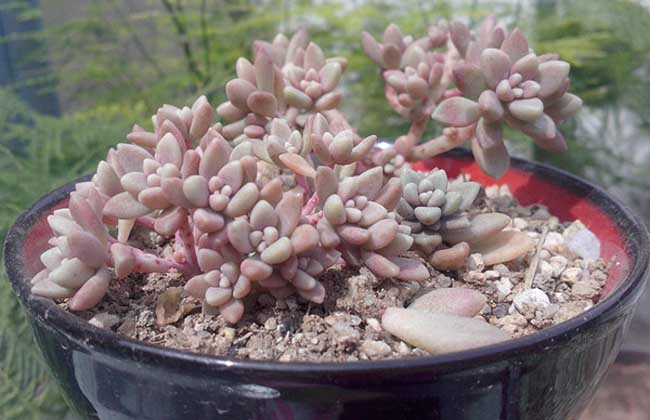
Graptopetalum 'Mendozae' is a relatively fast-growing, very easy-to-care-for succulent that is as delicate and compact as jade. It belongs to the Crassulaceae family, genus Graptopetalum. Its Chinese name comes from its Japanese name; "hime" means small in Japanese. Because its color and appearance resemble Graptopetalum paraguayense (Ghost Plant) but it is smaller than Ghost Plant, it was named 'Mendozae'. In reality, however, Graptopetalum 'Mendozae' and Ghost Plant are not related at all. Let's take a look below at how to grow Graptopetalum 'Mendozae' so it bursts into a full pot!
The Ecological Habits of Graptopetalum 'Mendozae'
Graptopetalum 'Mendozae' is robust by nature and prefers sunny, dry and well-ventilated environments. It is drought-tolerant and hates waterlogging, so small pots and well-draining sandy soil suit it. In summer it should be shaded appropriately; when the temperature is above 35°C, watering should be stopped to let it go dormant, and it should be moved to a cool, ventilated place for care. In winter, if the temperature is kept above 5°C, it will overwinter without trouble.
Propagation Methods for Graptopetalum 'Mendozae'
Graptopetalum 'Mendozae' is a very easy variety to propagate. Propagation can be done by cutting the top to encourage offsets, leaf cuttings and many other methods, with a very high success rate. In spring and autumn, twist off healthy, mature and intact leaves for cuttings, place the leaves slightly tilted or flat on vermiculite, peat or coconut coir, keep them slightly moist, and they will soon root at the base and grow new shoots. Once the new shoots have grown a little larger, plant them separately and they become new plants. In addition, young plants sprouting beside the old plant can also be used for cuttings; before planting, let the cut surface dry, then bury the lower stem shallowly in sandy soil, with the other precautions the same as for leaf cuttings. The cutting medium needs to be loose sandy soil so that the plant's roots can grow well.
How to Grow Graptopetalum 'Mendozae' into a Full Pot?
1. Light: The more abundant the light and the greater the temperature difference between day and night, the brighter and more lustrous the leaves of Graptopetalum 'Mendozae' become. When temperatures allow, it is best to keep it outdoors to ensure sufficient light. When light is insufficient or the soil is too wet, it will become leggy: the whole plant turns dull and green, the leaves become sparse with elongated spacing, and it grows rapidly upward, seriously harming its ornamental value and possibly even dying because the plant's photosynthesis is hindered.
2. Water: Because Graptopetalum 'Mendozae' has a high internal water content, it rots easily in overly humid environments, so never water too much. To avoid water accumulating at the roots, it is best to choose a pot with drainage holes at the bottom; beginners can use breathable terracotta pots, while glass containers absorb heat and have poor breathability, so use them with caution. Water about once every 10 days, watering thoroughly each time; the watering frequency can be adjusted as appropriate according to climate differences in different regions and seasons.
3. Soil: For growing Graptopetalum 'Mendozae', it is best to use well-draining, breathable sandy soil, which helps drain excess water and supports root growth. You can mix 1 part pine needle soil, 1 part vermiculite, 1 part leaf mold and 1 part sandy soil. Repot once every 1 to 2 years in spring, and trim away dead old roots.
4. Temperature: Graptopetalum 'Mendozae' generally stops growing or suffers mild frost damage below 5°C, and at 0°C and below, the water in the leaves freezes and the cells die. When temperatures are too high (above 35°C) or too low (below 5°C) in winter and summer, the plant stops growing; at this time, reduce or stop watering temporarily, and resume the watering frequency once temperatures are suitable again. In summer's high heat, pay attention to ventilation and prevent prolonged exposure to strong sun to avoid sunburn.
5. Pruning: Normally, remove withered old leaves promptly to prevent them from piling up and breeding bacteria. When the plant becomes leggy or grows too tall, you can trim the top branches and leaves to shape it and control its height, keeping the plant's form graceful. The cut top portion can be dried at the wound and then inserted into slightly moist sandy potting soil to root and become a new plant. The stem and branches at the bottom can sprout more side shoots.