A Detailed Guide to the Cultivation Methods of the Firecracker Succulent
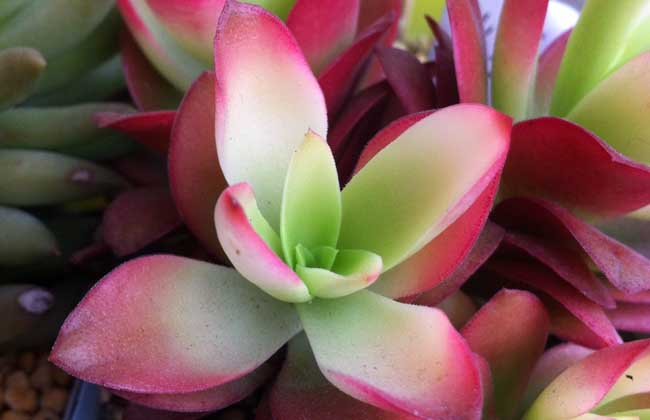
Firecracker, also known as Autumn Fire Lotus, is a perennial herbaceous plant in the Crassulaceae family, genus Crassula. Its stems are prostrate or upright, and the plant grows in clumps. The fleshy leaves are decussate (opposite in pairs). Under normal growth conditions, they are tightly arranged, giving the whole plant a four-angled appearance. It prefers a sunny and relatively dry growing environment. In full sunlight, the leaves range from light green to bright red. Let's take a look at how to grow Firecracker below!
Firecracker's Growth Habits
Firecracker is native to South Africa and can now be cultivated in many parts of the world. It prefers a cool, dry, and sunny environment, is drought-tolerant, fears waterlogging, and has a certain degree of cold hardiness. In partial shade or sheltered spots, the plant can still grow, but the leaves remain green, making it hard to showcase the variety's characteristics. It prefers a cool, dry, sunny environment and well-draining sandy soil.
Firecracker's Propagation Methods
Firecracker is generally propagated in three ways: cuttings, division, and sowing, with cuttings being the main method. Cuttings are further divided into stem cuttings and leaf cuttings. For stem cuttings, simply use a stem of Firecracker and bury about 2 cm of the lower end into the soil, keeping the soil moderately moist; roots will form within a week. For leaf cuttings, remove a leaf with the petiole as intact as possible, lay it flat on the surface of loose potting soil, and keep the soil moderately moist; within one to two weeks, roots will form from the petiole, then new shoots will grow and gradually develop into a new plant. The advantage of stem cuttings is that they grow into new plants faster, while the advantage of leaf cuttings is a high propagation rate, as each leaf can produce a new plant.
How to Grow Firecracker
1. Light: The more abundant the light and the greater the temperature difference between day and night, the more vivid the leaf color. When temperatures allow, it is best to place it outdoors for care to ensure sufficient light. With insufficient light or excessive soil moisture, it will become leggy, with the whole plant turning light green or dark green, the leaves becoming sparse and the internodes elongating, accelerating upward growth, seriously affecting its ornamental value, and it may even die because the plant's photosynthesis is hindered.
2. Water: Firecracker rots easily in overly humid environments, so never overwater. To avoid water accumulating at the roots, it is best to choose a pot with drainage holes at the bottom. Beginners can use a red clay pot with good breathability. Usually water about once every 10 days, watering thoroughly each time, and adjust the watering frequency as appropriate according to climate differences in different regions and seasons.
3. Soil: Firecracker is best cultivated in well-draining, breathable sandy soil to facilitate the removal of excess water and the growth of the plant's roots. It can be prepared with 1/3 leaf mold, 1/3 sandy soil, and 1/3 garden soil. Repot once every 1 to 2 years in spring, and dead old roots can be trimmed off.
4. Temperature: Below 5°C, Firecracker stops growing or suffers mild frost damage; at 0°C and below, the water in the leaves freezes and the cells die. When temperatures are too high (above 35°C) or too low (below 5°C) in winter and summer, the plant stops growing. At this time, watering should be temporarily reduced or stopped, and the watering frequency resumed once temperatures are suitable. In summer heat, pay attention to ventilation and prevent prolonged exposure to strong sun to avoid sunburn.
5. Pruning: Firecracker needs dry old leaves removed promptly to prevent buildup that leads to bacterial growth. When the plant becomes leggy or grows too tall, you can trim the top branches and leaves to shape it and control its height, maintaining a graceful form. The cut top portions can be dried until the wounds heal, then inserted into slightly moist sandy potting soil to root and become new plants. The stem and branches at the bottom can sprout more side shoots.
6. Fertilizer: Firecracker should not be over-fertilized, especially with nitrogen fertilizer, otherwise the plant will become leggy and the leaves will not turn red. Apply a dilute phosphorus- and potassium-based fertilizer once a month.
How to Make Firecracker Turn Red
1. Firecracker only turns very red under the combined effect of dry + cold + strong sun in winter.
2. During the growing season, Firecracker turns green and grows rampantly. You can keep taking stem cuttings and propagating them, and within half a year you will have a large cluster. If you don't want to take cuttings, you can trim some off; after pruning, the plant's shape will become fuller and more beautiful.
3. Once Firecracker has a well-developed root system, it becomes robust and has already stored a large amount of water in its tissues. Then gradually cut back on watering, giving a little less each time, until you stop watering altogether, and then expose it to strong sun and it will turn red.
4. Firecracker is a horticultural variety that prefers a warm, dry, and sunny environment. In partial shade or sheltered spots, the plant can still grow, but the leaves will not turn red.
5. Normally, do not give Firecracker too much water or fertilizer, especially not too much nitrogen fertilizer, otherwise the plant will become leggy and the leaves will not turn red. Wait until the potting soil is completely dry before watering, and apply a dilute phosphorus- and potassium-based fertilizer once a month.