How to grow potted snake plants well? These care methods must be mastered
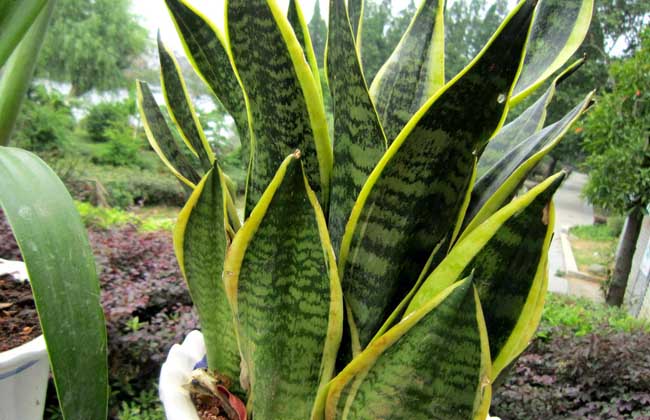
Snake plant, also known as mother-in-law's tongue, thousand-year plant, etc., is a perennial evergreen herbaceous plant of the genus Sansevieria in the family Liliaceae. It is native to western Africa and is cultivated throughout China. Its posture is firm and upright, unusual and interesting. It is a common indoor potted foliage plant, suitable for decorating studies, living rooms, bedrooms and other places, and can be enjoyed for a relatively long time. Now let us take a look at how to grow potted snake plants well!
Cultivated varieties of snake plants
The leaves of the snake plant are firm and upright, with grayish-white and dark green tiger-tail-like horizontal banded markings on the leaf surface. Its posture is firm and upright, unusual and interesting. There are many varieties, and the plant shape and leaf color vary considerably, exquisite and distinctive. It has strong adaptability to the environment, prefers warmth and humidity, is drought-tolerant, likes light and also tolerates shade, and has no strict requirements for soil, though well-drained sandy loam is better. Its optimum growth temperature is 20-30°C, and its overwintering temperature is 10°C.
Propagation methods of snake plants
1. Division: First take the whole plant out of the pot, remove the old growing medium, and after the rhizomes are exposed, cut them along their direction into several divisions (each division should contain at least 2-3 leaves). Each pot can hold 2-3 plants. This method can propagate plants throughout the year, but spring and summer are best, and it can be done in spring along with repotting.
2. Cuttings: Cut mature leaves horizontally into small sections about 8 cm long, air-dry them in the shade for 1-2 days, then insert them upright into clean river sand, inserting them 3-4 cm deep. When taking cuttings, be careful not to insert them upside down. In summer, the cuttings can grow adventitious roots in about one month, after which new shoots sprout from their base. After the new shoots grow leaves, they can be potted and transplanted together with the cuttings. Cuttings taken in other seasons take relatively longer to root. As long as the temperature is 15-25°C, cuttings can be taken at any time.
How to grow snake plants well?
1. Soil: Snake plants require loose soil and need air permeability, so when preparing soil for snake plants, be sure to use 2/3 leaf mold plus 1/3 garden soil. Remember that the soil must be loose and breathable, otherwise water will not evaporate easily, causing the rhizomes to rot.
2. Planting: Snake plants are root-propagating plants. Generally, you only need to plant a few plants, and after one year you can harvest a full pot. When planting, first place part of the soil at the bottom of the pot, then start planting from one side of the pot, planting evenly within the pot.
3. Sunlight: Snake plants like light, so be sure to let them receive sunlight often. It is best to place them where they can be directly exposed to sunlight. If conditions do not allow it, then place them in a spot relatively close to sunlight. Being placed in a dark place for a long time will cause the leaves to turn yellow.
4. Temperature: Snake plants have fairly high temperature requirements. Their suitable growth temperature is 20-30°C, and in winter it should not be lower than 10°C, so be sure to pay attention, especially in northern regions.
5. Watering: Snake plants also have fairly high water requirements. Generally speaking, if the soil is relatively loose, they need to be watered twice a week, while in winter, due to climatic factors, only once is needed.
6. Pruning: Compared with other home-grown green plants, snake plants grow relatively quickly, so when the pot becomes full, manual pruning is needed, mainly by cutting away old leaves and overly dense areas to ensure sunlight and growing space.
7. Repotting: Snake plants are perennial plants. Generally speaking, they need to be repotted once every two years. When repotting, be sure to add nutrients to the new soil so as to ensure their nutrient supply.
8. Fertilizing: Snake plants do not have high fertilizer requirements. It is enough to fertilize them twice a month during the growing season. Be careful to apply dilute fertilizer solution so as to ensure lush growth.
9. Pests and diseases: The common diseases of snake plants mainly include leaf spot disease and anthracnose. In this case, 50% carbendazim can be sprayed for treatment. A common pest is damage by weevils. In this case, 50% fenitrothion emulsifiable concentrate at 1000 times dilution can be sprayed to kill them.