How to grow Callistemon rigidus? A detailed guide to cultivation methods
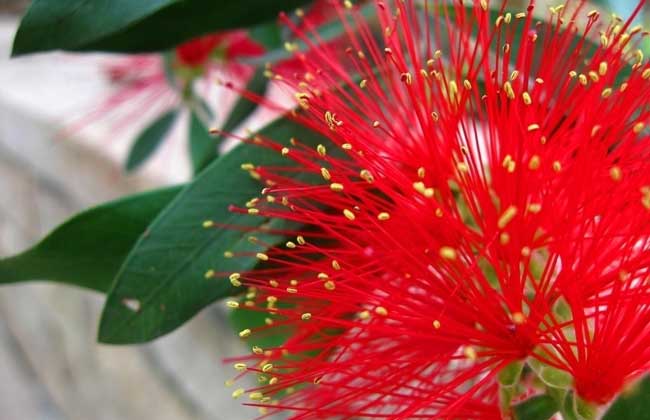
Callistemon rigidus is an evergreen shrub or small tree of the Myrtaceae family, native to Australia. It was introduced to China over a hundred years ago and is cultivated in Taiwan, China, Guangdong, Guangxi, Fujian, Zhejiang and other places. It is suitable for courtyard landscaping and serves as a premium flowering tree for courtyard beautification, street tree, garden tree and landscape tree. It can also be used as a windbreak, cut flower or large potted plant. Let's take a look at the cultivation methods for Callistemon rigidus!
Growth habits of Callistemon rigidus
Callistemon rigidus prefers warm and hot climates and can withstand scorching sun and intense heat, but it is not very cold-tolerant or shade-tolerant. It prefers fertile, moist, acidic soil and can also tolerate poor, thin and dry soil. It grows slowly, has strong sprouting ability, tolerates pruning and resists wind. In the north it can only be potted in high-temperature greenhouses; seedlings can overwinter outdoors in their native area, tolerating low temperatures of -10°C and high temperatures of 45°C. The optimum growth temperature is around 25°C. It is not strict about water requirements, but grows faster under moist conditions. Because it is extremely drought-tolerant and tolerant of poor soil, it can also be cultivated on barren hills or in forest parks on the outskirts of towns and cities.
Propagation methods for Callistemon rigidus
1. Cuttings: In March, cut semi-mature side branches that have not flowered, 10-12 cm long, with the base slightly bearing 1-year-old mature wood, and insert them into half sand-mud. Build a frame and cover with shade to maintain humidity. Roots can develop in about 40 days. Once the root mass grows vigorously, pot them up.
2. Sowing: In April, collect mature fruits of Callistemon rigidus, mix the seeds evenly with fine sand, then broadcast sow them, cover lightly with fine soil to maintain humidity. They germinate in about 35 days. Thin the seedlings at the appropriate time, and when the seedlings are about 15 cm tall, pot them up with soil.
Cultivation methods for Callistemon rigidus
1. Pruning: Pruning before lifting seedlings is an effective measure to reduce water transpiration and helps maintain the water balance within the plant. This is especially important when transplanting in hot summer, when evaporation is high. The branches and leaves removed should account for about one third of the whole plant, mainly inner canopy branches (shaded branches) and newly sprouted tender shoots. When transplanting in winter and spring, keep the terminal branches that bear flower buds well, so that they can bloom in summer after transplanting and achieve a near-term greening effect.
2. Lifting seedlings: The soil for Callistemon rigidus must not be too wet, nor too dry. The soil ball should ideally be 40-50 cm in diameter and 30-40 cm in column height, forming a cylindrical shape; avoid a pot-bottom shape. After lifting the seedlings, immediately wrap them with straw or other materials, handle them gently during loading and unloading, and prevent the soil ball from breaking apart and the roots from being exposed. This is an important step for survival.
3. Planting: The planting hole for Callistemon rigidus should preferably be 80x80 cm. Apply basal fertilizer well, placing farmyard manure 1:1 at the bottom, then add 5 cm of clean soil on top and compact it, to avoid the roots contacting the fertilizer and being burned. Remove the soil ball packaging, place the plant in the hole with the soil ball surface level with the ground, then backfill in layers and tamp firmly so that no voids remain at the bottom. Water thoroughly immediately after planting.
4. Watering: After planting, water 1-2 times a day for Callistemon rigidus, each time soaking through the soil layer, and also spray water on the branches and leaves to keep them moist. This plays an important role in reducing water transpiration and maintaining the plant's internal water balance. Spraying water on the branches and leaves is another important step for survival after planting. Some plants may have part of their soil scattered; if spraying on the branches and leaves is strengthened, they can still survive. When transplanting between June and September, the weather is hot and water evaporation is high, so the frequency of spraying water on the branches and leaves should be appropriately increased.
5. Fertilizing: Fertilizing Callistemon rigidus is extremely important for the plant to quickly recover its growth. 15 days after planting, apply a light application of nitrogen fertilizer, and one month later apply a high-quality organic fertilizer once. After that, apply high-quality organic fertilizer 1-2 times a year. After the flowering period each year, carry out pruning and shaping once to control the growth height and maintain a beautiful tree shape, which can promote more new branches to bloom.
6. Pests and diseases: The main disease of Callistemon rigidus is stem rot. Diseased seedlings should be removed, and Bordeaux mixture should be sprayed for control. Pests include cutworms, mole crickets, green weevils, etc. They can be controlled with 1000-fold dilution of trichlorfon or 1000-fold dilution of dichlorvos, spraying once every 7 days for 2-3 consecutive sprays.