How to plant nasturtium seeds? Detailed sowing method and steps
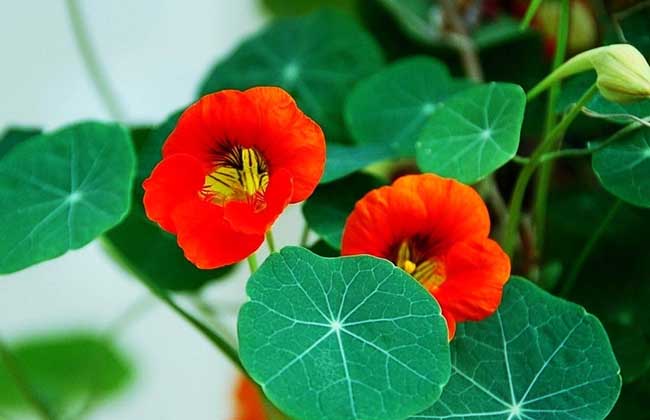
Nasturtium, also known as garden nasturtium, Indian cress, and monk's cress, among other names, is a perennial semi-trailing or prostrate plant of the genus Tropaeolum in the family Tropaeolaceae. In the north it is often grown as an annual or biennial flower, while in the south it can be grown as a perennial. Under suitable environmental conditions it can bloom all year round. Let's take a look below at how to plant nasturtium seeds!
Soaking and sprouting nasturtium seeds
1. Seed treatment: Because the seed coat of nasturtium is fairly thick, before sowing soak the seeds in warm water (about 40°C) or cold water for 12 hours, peel off the outer skin of the seeds, then continue soaking for another 12 hours, preferably with the water not covering the seeds.
2. Seed sprouting: Take a clean, unscented paper towel, fold it into 6-8 layers, place it on a small saucer, and moisten it with purified water (the paper towel should be thoroughly wet). Place the soaked seeds in the middle of the paper towel and press lightly, then put the small saucer into a transparent food bag and tie it tightly, opening it for 15-30 minutes each day for air.
3. Sprouting and sowing: Seeds sprouted with the paper towel method generally crack open and show the sprout tip within 2-7 days. When the sprout tip is 2 mm long, it can be planted in soil for seedling raising. After planting, the cotyledons break through the soil within 2-5 days, and once the cotyledons have fully spread open, the plant can receive full light.
Sowing time for nasturtium
1. Spring sowing (East China region): High summer temperatures are not suitable for nasturtium growth, so spring sowing should be done early. Sprouting can begin from early February to early March; after sprouting, buds appear in 30-35 days and flowers bloom in 40-45 days. Spring-sown nasturtium is characterized by broad leaves, slender stem nodes, fewer flowers than autumn sowing, a short single-flower bloom period, and few small seeds. Spring sowing has a short growth cycle, so it is more suitable for beginners.
2. Autumn sowing (East China region): Autumn sowing of nasturtium is carried out from late September to early October, with the peak bloom period in February to March of the following year. Autumn-sown nasturtium is characterized by thick leaves, sturdy branches, a compact plant shape, short stem nodes, abundant flowers, a long single-flower bloom period, and plump seeds. Because autumn sowing has a long growth cycle, it tests the patience and growing skills of gardeners.
How to grow nasturtium
1. Soil: Potted nasturtium prefers soil that drains easily, is rich in nutrients, and allows the roots to breathe. It fears waterlogging and must not sit in standing water. The potting soil can be made by mixing garden soil, leaf mold, compost soil, and sand in a 4:4:1:1 ratio.
2. Light: Nasturtium needs sufficient light. In summer it must not receive direct sunlight and should be placed in a cool, well-ventilated spot. In the North China region, move it indoors in mid-October and place it where it can receive sunlight. Nasturtium grows according to the light conditions, so the plant should be rotated constantly to receive even light.
3. Watering: Nasturtium likes moisture but does not tolerate waterlogging, and soil moisture should be kept at 50%. During the growing period, water in small amounts but more frequently; in spring and autumn water once every 1-2 days, in summer water once a day, and in the evening mist the leaves of the nasturtium. Reduce watering frequency during the bud stage, and increase the amount as appropriate.
4. Temperature: The most suitable temperature for nasturtium is 18-24°C. It fears high temperatures; when summer temperatures are too high it does not bloom easily, and above 35°C growth slows or stops. Nasturtium is not cold-hardy and can only survive briefly at 0°C. In winter the temperature should be above 10°C to help it overwinter. Keeping the winter temperature at 12-16°C along with suitable fertilizer and water can maintain nasturtium growth.
5. Fertilizing: During the growing period, nasturtium can be given a 20% fermented soybean cake water once a month; during the bloom period, apply 0.5% superphosphate or fermented chicken and duck manure water once every half month; after the flowers fade, apply a 30% fermented soybean cake water once. Nasturtium does not need fertilizer in summer; apply a compound overwintering fertilizer once in late autumn, which helps with cold resistance and growth the following year.
6. Pests: Nasturtium rarely suffers from pests and diseases. Diseases generally include leaf miners, which cause leaves to curl or drop, as well as aphids and whiteflies, which can be controlled by spraying pesticide. Diseases generally include mosaic disease and ringspot disease; you can spray insecticide to control aphids, clear the surrounding weeds, and pull up infected plants and burn them.