How to grow nasturtium? A complete guide to its cultivation methods
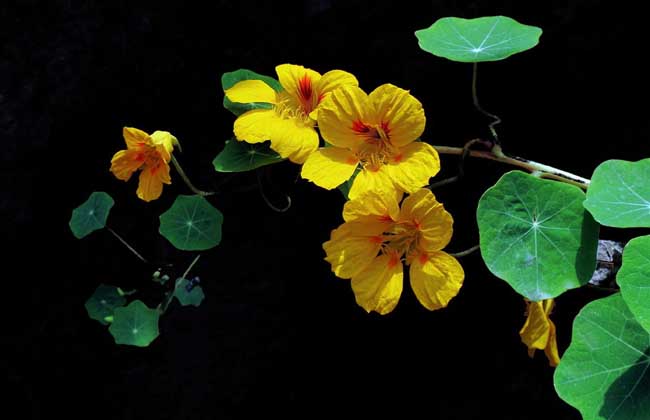
Nasturtium is a perennial semi-trailing or prostrate plant of the genus Tropaeolum in the family Tropaeolaceae. In southern China it can be grown as a perennial, while in North China it is mostly sown in autumn and kept indoors in pots, and in the north it is often grown as an annual or biennial flower. Under suitable environmental conditions it can bloom all year round, with a fragrant scent and brilliant colors, which has won people's affection. Let's take a look below at the cultivation methods for nasturtium!
Growth habits of nasturtium
Nasturtium prefers a mild climate and cannot tolerate severe cold or intense heat. Its suitable growing temperature is 18 to 24°C, and it can endure short periods of 0°C. It likes warmth and humidity, and its overwintering temperature should be above 10°C. It does not bloom easily during high summer temperatures, and growth is inhibited above 35°C. It needs ample light in winter, spring and autumn, while potted plants should avoid direct sun exposure in summer. Potted plants need a loose, fertile, highly permeable growing medium; they like humidity but fear waterlogging.
Propagation methods for nasturtium
1. Sowing: Generally the sowing period is from March to June, with the flowering period from August to December. Sowing in late August or early September of autumn is also possible, in which case it will bloom around New Year's Day and the Spring Festival. The suitable germination temperature for nasturtium is 18 to 20°C. After sowing at intervals, cover with about 1 cm of soil, water thoroughly and keep moist, and it will germinate in 7 days. When 2 to 3 true leaves appear, pinch out the growing tips and pot up; trim the leaves and branches appropriately to improve ventilation and expose the flowers.
2. Cuttings: Take cuttings from April to June, selecting tender stems as cuttings, removing the lower leaves, shading them after planting and keeping them moist; they can root in 2 to 3 weeks. As the stems grow, bamboo strips should be used in time to set up a support frame and tie the branches and vines. Apply fertilizer once every 10 to 15 days, and maintain sufficient moisture and relatively high air humidity throughout the entire growth period.
Cultivation methods for nasturtium
1. Soil: Potted nasturtium likes soil that drains easily, is rich in nutrients and favors root respiration. It fears waterlogging and must not be left with standing water. The potting soil can be made by mixing garden soil, leaf mold, compost soil and sand in a 4:4:1:1 ratio.
2. Light: Nasturtium needs sufficient light. In summer it must not receive direct sunlight and should be placed in a cool, well-ventilated place. In North China, move it indoors in mid-October and place it where it can receive sunlight. Nasturtium grows according to the light conditions, so the plant should be rotated constantly to receive even light.
3. Watering: Nasturtium likes moisture but cannot tolerate waterlogging. Soil moisture should be kept at 50%. During the growth period, water less but more often: water once every 1 to 2 days in spring and autumn, once a day in summer, and mist the leaves of the nasturtium in the evening. During the bud stage, reduce the frequency of watering and increase the amount as appropriate.
4. Temperature: The most suitable temperature for nasturtium is 18 to 24°C. It fears high temperatures; when summer temperatures are too high it does not bloom easily, and above 35°C growth slows or stops. Nasturtium is not cold-tolerant and can only survive 0°C for a short time, so the winter temperature should be above 10°C to help it overwinter. Keeping the winter temperature at 12 to 16°C together with suitable fertilizer and water can maintain the growth of nasturtium.
5. Fertilizing: During the growth period, nasturtium can be given a 20% decomposed soybean cake water once a month; during the flowering period, apply 0.5% superphosphate or decomposed chicken and duck manure water once every half month; after the flowers fade, apply a 30% decomposed soybean cake water once. Nasturtium does not need fertilizing in summer; apply a compound overwintering fertilizer once in late autumn, which helps cold resistance and growth in the coming year.
Pest and disease control for nasturtium
1. Leaf miner
[Symptoms] The larvae bore into the new shoots and tender leaves of the plant, forming winding tunnels within the layers between the upper and lower epidermis, so that the entire new shoot and leaves cannot unfold and easily fall off; in severe cases, all autumn shoots can turn yellow and wither.
[Control] In winter, prune out the larvae and pupae that overwinter on late-autumn shoots and winter shoots; in spring and early summer, remove the scattered larvae and pupae causing damage, so as to reduce the source of the next generation of pests.
2. Mosaic disease
[Symptoms] Infected leaves show original mosaic-type symptoms of alternating yellow-green and dark green, the leaves become smaller, and the whole plant looks somewhat stunted.
[Control] Spray insecticides to control the aphids that transmit the virus; when diseased plants are found, pull them out promptly and burn them.
3. Ringspot disease
[Symptoms] Ring-shaped mosaic or necrotic spots form on diseased leaves.
[Control] Control aphids promptly. Commonly used insecticides include 50% malathion emulsifiable concentrate at 1000 times dilution, or 40% dimethoate emulsifiable concentrate at 1000 to 1500 times dilution, or compound fruit emulsifiable concentrate (40% dichlorvos, 10% omethoate) at 2000 to 3000 times dilution, or 20% fenpropathrin emulsifiable concentrate at 3000 times dilution, etc. At the same time, pay attention to the weeds around the nasturtium and remove other virus-source plants.