Detailed Guide to the Cultivation Methods and Precautions for Banana Shrub
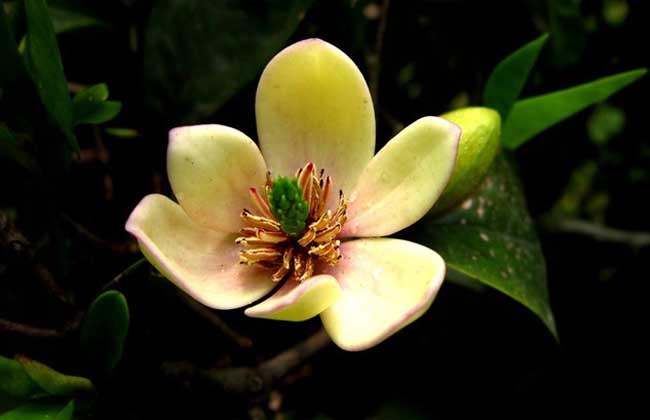
Banana shrub is also known as Xianghanmei, Xianghanmei, Shanjiezi, Bainlanhua, Banana Flower, etc. It is an evergreen shrub of the genus Michelia in the Magnoliaceae family, native to the southern provinces of South China. It grows wild in Dinghu Mountain, Guangdong, China, in shady mixed forests on shady slopes. It is a fragrant flowering plant with buds as smooth as jade and a fragrance as delicate as orchid. It is mainly grown as a potted plant for ornamental purposes, followed by courtyard landscaping. Now let us take a look at the cultivation methods of banana shrub!
Growth Environment of Banana Shrub
Banana shrub grows in shady mixed forests on shady slopes, and is especially lush along stream valleys. It loves fertilizer and prefers semi-shade. It grows best in weak shade and avoids direct strong sunlight. Attention should be paid to shading in summer. Before frost in late autumn, it should be moved into a greenhouse and overwintered at a temperature of around 10°C. Banana shrub is a warm-region woody flowering shrub and is not very cold-tolerant. South of the Yangtze River, it can overwinter outdoors in a sheltered, sunny spot. It is not tolerant of dry and barren conditions, but also fears waterlogging. It requires well-drained, fertile, slightly acidic loam soil, and can also adapt to neutral soil.
Propagation Methods of Banana Shrub
1. Cuttage: Propagation of banana shrub by cuttage is suitable from late July to early September. You can take semi-hardwood branches or terminal buds about 15 cm long that have not yet sprouted new buds but still have 3 to 8 leaves. Dip the base of the cuttings in rooting powder and insert them into sandy soil. Provide appropriate shading and keep the environment moist. Roots will form in about 2 to 3 months, and then transplant in the following spring.
2. Air layering: Air layering propagation of banana shrub usually involves selecting well-developed, plump and robust 2-year-old branches in April. Make a ring cut 0.5 cm wide at an appropriate part of the branch, reaching deep into the xylem. Apply moist moss to the ring-cut area, wrap it with plastic film on the outside, and tie it tightly at the top and bottom. Roots will form in about 2 months. After the new roots have fully developed, cut it off and pot it for cultivation. After potting, water thoroughly, then water once a day or not at all.
3. Grafting: Grafting propagation of banana shrub is suitable from May to June. Magnolia is often used as the rootstock, and after survival it can grow rapidly. Banana shrub, with its thick and fleshy roots, does not tolerate transplanting. If transplanting is absolutely necessary, it should be done with a large soil ball, and pruning and shaping of the plant are best done before overwintering.
Cultivation Methods of Banana Shrub
1. Soil: Banana shrub has fleshy roots. It is not tolerant of dry and barren conditions, but also fears waterlogging. It requires well-drained, fertile, slightly acidic loam soil, and can also adapt to neutral soil. A cultivation soil can be prepared with 4 parts leaf mold, 3 parts garden soil, 2 parts decomposed manure soil, and 1 part sandy soil.
2. Watering: Banana shrub should usually keep the potting soil moist, but must never be too wet. Because its roots are mostly fleshy, too much watering or waterlogging after rain can cause root rot, so humidity should be controlled during rainy seasons. During the growing season and before flowering, it needs more water, watering once a day. In high-temperature summer weather, water should be applied to the leaves to maintain a certain air humidity. In autumn and winter, due to shorter sunshine, watering once or twice a week is sufficient.
3. Sunlight: In summer, banana shrub plants should not be exposed to the sun and need 30% shading to avoid strong light burning the leaves. They can be placed indoors at east-facing windows and balconies, or outdoors under tree shade or a shade shed. After the weather cools in autumn, they can receive more sunlight. In winter, place them indoors in a sunny and ventilated spot.
4. Temperature: The minimum temperature for banana shrub overwintering should not be lower than 5°C. Once the temperature is below 5°C, the normal physiological activities of the plant will be affected, the absorption capacity of the roots will weaken, and the tender branches and leaves of the plant will wilt. At the same time, the maximum temperature should not exceed 15°C. If the temperature is too high, the plant will consume too much internal nutrients, which is unfavorable for growth in the following year. Therefore, in winter, it is advisable to keep the room temperature between 5°C and 15°C for banana shrub.
5. Fertilization: Banana shrub loves fertilizer. It is mostly applied with decomposed cake fertilizer, bone meal, chicken and duck manure, and fish offal and other composted fertilizers mixed with water. During the growing season (April to September), apply fertilizer once every 15 days or so. Stop fertilizing during the flowering period and after October. If the leaf color is not bright and dark green, apply a dose of potassium fertilizer water.
6. Pests: Banana shrub is often harmed by scale insects, which can also induce sooty mold. Scale insects can be brushed off with a small brush, or sprayed with No. 20 petroleum emulsion diluted 150 times with water. Sooty mold can be controlled by wiping with clean water or spraying with a carbendazim aqueous solution diluted 500 to 1000 times with water.
7. Pruning: Banana shrub should not be pruned excessively. Usually after flowering, prune leggy branches, diseased and weak branches, and overly dense overlapping branches that affect the tree shape, and remove the fruit after flowering to reduce nutrient consumption. Before spring budding, appropriately thin out some old leaves to stimulate new branches and leaves.
8. Repotting: Banana shrub should be repotted once every 1 to 2 years, preferably before new leaves emerge each spring, or after flowering, or in autumn. When repotting, remove an appropriate portion of the compacted old soil, replace it with fertile and loose cultivation soil, cut off dead branches and overly long old roots, and place sufficient base fertilizer at the bottom of the pot.
When Does Banana Shrub Bloom?
Banana shrub generally blooms abundantly from April to May. If the shoot tips are pruned regularly, it can bloom in three seasons of the year (except winter). Although the flowers are not as many as in April to May, the flowers still have a very pleasant fragrance. Because the flowers of banana shrub open without fully spreading, as if smiling without speaking, this characteristic largely represents the Chinese people's implication of reserve and suggestion, so its flower language is reserve and restraint.
Cultivation Value of Banana Shrub
1. Indoor ornamental: Banana shrub has elegant branches and emerald green leaves. When in bloom, it is charming. It is a plant for both foliage and flowers, and growing it in pots indoors has relatively high ornamental value.
2. Air improvement: Like other plants, banana shrub has a certain function of freshening the air. In addition, the elegant and charming floral fragrance of banana shrub, diffused indoors, gives people a strong sense of comfort and has a very obvious effect on improving indoor air.
3. Medicinal value: Banana shrub flower tea can not only make people feel happy and invigorated, but also has the magical effects of promoting blood circulation and regulating menstruation, nourishing the skin and beautifying the face, calming the nerves and reducing stress, slimming and shaping the body, strengthening health and preventing disease, and prolonging life.
Winter Care of Banana Shrub
1. Temperature management: The minimum temperature for banana shrub overwintering should not be lower than 5°C. Once the temperature is below 5°C, the normal physiological activities of the plant will be affected, the absorption capacity of the roots will weaken, and the tender branches and leaves of the plant will wilt. At the same time, the maximum temperature should not exceed 15°C. If the temperature is too high, the plant will consume too much internal nutrients, which is unfavorable for growth in the following year. Therefore, in winter, it is advisable to keep the room temperature between 5°C and 15°C for banana shrub.
2. Humidity management: Banana shrub prefers a humid environment, and dry air is not conducive to its growth. In winter, the relative humidity is generally required to be above 65%. When the air is dry, a sprayer can be used to spray the ground and plant leaves to increase air humidity, but the temperature of the sprayed water should not differ too much from room temperature, and cold water must not be used.
3. Reasonable watering: Banana shrub roots are fleshy, so too much watering in winter can cause root rot or lead to pests and diseases. Generally, watering once a week is sufficient. Before watering, make sure the water temperature, room temperature, and soil temperature are all similar. Watering should preferably be done at noon when the temperature is relatively high. Watering in the early morning and evening when temperatures are lower is not advisable, to avoid sudden temperature changes that freeze and damage the roots.
4. Ventilation management: After banana shrub is brought indoors at the time of Frost's Descent, indoor air should be kept fresh. If ventilation is poor, it is prone to damage by pests such as aphids and scale insects. If placed in a greenhouse heated by coal in winter, large amounts of harmful gases such as carbon monoxide and sulfur dioxide will cause poisoning in the plant. Therefore, on sunny and windless noons, windows should be opened for ventilation and light transmission.
5. Timely fertilization: Banana shrub cultivated in the north is in a dormant or semi-dormant state in winter, and its fertilizer requirement is not large. An appropriate application of base fertilizer mainly composed of organic fertilizer should be made to benefit flowering in the coming year.
Precautions for Cultivating Banana Shrub
1. Banana shrub has thick roots and does not tolerate transplanting. When transplanting, it should be done with more soil around the roots, and branches and leaves should be appropriately thinned. If the soil ball breaks apart during transplanting, the branches and leaves must be heavily pruned in time, otherwise the whole plant is likely to die.
2. Banana shrub is not tolerant of drought or barren conditions, fears waterlogging, and prefers fertile, loose, well-drained, slightly acidic loam soil.
3. During the overwintering period, banana shrub plants should be properly ventilated and given light to avoid damage by pests such as aphids and scale insects.
4. Watering banana shrub should preferably be done at noon when the temperature is relatively high, and appropriate humidity should be maintained in the greenhouse.
5. After flowering, if the seeds are not to be kept, the young fruit should be cut off in time to reduce nutrient consumption.