Cineraria Cultivation Methods and Care Tips
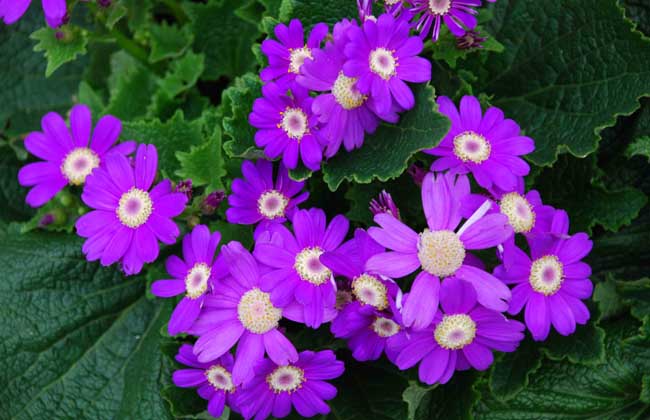
Cineraria is one of the main ornamental plants of the winter and spring seasons, also known as florist's cineraria, cucumber flower, etc. It is a perennial herbaceous plant of the genus Pericallis in the Asteraceae family, often grown as a 1- to 2-year-old plant, divided into tall and dwarf varieties. Its flowers are bright and colorful, and it can be planted in flower beds or potted and placed in corridors and courtyards, giving people a fresh and pleasant feeling. Let's take a look at the cultivation methods of cineraria!
Growth Habits of Cineraria
Cineraria prefers a warm, humid, and well-ventilated environment. It is not tolerant of high temperatures and is afraid of frost. It is generally cultivated in low-temperature greenhouses. The temperature at night should not be lower than 5°C, but seedlings can withstand temperatures as low as 1°C. During the day, it should not exceed 20°C, with 10-15°C being most suitable. If the room temperature is too high, it tends to grow leggy, causing internodes to elongate and losing commercial value. If the temperature is too low, it affects plant growth, and the flowers develop poorly and become small. Cineraria is a light-loving plant. With sufficient sunlight, the leaves are thick and dark, and the flower colors are vibrant. However, excessively strong sunlight can also cause leaf curling and a lack of vitality. Because cineraria leaves are large and thin, they need sufficient water, but not overly wet conditions. It is best to keep the leaves from wilting.
Cultivation Value of Cineraria
1. Decorative applications: Cineraria is a greenhouse flower. When potted, it serves as an indoor display. Its flowering period is early, and blooming in the cold winter is especially precious. The flower colors are rich and vibrant, especially the blue flowers, which shimmer with a velvety luster, elegant and moving. The flowers bloom uniformly with full flower shapes. They can be displayed on indoor low stands, or multiple pots can be arranged in rows to form patterns in hotel courtyards, conference venues, or theater forecourts, creating a profusion of blooms and a festive atmosphere.
2. Ornamental value: Cineraria has richly colorful flowers. The main cultivated varieties include the European “red flower,” the African “pink flower,” and the Mediterranean “red with spotted petals,” among others. Cineraria is one of the main ornamental potted flowers during New Year's Day and the Spring Festival. Cineraria is cross-pollinated, resulting in a large number of horticultural varieties.
Propagation Methods of Cineraria
1. Sowing method: Cineraria is generally sown in late July, taking about half a year from sowing to flowering. The sowing time can also be determined according to the desired flowering time. For example, for flowers needed at New Year's Day, sowing can be done in mid-to-late June. When daylight is longer, flower buds may appear earlier, but the stems will be slender and the plants smaller, affecting the overall ornamental effect. Early sowing results in lush plants with large flowers, so the sowing period should not be delayed until after August.
2. Cutting method: Double-petaled cineraria varieties do not easily set seed, so cuttings can be used. Usually from January to June, root sprouts or axillary buds after flowering are cut as cuttings and inserted into sand. They root in about 20-30 days, and after 5-6 months of nurturing, they can bloom. Root tender shoots can also be used for division propagation.
Cineraria Cultivation Methods
1. Soil: Cineraria prefers sandy loam rich in humus and well-drained. It dislikes drought and fears waterlogging, and is suitable for neutral and slightly acidic soil. For potting soil for cineraria, a mix of 4 parts garden soil, 2 parts leaf mold, 2 parts compost soil, and 2 parts river sand can be used, with cake fertilizer and superphosphate added as base fertilizer.
2. Watering: Cineraria leaves are large and thin, requiring sufficient water, but the potting soil should not be overly wet. The appropriate level is to keep the leaves from wilting. Normally, watering depends on the moisture condition of the potting soil. Water after the soil dries, about once every 2-3 days. Water can be sprayed on the leaves once a day with clean water, and twice a day in hot weather to lower the temperature and increase air humidity. After flower buds appear, watering should be controlled as much as possible. During the flowering period, the pot should be placed in a cool environment of 8-12°C, which can extend the flowering period to 30-40 days.
3. Sunlight: Cineraria is a short-day, light-loving flower. Sufficient lighting not only keeps the plant canopy neat and compact with abundant flowers and lush leaves, but also enhances disease resistance and reduces the occurrence of pests and diseases. Insufficient light causes flower stems to grow slender and flower colors to be pale and off-color, affecting appearance. About 8 hours of sunlight daily is suitable. In summer, avoid direct exposure to strong sunlight, otherwise leaf tips will turn yellow and wither. It should be placed in a well-ventilated area with scattered light for care. In winter, during snowy days, insufficient light should be prevented.
4. Temperature: Cineraria prefers warmth but is not tolerant of high temperatures. It grows best under conditions of 15-20°C. When the temperature exceeds 2l°C, leggy growth can occur, which is detrimental to flower bud formation. When the temperature is below 5°C, the plant stops growing and developing, and below 0°C, frost damage occurs. The suitable temperature for flowering is 10-15°C. Below 6°C, buds cannot open, and above 18°C, flower stems grow slender, affecting ornamental value.
5. Fertilizing: In addition to applying base fertilizer at planting time, cineraria should be given a thin cake fertilizer solution every 7-10 days during the growing process. Diluted chemical fertilizers can also be used. After flower buds appear, 1-2 applications of 1000x potassium dihydrogen phosphate solution can be added. Fertilizing continues until flowering (stop during the rainy season). If fertilizer contaminates the leaves during application, rinse them promptly.
6. Pests: Common pests and diseases of cineraria are aphids and red spider mites. For severe aphid and red spider mite infestations, a 2000x dimethoate dilution can be sprayed. Because red spider mites generally occur on the underside of leaves, while aphids generally occur on the tender tops of cineraria, when spraying, focus on the underside of leaves and the top of the plant, and also spray appropriately on the upper surface of leaves.
Potted Cultivation Techniques for Cineraria
1. Pre-sowing preparation: First, deep-plow the sowing soil and expose it to the sun for about 20 days. The sowing soil mix ratio is 3 parts leaf mold, 2 parts sandy soil, plus a small amount of cake fertilizer mixed in. One day before sowing, disinfect the soil by evenly spraying carbendazim, then level the soil and water thoroughly so that the soil moisture content is not less than 70%.
2. Sowing and seedling separation: The sowing seedbed must first have shade, rain protection, and cooling measures in place. Sow each gram of seeds on the soil surface, then cover with a thin layer of about 0.5 cm of soil. Keep the soil surface moist before and after emergence, with temperature controlled at around 25°C and humidity at around 60%. About 40 days after emergence, seedling separation is needed, with a planting density of 12×12 cm spacing between plants and rows. During the seedling separation period, shade for about 10 days and water thoroughly once.
3. Potting: Potting is done one month after seedling separation, using plastic pots or clay pots with a diameter of 18 cm. The nutrient soil ratio is 6 parts sandy loam, 3 parts sawdust or rice husk ash, and 1 part cake fertilizer. It should be prepared one month before potting. After potting, lateral buds appearing at the 3-4 basal nodes of cineraria should be removed at any time to reduce nutrient consumption and avoid overcrowding of branches and leaves, thereby concentrating more nutrients for the growth of upper flower branches, which helps produce more, larger, and more colorful flowers.
Seed-saving Techniques for Cineraria
1. Cultivating strong seedlings: Cineraria is not cold-tolerant nor heat-tolerant. It likes sunlight and prefers moisture, so it should be planted in a well-ventilated, cool environment with well-drained soil. It can also be potted, and protective facilities for warmth and shading are also needed. Cineraria is fond of fertilizer. After planting, apply dilute fertilizer water every 5 to 7 days, applying thin fertilizer frequently, and pay attention to the nitrogen, phosphorus, and potassium ratio to cultivate robust plants.
2. Bud stage management: Cineraria can generally produce 20 to 40 main branches from the main stem, and each main branch tip forms a flower bud. Each node of the main branches also produces 3 to 4 lateral branches, and each lateral branch also has a flower bud. Therefore, pruning and thinning are needed. Generally, 15 to 30 main branches with strong growth vigor are kept, and efforts are made to make the flowering periods of all flowers consistent. All other main branches and lateral branches are removed to concentrate nutrient supply.
3. Flowering stage management: During the flowering stage of cineraria, the main tasks are removing ligulate flowers (i.e., marginal flowers) and removing sprouts. Removing ligulate flowers is generally done in the morning, using hands to remove the ligulate flowers of opened flowers one by one. At the same time, attention should be paid to removing sprouts.
4. Seed collection: When cineraria seeds mature, the flower disk cracks slightly, the calyx begins to fall off, the pappus has begun to appear, the seed coat turns black, and when squeezing out the flocculent material inside by hand, the flocculent material has also turned black. This indicates that the seeds have fully matured. This is the best time to harvest seeds. If harvesting is too late, the seeds will naturally scatter and fly away. When collecting seeds, collect and store them separately according to different flower colors. Harvest together with the flower disk, dry in the sun, extract the seeds, and store in a cool, ventilated, and dry place.
Pest and Disease Control of Cineraria
1. Red spider mite
[Damage] The damage of red spider mites to cineraria begins in March, when the greenhouse is dry and warm. Overwintered female adults begin to feed and lay eggs at this time, usually causing damage around the main vein on the underside of leaves. On the upper surface of affected leaves, small white chlorotic spots first appear, gradually turning red. Silk webs appear on the underside of leaves, and the damaged leaves eventually fall off.
[Control] The earliest prevention should be in winter, ensuring a clean environment around the cineraria, promptly removing weeds and fallen leaves, checking the potting soil, and eliminating overwintering pest sources. During the pest occurrence period, if the cineraria has not yet budded or flowered, spray with 2000x 40% dicofol emulsion or 40% omethoate 1000x solution once every 7 days, for a total of 2-3 sprays, which is quite effective. If the cineraria has already budded or flowered, to avoid sensitivity of the flowers, try not to spray pesticides. Leaf surface water spraying to wash off, or using chewing gum to stick and remove the pests can be adopted. Natural plant extracts such as garlic, scallion, and Sichuan pepper, soaked in water for several days, combined with an appropriate amount of neutral laundry detergent, can also be used for spraying.
2. Aphids
[Damage] Aphids are small and reproduce quickly, mostly gathering on the underside of cineraria leaves and tender stems to suck sap and cause damage. Affected leaves turn yellow and curl and wrinkle toward the underside. Generally, in years with warm winters, early spring warming, and even rainfall, damage begins in March.
[Control] Since aphids overwinter as eggs on cineraria, after inspecting the plants in winter, spray the plants with 5-degree Baumé lime sulfur mixture to eliminate overwintering eggs. During the aphid damage period, spray with 40% omethoate 1200-2000x or 40% acephate 1000x solution. To avoid pesticide damage during the flowering period, plant-based insecticides such as 3% natural pyrethrum, 25% derris extract, and 40% nicotine sulfate can also be used, all of which can be diluted to 1000-1500x solutions.
3. Tussock moths
[Damage] The damage of tussock moths to cineraria is mainly caused by larvae, often called tussock caterpillars. Young larvae gather to cause damage, gnawing on leaf mesophyll and leaving the epidermis, appearing window-like. Slightly larger tussock caterpillars disperse to cause damage, biting leaves into notches and holes. The entire plant is affected starting from the larger leaves at the lower part. The peak period of pest occurrence is mostly in April, when the greenhouse temperature stabilizes at around 20°C.
[Control] If chemical control is adopted, spray with 50% fenitrothion or 50% phoxim 1000x solution. However, at this time cineraria is usually in the flowering period, so manual capture is more reliable. It is worth noting that tussock caterpillars are toxic to human skin and can cause dermatitis, so gloves and tweezers must be used for capture as a precaution.
4. Powdery mildew
[Damage] Cineraria is most susceptible to powdery mildew, which is a widely spread fungal disease. White adhesive substances appear on the upper surface of infected leaves, which curl and deform, then wither and fall early.
[Control] The simplest preventive method is to ensure sufficient light and timely ventilation. If the disease has already occurred, spray with 1000x 70% thiophanate-methyl solution or 2000x diluted 50% amobam solution, or 25% triadimefon wettable powder 2000x solution in the early stage to control the condition. At the same time, cut off diseased leaves and destroy them, and separate diseased plants from healthy ones to prevent mutual infection and worsening disease spread.
5. Root rot and stem rot
[Damage] In winter, water in the potting soil of cineraria is often slow to dry out. Poor drainage combined with insufficient indoor light and excessively humid air and other unfavorable factors can cause the occurrence of root rot and stem rot. It manifests as roots and stems turning black and rotting.
[Control] First, after watering, pay attention to ventilation and reducing humidity, and increase light. Second, for cineraria that has just been affected, cut away the diseased parts, apply sulfur powder, replace with loose cultivation soil, and replant.
6. Verticillium wilt
[Damage] Verticillium wilt is mainly caused by viral pathogens. Affected plants have strong tillering, inflorescence development is suppressed, flower colors turn green, and development is abnormal. Occasionally, there is also leggy growth of flowers. The virus is generally transmitted by leafhoppers.
[Control] During the growing period, appropriately increase potassium fertilizer application to enhance plant disease resistance and reduce the chance of virus infection. Spraying 0.5% potassium permanganate aqueous solution for disinfection can have a preventive effect. If plants are found to be infected with the virus, immediately pull out the diseased plants and burn them to prevent spread.