Detailed Explanation of Sedum lineare Planting Techniques and Care Points
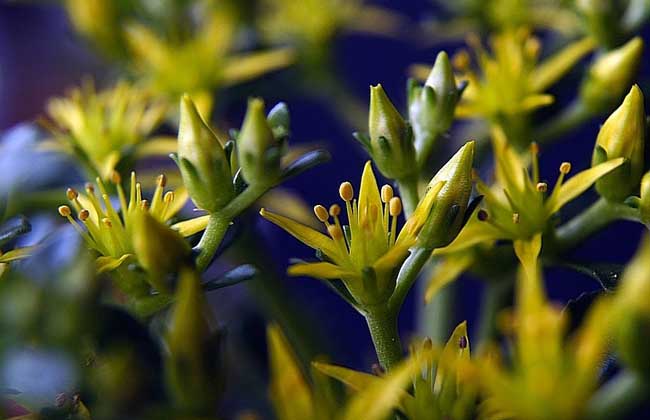
Sedum lineare, also known as Fo Zhijia, Tie Zhijia, Gou Ya Cai, Jin Ci Cha, etc., is a perennial herbaceous plant of the Sedum genus in the Crassulaceae family. The whole plant is used medicinally and has the effects of clearing heat and detoxifying, reducing swelling and draining pus, relieving pain and reducing jaundice. It is used for sore throat, hepatitis, carbuncles and sores, venomous snake bites, shingles, burns and scalds, and other conditions. Let us take a look at Sedum lineare planting techniques below!
Growth Habits of Sedum lineare
Sedum lineare has extremely strong adaptability and is not selective about soil. It can grow on relatively thin substrate. Its drought tolerance is extremely strong, and its cold resistance is also relatively strong. In summer, when the roof temperature reaches as high as 50-55°C and there is no rain for 20 consecutive days, it will not die. When cultivated in northern China, it grows very well in spring, summer, and autumn. During severe cold periods, the aboveground stems and leaves freeze and wither, and it enters a dormant period. Once the soil thaws the following year, new buds sprout, and by early spring it can cover the ground.
Propagation Methods of Sedum lineare
1. Sowing: Broadcast sowing is mainly suitable for the rainy season or cloudy days. It requires flat terrain, loose soil, and a moist plot that has been plowed and harrowed. The seedbed should not be too large, as too large a bed is inconvenient to manage. Cut vigorous stems and leaves into 3-4 cm segments and evenly broadcast them in the prepared bed. The spacing between the broadcast stems and leaves should be about 1 cm. Cover with fine soil to the extent that they are just barely exposed, then spray irrigate to keep the soil moist. Roots will form in about one week, after which routine management can begin.
2. Cuttage: Cuttage is suitable in summer and autumn. In a flat, loose, moist plot that has been plowed and harrowed, make beds and draw furrows, with furrow spacing of 10-15 cm. Cut vigorous stems and leaves into small segments of about 10 cm, insert them into the furrows and fill with soil, burying about 3-4 cm of soil. After leveling the ground, irrigate heavily with flooding. The irrigation must be sufficient. Do this once every 3 days, 2-3 times in total.
3. Division: In spring and summer, cut stems and leaves into small segments 6-7 cm long and scatter them on the ground that has been plowed, harrowed, and leveled. Use a three-tooth rake to gently hoe the soil surface so that the stem nodes are half-buried and planted into the soil, then spray water twice to keep the soil moist. Roots will form in about one week. The cuttage propagation coefficient of Sedum lineare is 1:20, meaning that 1 sq m of well-growing Sedum lineare can be expanded to 20 sq m.
Sedum lineare Planting Techniques
1. After planting Sedum lineare, the soil should be kept moist and water should be replenished in time, irrigating or spraying about once every 2-3 days. The plants can resume normal growth in 2-3 days, after which routine management can begin.
2. After planting Sedum lineare, irrigate according to different soil temperatures and air temperatures. Each irrigation should be thorough and sufficient, about 4-5 times throughout the year.
3. During routine management, fertilize Sedum lineare according to different soil textures, applying 15 kg per mu each time, about 2-3 times throughout the year.
4. Irrigate Sedum lineare with overwintering water before the soil freezes, so as to help Sedum lineare overwinter smoothly in the open field.
5. After the soil thaws in the spring of the second year after planting, water Sedum lineare with spring-return water and promptly remove weeds in the field to prevent field weeds from spreading and making management inconvenient.
6. Sedum lineare basically has no pests or diseases and does not require prevention and control work.