How to Grow Pleione? A Detailed Guide to Cultivation Methods
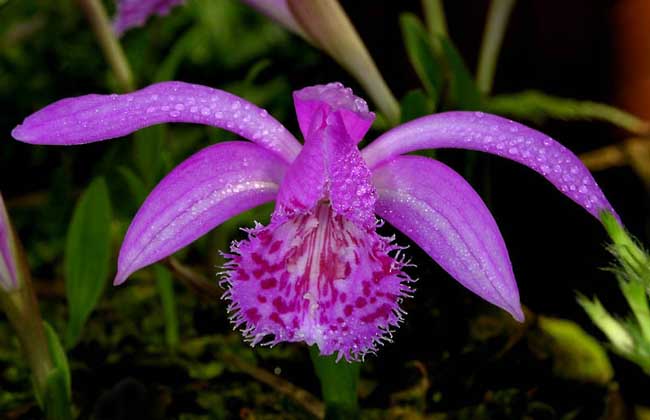
Pleione is a semi-epiphytic herbaceous plant of the genus Pleione in the orchid family (Orchidaceae). Its pseudobulbs are ovate to ovate-conical, with a distinct neck at the upper end. It often grows on humus-rich soil under evergreen broad-leaved forests or at the edges of shrubland, or on moss-covered rocks. This flower is cultivated and has relatively high horticultural value. Let us take a look together at the cultivation methods for Pleione.
Growth Habits of Pleione
Pleione prefers a cool, well-ventilated, semi-shaded environment and is relatively cold-tolerant. It does not go dormant in winter, and the minimum overwintering temperature should be above -10°C. It is best planted in loose, breathable, well-draining fern roots, sphagnum moss, or humus soil. It likes a climate with four distinct seasons. In summer, the temperature should preferably not exceed 25°C; it can also tolerate occasional days of 30°C heat. During the winter dormant period, the temperature should be close to freezing point, ideally 1 to 5°C, which is basically the same as a typical refrigerator's crisper compartment. After a period of low-temperature dormancy, it will sprout new shoots on its own.
Propagation Methods for Pleione
Pleione is usually propagated by division or sterile sowing. Because its embryo is underdeveloped, it can only be sown in culture medium under sterile conditions. Division is carried out after flowering. It prefers a warm, humid, and semi-shaded environment. Plant it in shallow pots using peat, moss, or humus soil. Newly transplanted plants should have watering controlled to prevent the pseudobulbs from rotting. During the growing season, apply dilute fertilizer. The root zone must be well-ventilated and well-draining. In autumn, it gradually enters dormancy. After the leaves dry up, keep the potting soil dry until germination begins the following spring.
Cultivation Methods for Pleione
1. Pot selection: Both ceramic pots and plastic pots can be used. Ceramic pots require more frequent watering. The evaporation of water from the surface of ceramic pots helps keep the root environment of Pleione cool. The advantage of plastic pots is that they do not require frequent watering and are clean and lightweight. Many people use semi-tall flower pots to grow them, because wild Pleione has relatively shallow roots. It has now been found that if deep pots are provided, they can grow quite well-developed root systems. Before planting, the flower pot must be cleaned and sterilized.
2. Substrate: The substrate for potting must be loose, well-draining, and well-ventilated, and must also have strong water retention capacity. Therefore, ordinary garden soil and commonly used potting soil are generally not suitable for growing Pleione. You can use the cultivation substrate for epiphytic or semi-epiphytic orchids as potting material. There can be many mixing ratios. The more commonly used one consists of 6 parts bark chunks for growing epiphytic orchids, 1 part coarse-grained perlite, 1 part moss cut into 5-6 mm pieces, and 1 part crushed peat.
3. Potting: Pleione should be potted or repotted during the dormant period, generally at the end of January or the beginning of February. The pseudobulb should be exposed one-third above the potting soil. Old roots do not need to be trimmed, as this helps stabilize the bulb. The planting spacing between bulbs is about 2 cm. A few varieties require the pseudobulbs to be completely buried in the substrate. When potting, fill the lower 2/3 of the pot with the coarser granules mentioned above, and place slightly finer material on top. Fill small bark chunks and shorter moss around the new pseudobulbs.
4. Watering: The critical period for watering Pleione is the early part of the growing season, when the roots of Pleione have just begun to grow and the flowering period is coming to an end. At this time, water lightly, keeping the substrate only slightly moist, in order to promote root growth. If too much water is given at this time, root rot is very likely to occur. After some time, once the roots have basically grown, you can begin watering heavily.
5. Fertilizing: Pleione likes frequent applications of dilute fertilizer. Fertilizing can only be done during the heavy watering period. In the early stage, use fertilizer with a relatively high nitrogen content, then switch to a formula with relatively high phosphorus and potassium content. In Australia, some people directly use horse manure as the substrate and have also achieved success.
6. Light: Pleione can tolerate direct sunlight, but during the summer growing season it is best to provide 50% shade. Under outdoor tree shade is a very good growing location. In addition, like other orchids, it likes air circulation.
Pest and Disease Control for Pleione
1. Leaf spot: Leaf spot mainly harms the leaves and flower buds of Pleione. It can be controlled with 1% Bordeaux mixture, 50% carbendazim, or 50% thiophanate-methyl at 1000 times dilution, or 40% dimethoate emulsifiable concentrate at 1500 times dilution.
2. Rust fungus: Usually on the upper and lower surfaces of leaves, and less often on stems, raised small pustules appear, containing yellow, orange, rust-colored, or even purplish-black powdery spores. Rust disease is not fatal, and the leaves will not die either, but it weakens plant growth. In addition to cutting off diseased leaves, the control method is to spray with 65% zineb powder at 500-600 times dilution or copper-containing fungicides.
3. Southern blight: Southern blight mostly occurs during the plum rain season. At the initial stage of the disease, the leaf base is covered with white mycelium, causing the rhizome to rot. The control method is to remove the infected potting soil and sprinkle on pentachloronitrobenzene powder or lime. Radical cure method: pay attention to ventilation and light transmission, and ensure good drainage of the potting soil. Severely diseased plants should be burned.
4. Anthracnose: The lesions first extend from the leaf tip toward the rhizome. They are initially brown, then gradually expand and increase, with many dry black spots appearing. In severe cases, the entire plant dies. In addition to actively improving environmental conditions, during the disease period you can first spray with 50% thiophanate-methyl wettable powder at 800-1500 times dilution, once every 7-10 days, and then supplement with 1% equal-strength Bordeaux mixture, once every half month, spraying continuously 3-5 times.
5. Scale insects: Scale insects parasitize the leaf edges or undersides of leaves and suck sap, causing the plant to wither. In severe cases, the entire plant will turn yellow and die. The secretions of scale insects can also cause sooty mold. They can be killed by spraying with 50% omethoate emulsifiable concentrate, 50% malathion, 25% phosmet emulsifiable concentrate, or 80% dichlorvos emulsifiable concentrate at 1000 times dilution, generally once every 5-7 days, spraying continuously more than 3 times.