How to propagate Peperomia? Several common methods explained
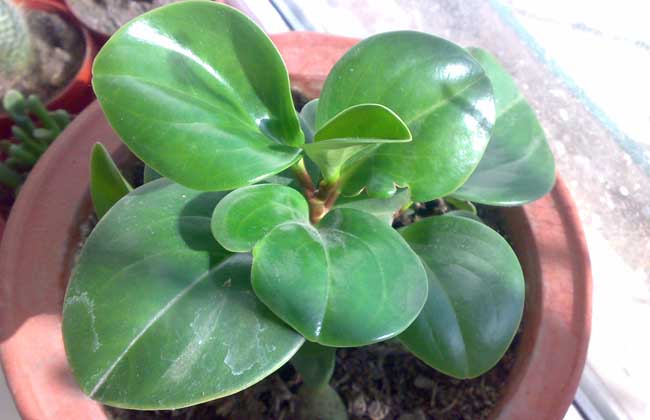
Peperomia is a perennial evergreen herbaceous plant of the genus Peperomia in the Piperaceae family. It is found in Taiwan, China, Fujian, Guangdong, Guangxi, Guizhou, Yunnan, Sichuan, southern Gansu and southern Tibet, growing on moist rocks or dead trees, and can be kept as a small potted plant. It is often placed on coffee tables, display cabinets, curio shelves and office desks, and is very beautiful. Let's take a look below at how to propagate Peperomia!
Stem cutting method
For propagating Peperomia by stem cuttings, terminal bud cuttings give the best results. Generally in May to June, select a robust, well-developed 8-10 cm long branch that is two years old. It should have 3 nodes; cut 0.5 cm below a node. Leave 3-5 leaves on the upper part, place in a ventilated, shady spot for 1-2 hours, and once the cut has dried slightly, insert it into a growing medium of half leaf mold and half garden soil, water thoroughly, and place in a shaded spot. Keep the potting soil moist at all times; roots will form after 20 days, and when the roots are 3 cm long, it can be potted up for care.
Leaf cutting method
For propagating Peperomia by leaf cuttings, in East China it is best done in May each year. Take a robust, mature leaf from the middle or lower part of the plant and remove the whole leaf together with its petiole. After drying in the shade for half a day, insert the petiole at a 45° angle into a shallow pot filled with vermiculite or sand, and keep it moist. At a temperature of around 25℃, roots will grow in about 25 days, and once the leaf has 3-4 leaves it can be potted up for care. When leaf cutting, never cover the pot opening with plastic film or glass to retain moisture, otherwise rot easily occurs.
Division method
The division method for Peperomia is mainly used for propagating variegated-leaf varieties. The potting soil can be made up of leaf mold, peat soil plus some perlite or sand, with an appropriate amount of base fertilizer added. During the growing season, apply a top dressing once every half month. For watering, water that has been left standing in a water tank for 1-2 days is best. Reduce watering in winter. Temperature changes directly affect leaf color: for variegated-leaf types the optimum winter temperature is 18-20℃, while for green-leaf types it is around 15℃. It fears heat in midsummer, so it can be placed under a shade shed and misted to cool down, but note that both excessive heat and excessive moisture can cause the stems and leaves to turn black and rot. Place it in a bright spot in winter and avoid direct sunlight in summer. Repot once every 2-3 years.