How do you care for Peperomia? A full breakdown of growing methods and things to watch out for
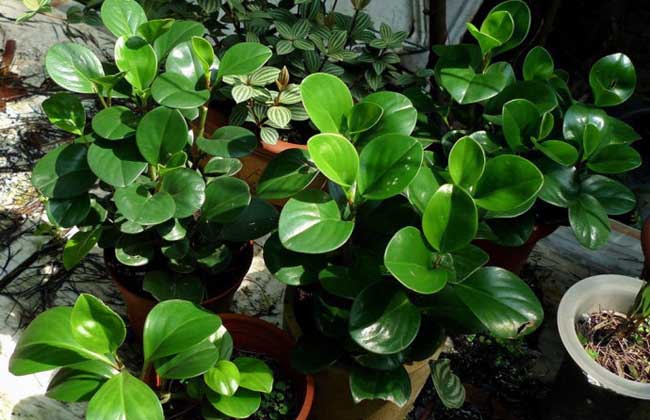
Peperomia is a perennial evergreen herbaceous plant in the Piperaceae family, genus Peperomia. Small potted plants are often grown in white plastic pots or white porcelain pots and placed on coffee tables, display cabinets, curio shelves, or office desks, where they look very beautiful; or the branches can be allowed to spread and trail down, hung in front of an indoor window or in a bathroom, where they are also very fresh and pleasing to the eye. Now let us take a look together at the growing methods and things to watch out for with Peperomia!
Peperomia's growth habits
Peperomia grows on damp rocks or dead trees, and is distributed across the Americas, Oceania, Africa, and the tropical and subtropical regions of Asia. It likes a warm, humid, semi-shaded environment. The suitable growing temperature is around 25°C, and it must not go below 10°C. It is not tolerant of high temperatures, requires relatively high air humidity, avoids direct sunlight, and likes loose, fertile, well-drained, moist soil.
Peperomia's propagation methods
1. Cuttings: In April to May, select healthy top branches about 5 cm long as cuttings, keep 1 to 2 leaves on the upper part, and after the cut end has dried, insert them into a moist sand bed. Leaf cuttings can also be used: cut off a leaf with its petiole using a knife, let it dry slightly, then insert it diagonally into the sand bed, and it will root in 10 to 15 days. In a greenhouse with temperature control equipment, this can be done year-round.
2. Division: The potting soil can be made from leaf mold, peat soil plus some perlite or sand, with an appropriate amount of base fertilizer added. During the growing season, apply a topdressing once every half month. For watering, water that has been left standing in a water tank for 1 to 2 days is best. In winter, reduce watering. Temperature changes directly affect leaf color. For colorful-leaf types, the suitable winter temperature is 18 to 20°C, while for green-leaf types it is around 15°C. In the heat of summer, it fears heat, so it can be placed under a shade shed and misted to cool it down, but note that both excessive heat and excessive moisture can cause the stems and leaves to turn black and rot.
Peperomia's growing methods
1. Soil: Peperomia likes to grow in loose, fertile, well-drained sandy soil rich in humus, and is not suited to growing in clay soil. So the substrate is usually a mixture of leaf mold, river sand, and a small amount of decomposed organic fertilizer. For a better substrate, peat soil mixed with perlite can be used for cultivation.
2. Watering: Peperomia is relatively fond of water and is not tolerant of drought. During the growing season, water frequently. When the temperature is above 25°C or the air is dry, water a bit more, but also prevent waterlogging. When the temperature is below 25°C, water thoroughly again only when the surface of the potting soil is dry. When the temperature is below 10°C, it can tolerate several days of dryness without watering.
3. Humidity: Peperomia likes a moist growing environment. Under high-humidity conditions it grows luxuriantly and its leaf color is vivid. When the temperature is high or the air is dry, increase misting of the leaf surface or sprinkle water in the growing environment to maintain relatively high air humidity, which is extremely beneficial to the plant's growth. It can also adapt to short periods of dry conditions, but not for long, and generally should be kept at around 70%.
4. Temperature: Peperomia likes a warm environment. The suitable growing temperature is between 20 and 30°C. The overwintering temperature is best kept above 10°C. Below 10°C it stops growing, and below 5°C it is prone to frost damage.
5. Sunlight: Peperomia likes semi-shade or scattered light. Apart from winter, when it needs sufficient light, in other seasons it needs a little shading, and in summer especially it needs more shading. If placed in a shaded environment, it tends to grow leggy, the internodes lengthen, and its ornamental value decreases, so this is not advisable either. Under semi-shaded conditions, the leaf color is brighter and the gloss is better, and especially for variegated varieties, the demand for sunlight is a little higher.
6. Fertilizing: When the temperature is above 18°C, a small amount of fertilizer is needed. When the temperature is below 18°C or above 30°C, it is best to apply little or no fertilizer. Fertilizing is best done in small amounts and frequently, and watering with diluted fertilizer solution instead of clean water is best. It is not tolerant of raw fertilizer or concentrated fertilizer, and fertilizer damage is very easy to cause. Fertilizer solution can also be sprayed on the leaves for fertilizing, with good results. The main fertilizers are nitrogen fertilizer and potassium fertilizer, with phosphorus fertilizer secondary.
7. Pests: Peperomia has relatively few pests and diseases. Generally, the diseases that appear are all caused by improper care and an unsuitable environment, and it can gradually recover after some adjustment. The main pest is red spider mite damage, but this can be prevented by maintaining relatively high air humidity. When it occurs, it can be controlled by wiping the leaves with a damp cloth or spraying a specialized pesticide.
8. Pruning: For newly propagated young Peperomia seedlings, when the seedlings are about 10 cm tall they should be pinched to increase the number of branches, making the plant shape fuller and its ornamental value higher. For large plants, pruning is generally based on their growth condition.
What should you do if Peperomia's leaves turn yellow?
1. Unsuitable light: Peperomia is a shade-loving plant, and it only needs scattered light sufficient for photosynthesis, while direct sunlight should be avoided. Exposing Peperomia to too much sun is one of the reasons its leaves turn yellow. You can apply a little fertilizer, water it a bit, and place it in a semi-shaded spot for a few days, and Peperomia will become verdant again.
2. Improper care: It may be due to overwatering, or low temperature, or insufficient fertilizer, and other reasons. If Peperomia is kept indoors, scattered light is enough; there is no need to sun it all the time. Water thoroughly each time, once a week is enough. Supplement fertilizer appropriately to increase nutrients. If the air is dry, mist the leaf surface more, and avoid frost.
Peperomia's water culture method
1. Water culture of Peperomia is best carried out in April and May. Take a soil-grown plant with a relatively good shape, carefully rinse off the soil from the roots, and remove dead roots and dead leaves. Soak in a 0.05% potassium permanganate solution for 10 minutes. After rinsing, plant it in a container, fix the root system with a medium, and pour in clean water, with an amount of water sufficient to submerge 1/2 to 2/3 of the root system. It is worth mentioning that Peperomia's stems and leaves are soft and tender, so it is best not to get them wet.
2. In the early stage of water culture of Peperomia, change the clean water once every 2 to 3 days. After a week, new roots will grow. When the new roots grow to more than 5 cm, move the container together with the plant to a place with sufficient scattered light for care, switch to a foliage plant nutrient solution for cultivation, and thereafter replace the nutrient solution once every half month.
3. When Peperomia is first put into water culture in April and May, change the water once a day, clean off the sticky substances produced on the root system, and add clean water. This lasts about 10 days or so. After new fibrous roots grow out, the water can be changed once every 2 to 3 days. For watering Peperomia, river water, rainwater, or tap water can be used. For special varieties (such as poinsettia, etc.), rainwater or settled tap water should be used for watering, and well water is generally not used.
4. Compared with other water-cultured plants, Peperomia needs fewer nutrients, and basically does not need fertilizing. Water that is too nutrient-rich instead easily causes microorganisms to breed in the water body, which is not good for plant growth. Also, succulent and pulpy plants do not have high light requirements. Once new fibrous roots grow, later care is relatively simple. When the air is dry, mist the leaf surface more, and avoid frost.
5. Peperomia has relatively few pests and diseases. Generally, the diseases that appear are all caused by improper care and an unsuitable environment, and it can gradually recover after some adjustment. The main pest is red spider mite damage, but this can be prevented by maintaining relatively high air humidity. When it occurs, it can be controlled by wiping the leaves with a damp cloth or spraying a specialized pesticide.
Things to watch out for when growing Peperomia
1. Peperomia is a semi-shade plant, so it should usually be placed in a spot with good scattered light. In winter, when the temperature is lower, it can be placed in a place with sufficient light. But if it is kept in an overly shaded environment for a long time, besides being prone to leggy branches and stems, its leaf color will also become pale and lusterless, greatly affecting its ornamental value.
2. Peperomia likes a warm, humid environment. It grows rapidly in spring and autumn, and grows slowly or stops growing during high summer temperatures and low winter temperatures. Peperomia is relatively fond of water and grows luxuriantly in a relatively humid environment, so in the hot, dry summer season, frequently spray water around it and on its leaves to maintain relatively high air humidity.
3. Peperomia is relatively fond of water and not tolerant of drought. Usually, watering should follow the principle of watering when dry and letting it dry between waterings, and the potting soil must not be too dry. But at the same time as watering, also be careful to avoid water accumulating in the pot, as waterlogging very easily causes root rot and leads to plant disease. In winter, when the temperature is low, it depends on the situation: when the temperature is lower, water less, and on sunny days, water a bit more appropriately.
4. Peperomia does not have very high requirements for fertilizer and water. In winter and summer, apply a small amount of fertilizer, and in other seasons it can be watered with thin fertilizer solution. It is best to follow “light fertilizer applied frequently”, and avoid concentrated fertilizer and raw fertilizer. In order to avoid water accumulating in the pot, it is best to choose a clay pot or ceramic pot with better air permeability when planting. Households with heating in winter should also frequently mist the leaves, and while cleaning the leaves, also appropriately increase humidity, so that Peperomia's leaves can be verdant and bright.
5. A well-cared-for Peperomia has a relatively strong branching ability and grows rapidly. Usually, pay attention to pruning and cut off branches that are too tall or too dense. This can both improve air circulation between the branches and stems and keep the plant shape attractive.