A Detailed Guide to the Planting Methods and Care Techniques of China Aster
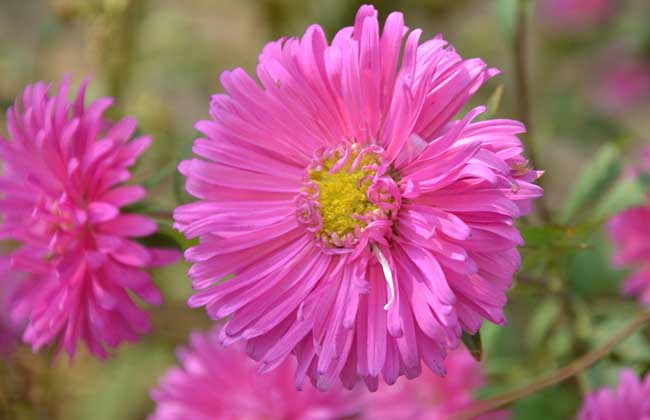
China aster, also known as Jiangxi aster, July aster, Gesang flower, etc., is an annual or biennial herb of the genus Callistephus in the Asteraceae family. It is produced in Jilin, Liaoning, Hebei, Shanxi, Shandong, Yunnan, Sichuan and other places, growing on hillsides, in grass clumps, by water or in sparse shady forests, and is usually introduced as an ornamental planting in botanical gardens, gardens, courtyards and other public places. Let's take a look at the planting methods for China aster below!
Growth Habits of China Aster
China aster is a shallow-rooted plant, so pay attention to water supply in dry seasons. The plant is robust and not fussy about soil, but it likes fertilizer and grows best in fertile sandy soil. It likes sunlight and moisture, is not tolerant of waterlogging, and is prone to pests and diseases under high temperature and high humidity. Its heat tolerance and cold tolerance are both relatively poor. Tall varieties are more adaptable and can be planted anywhere, while medium and short varieties are less adaptable and require careful management. Avoid continuous cropping, and plant once every 3 to 4 years. For potted plants, replace the soil with new soil once a year.
Propagation Methods for China Aster
1. China aster is propagated by seeds, and drilling is likely to produce seedlings. Under 14-16°C conditions, it germinates in 4 days and emerges in about 10 days. It is generally sown in spring, but can also be sown in summer and autumn. It can bloom 2 to 3 months after sowing, and sowing can be done in batches according to needs to control the flowering period.
2. Short varieties of China aster sown in a greenhouse in February to March or sown in a cold frame in March can bloom in May to June; sown in the open field in April to May, they bloom in July to August; sown in early July, they can bloom on "National Day"; sown in early to mid-August, the seedlings overwinter in a cold frame and bloom on "May Day" the following year.
3. Medium varieties of China aster sown in May to June bloom in August to September; sown in August, they need to overwinter in a cold frame and bloom in May to June the following year. Tall varieties can be sown in spring and summer, and all bloom in autumn.
Planting Methods for China Aster
1. During the seedling stage of China aster, transplanting 2 to 3 times can make the stems thick and sturdy, the plant shape full, and the fibrous roots dense, improving drought resistance, waterlogging resistance and lodging resistance. For spring-sown seedlings, when they grow to 5-10 cm tall, they can be transplanted about one month after sowing, and planted in place about two months after sowing. During the seedling-raising period, water 2 to 3 times and loosen the soil once. After planting in place, water 2 to 3 times, then loosen the soil, and loosen the soil after rain. Generally, topdressing and watering are carried out after planting in place and before flowering.
2. When planting China aster, pay attention to intertillage and moisture conservation, so as to avoid excessive watering or excessive rain causing the soil to be too wet, which can lead to spindly growth, lodging or disease. After flower buds appear at the branch tips, water less to inhibit the elongation of the main branches and promote the growth of side branches. When the side branches grow to 2-3 cm, slightly increase the water to make the plant shape full. Topdressing should mainly be phosphorus and potassium fertilizers. Do not practice continuous cropping, and it is also not suitable to sow seeds or plant seedlings in plots where other Asteraceae plants have been grown, so as to ensure healthy growth.
Pest and Disease Control of China Aster
1. Yellowing disease: The best control method is to grow the plants in a screenhouse. You can also spray 50% malathion 1000x solution or diazinon and other insecticides to control leafhoppers. At the same time, frequently remove wild weeds around the China aster to reduce sources of infection. In the early stage of the disease, spray medical tetracycline or oxytetracycline 4000x solution.
2. Gray mold: Gray mold is caused by Botrytis fungi, whose sclerotia overwinter on diseased residues or in the soil. This disease easily occurs when the temperature is around 20°C and the humidity is very high. Plastic greenhouses suffer more severe disease than glass greenhouses, so pay attention to greenhouse ventilation, reduce humidity, and avoid inappropriate watering. Remove diseased plants and leaves in time to reduce sources of infection. During the disease period, spray 50% procymidone wettable powder 1500x solution or 50% iprodione 1500x solution.
3. Fusarium wilt: In the early stage of the disease, or before the disease occurs, apply chemicals by root drenching or spraying. Use 50% carbendazim wettable powder 500x, pouring 0.25 kg per plant, once every 5 to 7 days, for 2 to 3 consecutive times. You can also use 40% carbendazim suspension concentrate 400x solution, or 50% thiophanate-methyl wettable powder 400x solution, or 10% shuangxiaoling aqueous solution 200-300x solution, or 25.9% kangfuning 500x solution. Root drenching with potassium permanganate 800-1500x solution is also acceptable.
3. Rust disease: When there are alternate host plants of the genus Pinus near the China aster, the disease is likely to occur and spread. Chlorotic spots appear on the upper surface of the leaves, and on the corresponding lower surface round pale yellow powdery spore piles can be seen. In the early stage of the disease, spray 15% triadimefon (fenoxinyl) wettable powder 1500x solution or 12.5% subaoli 3000x.
4. Brown spot disease: Choose a planting site with good drainage, maintain appropriate planting density, select disease-resistant varieties, remove diseased leaves immediately upon discovery, collect diseased fallen leaves and diseased residues in late autumn and destroy them centrally, and spray 50% carbendazim wettable powder 1000x solution, or 80% zineb wettable powder 500-700x solution, or 1% Bordeaux mixture, or 75% chlorothalonil 500x solution for control, spraying once every 7 to 10 days.