How to grow daisies well? Master these care methods
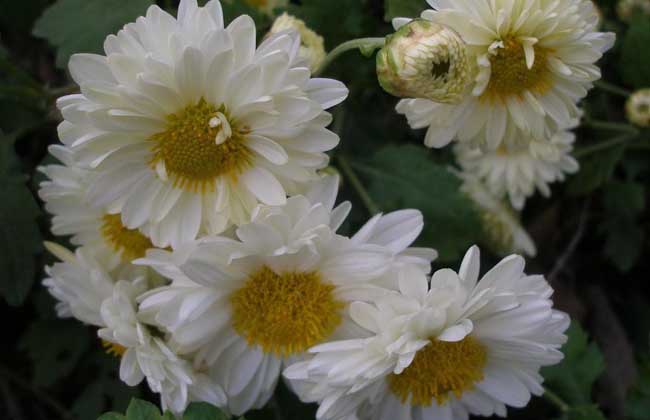
The daisy, also known as spring chrysanthemum, malantou flower, and yanming chrysanthemum, is a perennial herbaceous plant of the genus Bellis in the Asteraceae family. It is native to Europe and is cultivated in gardens across China as a flowerbed ornamental plant. It blooms in early spring, with delicate, small flowers in harmonious colors full of vitality, possessing the grace of a gentleman and a charmingly innocent flair. Let us take a look below at how to grow daisies well!
Daisy Growth Habits
Daisies prefer cool climates and dislike heat. They like light but also tolerate partial shade, and have no strict requirements for the soil of the cultivation site. The optimum temperature for seed germination is 22-28°C, and the optimum temperature for growth is 20-25°C. In the southwest region, it is suitable to plant single-petaled or semi-double varieties with medium and small flowers. Medium and large double-petaled varieties grow weakly and set seed poorly.
How do daisies reproduce?
1. Seed propagation: In the south, sowing is mostly done in autumn from August to September, though spring sowing is also possible, but growth is often poor in summer. In the north, sowing is mostly done in spring, though autumn sowing is also possible, but in winter the seedlings need to be moved into a greenhouse for cultivation and management. Because daisy seeds are relatively small, the broadcasting method is usually adopted. However, seedlings grown from seed often cannot retain the characteristics of the mother plant.
2. Division propagation: Seedling-grown daisies vary considerably, so for some superior varieties the division method can be used for propagation, but the growth vigor is not as good as that of seedling-grown plants, and seed setting is poor. In mid-to-late March, the old clumps of chrysanthemum greens can be dug out, exposing the root crown, and the lateral buds that already have roots can be cut off together with the old roots and transplanted into the field. Division propagation is most suitable when new shoots are sprouting.
3. Cutting propagation: Daisies can be propagated by cuttings throughout the entire growing season, with the highest survival rate for cuttings taken from April to June. The seedbed is best made with new soil mixed with composted, thoroughly rotted organic fertilizer. Cut branches with 3-5 nodes and a length of 8-10 cm, remove the basal leaves, and insert them to a depth of 1/3 to 1/2 of the cutting length. After cutting, keep the seedbed moist, avoid waterlogging, provide shade during high-temperature seasons, and when temperatures are lower, build a plastic film arched shed to keep warm and retain moisture.
How are daisies cultivated?
1. Transplanting and potting: After the seedlings have been hardened off, they can be potted. At this point the seedlings already have 3 pairs of true leaves. If plug tray seedling raising is used, the root system has already filled the plug tray. For potting, nutrient pots with a 300px caliber are mostly used. After potting, there is no need to change pots again. When potting, compound fertilizer can be added as a base fertilizer. After potting, water thoroughly with rooting water promptly. Light regulation: Daisies also like sunlight, including during the growing period and the flowering period. Sufficient light can promote plant growth, with tender green leaf color and an increased number of flowers.
2. Temperature control: After potting, move them to a protected area to overwinter, which can prevent potted flowers from suffering freezing damage in winter. Daisies can safely overwinter above 5°C, and maintaining a temperature of 18-22°C is most suitable for the formation of good plants. However, this is difficult to achieve in practice. Daisies can bloom normally at 10-25°C. When the temperature is below 10°C, growth is relatively slow, the plant shape becomes smaller, and flowering is delayed. If the temperature is above 25°C, the flower stems will elongate, and both growth vigor and flowering will decline. In May to June, as the temperature rises, growth vigor and flowering are not ideal, so autumn-sown seedlings are generally used to avoid the environment of rising temperatures after May.
3. Water and fertilizer management: Daisies like fertile soil, and the base fertilizer in the medium alone cannot meet their growth needs. Therefore, apply fertilizer once every 7-10 days. Flower fertilizer can be used, or compound fertilizer can be applied by spot application or dissolved in water for irrigation, at a concentration of 200-250 ppm. However, spot application of compound fertilizer is not as quick-acting as irrigation. So if conditions permit, water-soluble flower fertilizer can be used alternately. But in winter, the amount of flower fertilizer used should be reduced. Before watering with fertilizer, the medium should be allowed to dry slightly, moist but not wet. Because it has basal leaves growing in a cluster, if there is no ventilation, the basal leaves are very likely to rot and become infected with pathogens. Giving sufficient water and fertilizer during the growing season makes it grow luxuriantly and also prolongs the flowering period.