Growing Methods and Precautions for Cymbidium longifolium
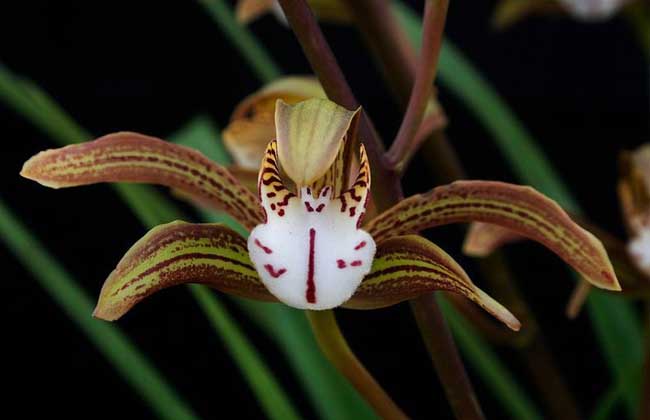
Cymbidium longifolium is an epiphytic plant of the genus Cymbidium in the orchid family (Orchidaceae). It grows in forests or on trees at forest edges or on rocks, at an altitude of 1400-2800 m. In China it is distributed in southwestern Sichuan, northwestern to southeastern Yunnan, and Tibet (Bomi, Zayu, Medog). It has high horticultural value. Let us take a look at the growing methods for Cymbidium longifolium below!
Growth Habits of Cymbidium longifolium
Cymbidium longifolium prefers shade and avoids direct sunlight; it likes moisture and dislikes dryness. It grows best at 15°C to 30°C, grows poorly above 35°C, and severe cold below 5°C will affect its growth vigor. At this time the orchid is often in a dormant state. If the temperature is too high combined with exposure to sunlight, leaf scorch or withering will appear within one or two days. If the temperature is too low and it is not moved indoors in time, frost damage will occur. It is suitable to use sandy loam rich in humus, and the drainage performance must be good. Leaf mold or mountain soil with more humus should be selected. Slightly acidic loose soil or iron-containing soil is suitable, with a pH value of 5.5-6.5 being appropriate.
Propagation Methods for Cymbidium longifolium
1. Division: This can be done in both spring and autumn, generally once every three years. Any plant that grows robustly with dense pseudobulbs can be divided. After division, each clump must retain at least 5 connected pseudobulbs. Before division, watering should be reduced to make the potting soil relatively dry. When potting after division, first cover the drainage hole at the bottom of the pot with broken tile pieces, then spread coarse gravel to occupy 1/5 to 1/4 of the pot depth, then place coarse-grained soil and a small amount of fine soil, and then plant with sandy loam rich in humus.
2. Sowing: For sowing, it is best to select fruit that has not yet split. After sterilizing the surface with 75% alcohol, take out the seeds, soak them in 10% sodium hypochlorite for 5-10 minutes, take them out and rinse them 3 times with sterile water, then sow them in a culture bottle containing medium, and then place them in a dark culture room, keeping the temperature at about 25°C. After germination, move them into the light and protocorms can form. From sowing to transplanting takes half a year to one year.
Growing Methods for Cymbidium longifolium
1. Potting: The potting time for Cymbidium longifolium is generally March-April in spring or October-November in autumn. Flower pots with a small mouth, deep body, and large bottom hole are best. Wild seedlings newly dug from the mountains need to be planted in clay pots (earthen pots), so that the orchid soil dries easily, has good aeration, and roots easily. Only after 2-3 years can they be transferred to purple clay pots or porcelain pots.
2. Planting: The planting method for Cymbidium longifolium is different from that of general flowers, especially for famous orchid varieties. When repotting and moving pots, the roots must be washed. The method is to soak the roots in clean water, gently scrub with an old toothbrush or writing brush, and never use too much force that damages the roots. Use scissors to cut off residual leaves, yellow leaves, broken roots, and blackened rotten roots, taking care not to damage young buds. Then place the treated plant in a cool, ventilated place to dry. When the roots turn white and show fine wrinkles and become soft, plant them in the pot.
3. Watering: During the peak growth period of orchids, once there is a water shortage in summer, potted orchids will grow poorly. Orchids need eight parts dry and two parts wet. Watering should follow the principle of “water when dry, stop when wet, and appropriately keep on the dry side.” Watering must be thorough, and half watering must not be done. The number of waterings can be determined by the potting medium of the orchid.
4. Fertilizing: Farmyard manure is a very good organic fertilizer, but it must be piled and decomposed for more than one year before it can be applied. This kind of fertilizer liquid can be diluted with water 10-20 times and poured on. Apply it as much as possible along the edge of the pot, without contacting the roots and without touching the orchid leaves. When applying chemical fertilizers, pay attention to the balance of nitrogen, phosphorus, and potassium, and strictly control the concentration. Variegated-leaf seedlings should control chlorophyll synthesis, should not be given nitrogen fertilizer, and should not be given fertilizers containing manganese and magnesium (such as calcium magnesium phosphate fertilizer, etc.).
5. Pruning: When Cymbidium longifolium sprouts, prune the plant once, cutting off overly long and overly dense branches and some old branches. Many new branches will sprout from the nodes, making the plant shape fuller. Because Qianye grass grows relatively quickly, it should be shaped frequently during cultivation, and branches affecting the plant shape should be cut off in time to maintain an attractive appearance.
Pest and Disease Control for Cymbidium longifolium
1. Southern blight: Southern blight mostly occurs in the moldy rainy season. At the initial stage of the disease, the leaf base is covered with white mycelium, causing rhizome rot. The control method is to remove the infected potting soil and sprinkle pentachloronitrobenzene powder or lime on it. The fundamental control method is to pay attention to ventilation and light transmission and ensure good drainage of the potting soil. Severely diseased plants should be burned.
2. Anthracnose: Disease spots first extend from the leaf tip toward the rhizome. They are initially brown, then gradually expand and increase, with many dry black spots appearing, and in severe cases cause the entire plant to die. In addition to actively improving environmental conditions, during the disease period the control method is to first spray with 50% thiophanate-methyl wettable powder at 800-1500 times dilution, once every 7-10 days, and then supplement with 1% equal-strength Bordeaux mixture, once every half month, spraying continuously 3-5 times.
3. Scale insects: Scale insects are commonly known as “orchid lice.” They reproduce fastest under conditions of high temperature, high humidity, and poor air circulation. During the hatching period, spray with 1% omethoate or 1500 times 50% malathion. If there are not many pots, they can also be removed manually by brushing.