How to Grow Coleus? Detailed Guide to Cultivation Methods and Precautions
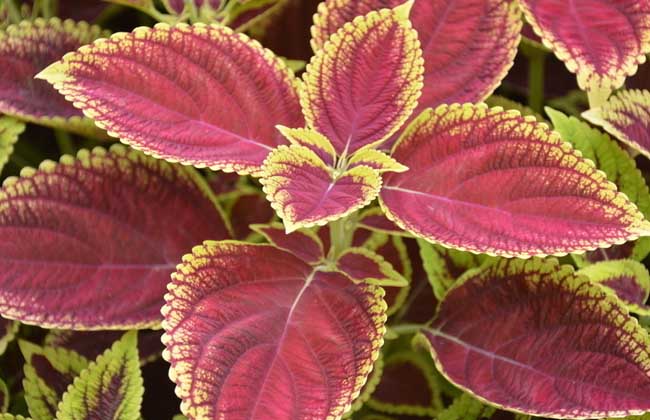
Coleus, also known as five-colored sage, laolai shao, five-color grass, and painted nettle, is a perennial herbaceous foliage flower of the genus Coleus in the Lamiaceae family. Depending on the variety, it has markings in various colors such as yellow, red, purple, orange, and green. It is commonly used for arranging patterns in flower beds, venues, and theaters, and can also serve as foliage in flower baskets and bouquets. Let's take a look at the cultivation methods for coleus!
Growth Habits of Coleus
Coleus is a flower with very strong adaptability. It can be seen in many parts of our country, especially commonly in the south. It is often cultivated in gardens across our country, with main cultivation bases in Jiangsu, Zhejiang, Anhui, and other places. It is a warmth-loving plant with strong adaptability. The winter temperature should not be lower than 10°C. In summer, provide slight shading during high temperatures. It prefers ample sunlight, and sufficient light makes the leaf colors vivid.
Propagation Methods for Coleus
1. Sowing: Coleus is generally sown in March in a greenhouse. Mix fully decomposed humus soil and plain sandy soil in equal parts, put the mixture into a seedling pot, and soak the seedling pot containing fine sandy soil in water until thoroughly saturated. Then sow according to the method for small seeds, cover with a thin layer of soil, cover with a glass plate or plastic film, keep the pot soil moist, and provide water and care. The suitable germination temperature is 25°C to 30°C, and germination occurs in about 10 days.
2. Cuttings: Can be done in all four seasons and roots very easily. You can also combine tip pruning and trimming of the plant for softwood cuttings. Cut plump, well-developed branches into sections of about 10 cm, insert them into clean, sterilized river sand. The part inserted into the soil must have leaf nodes for rooting. After cutting, maintain in partial shade and keep the pot soil moist. When the temperature is higher, rooting is faster. During this period, avoid overly wet pot soil to prevent root rot. Roots and survival are achieved in about 15 days.
3. Water propagation: For water propagation of coleus, use half a cup of cooled boiled water. Select the upper 2-3 nodes of well-developed branches as cuttings, remove the lower leaves, place them in water, and when white water roots grow to 5-10 mm, they can be planted into pots.
Coleus Cultivation Methods
1. Soil: Potted coleus requires sandy culture soil rich in humus, loose and fertile, with good drainage and aeration.
2. Watering: The water requirement for coleus is to keep the pot soil and environment moderately moist at all times. Avoid drought and prevent waterlogging, so as to prevent leaf dehydration and loss of color, and root infection with soft rot.
3. Sunlight: When the light is soft and sufficient, the leaf color of coleus is strikingly brilliant. However, avoid direct strong sunlight under clear summer skies, which can cause the leaf surface to become rough and lose gloss. In shaded environmental conditions, the leaf color is also not vivid.
4. Temperature: Coleus prefers a warm, humid climate and fresh air environmental conditions. The suitable indoor temperature in winter is 20°C to 25°C. The minimum overwintering temperature should not be lower than 10°C. If the temperature is too low, the leaves turn yellow and fall off. Below 5°C, the plant dies.
5. Fertilizing: Coleus has low fertilizer requirements. During the growing season, apply 1-2 times per month a thin fertilizer mainly based on nitrogen fertilizer.
6. Pests and diseases: Coleus seedlings are prone to damping-off disease, so attention should be paid to disinfecting the sowing soil. During the growing period, it can be harmed by leaf spot disease; spray with 50% thiophanate wettable powder at 500 times dilution. When cultivated indoors, it is prone to damage by scale insects, red spiders, and whiteflies; spray with 40% omethoate emulsifiable concentrate at 1000 times dilution for control.
7. Pruning: During the seedling stage, coleus should be pinched back multiple times to promote side branches and make the plant shape full. After flowering, keep 2-3 nodes on the lower part of the branches and cut off the rest to encourage new branch growth.