A detailed introduction to the cultivation methods of cosmos
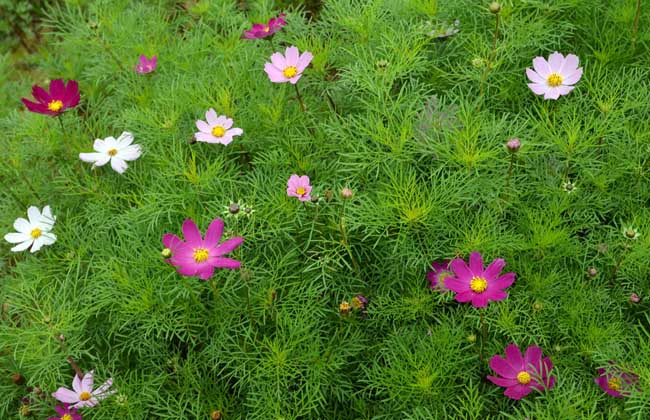
Cosmos is also known as large cosmos, autumn cosmos, etc. It is an annual or perennial herbaceous plant of the genus Cosmos in the Asteraceae family. It has a tall plant form, elegant leaf shape, and rich flower colors. It is suitable for arranging flower borders. Planted in patches along grassland edges, around tree clusters, and beside roads for beautification and greening, it has a rather wild charm. It can also be planted beside hedges, among rocks, on cliff slopes, in tree beds, or near homes. Now let us take a look at the cultivation methods of cosmos!
Growth habits of cosmos
Cosmos is native to Mexico in the Americas, and is widely cultivated in China. It also often grows spontaneously beside roads, on field ridges, and along stream banks. There are large areas of naturalized cosmos in Yunnan and western Sichuan. It is a light-loving plant, likes light, tolerates poor soil, avoids fertilizer, and dislikes overly fertile soil. It avoids heat, avoids waterlogging, is not suited to high summer temperatures, and is not cold-tolerant. It needs loose, fertile, and well-drained loam. The main varieties include white-flowered cosmos, large-flowered cosmos, and purple-red-flowered cosmos. Horticultural varieties are divided into two major systems: early-flowering and late-flowering, and there are also single and double forms.
Propagation methods of cosmos
1. Sowing: In northern China, sowing is generally done from April to June, and flowering occurs successively from June to August. From August to September, the weather is hot with frequent cloudy rain, so flowering is reduced. After the weather cools in autumn, flowering continues until frost. If sown in July to August, it can bloom in October, and the plants are short and neat. In late March and early April, sow the seeds in an open-field seedbed. They can germinate even at a lower soil temperature of 15°C, but if sown very early, they will grow into giant plants 2 m tall. There are also early-blooming varieties that flower 50 to 70 days after sowing, so sowing should be divided into early-blooming and autumn-blooming types.
2. Cuttage: Cuttage propagation is carried out in May. Select robust terminal branches and cut a section 8 cm to 10 cm long as a cutting. Insert 3 to 5 plants as a clump into a flower pot. The pot should be buried in the soil, with 4 cm to 5 cm exposed above the ground. Water and shade it, and roots will form after half a month. After rooting, apply a thin fertilizer liquid once every 15 days. When it grows to 15 cm, remove the terminal bud again to encourage more branching. If fertilizer and water are controlled properly, flowers can be seen in about 45 days.
Cultivation methods of cosmos
1. Transplanting: Transplant when the seedlings have 4 to 5 true leaves, and pinch off the growing tips. Thinning after direct sowing is also possible. If base fertilizer is applied to the planting site, no additional fertilization is needed during the growing period. If the soil is too fertile, the branches and leaves tend to grow excessively and flowering decreases. Plants that bloom during the high-temperature period from July to August are not easy to set seed.
2. Light: Cosmos is robust in nature, likes sunlight, tolerates drought, and has no strict soil requirements, but it must not be waterlogged. If planted in fertile soil, it easily causes excessive growth of branches and leaves, affecting flower quality.
3. Fertilization: Transplant when the seedlings are 5 cm tall, and plant out when they have 7 to 8 leaves. Thinning after direct sowing is also possible. If base fertilizer is applied to the planting site, no additional fertilization is needed during the growing period. If the soil is too fertile, the branches and leaves tend to grow excessively and flowering decreases. Alternatively, during the growing period, apply decomposed urine diluted with 5 times water once every 10 days. In dry weather, water 2 to 3 times, and it can grow and bloom well. Plants that bloom during the high-temperature period from July to August are not easy to set seed. Seeds fall off easily after maturity, so collect seeds in the early morning.
4. Pinching: Cosmos grows rapidly and can be pinched multiple times to increase branching. Cosmos plants are tall, so when planted in windy locations, supports should be set up to prevent lodging and breakage. Generally, dwarf plants are mostly cultivated, that is, remove the top when the seedlings are 20 to 30 cm tall, and then continue removing the new terminal buds several times in succession. The plant can then be dwarfed, and the number of flowers also increases. The planting plot should be given a little base fertilizer. For seed collection, pick when the achenes turn slightly black to avoid scattering after full maturity.
5. Seed collection: During the seedling stage, short-day treatment is needed for normal flowering, so the appropriate sowing time should be grasped. Direct sowing in the open field is suitable, and seedling raising is also possible. Cover with about 1 cm of soil after sowing, and seedlings emerge in about 5 to 10 days. Transplant when the seedlings have 4 to 5 true leaves. Plants that bloom during the high-temperature period from July to August are not easy to set seed. Seeds fall off easily after maturity, so collect seeds in the early morning.
6. Management: It has no strict requirements for fertilizer and water. During the growing period, apply decomposed urine diluted with 5 times water once every 10 days. Tall and medium-height varieties need supports before flowering to prevent lodging from wind damage. They grow rapidly and can be pinched multiple times to increase branching. During hot weather, red spider mites are prone to occur, and early control is advisable. If sown from late July to early August, they can bloom after 50 to 60 days. The plants are short and neat, suitable for use on National Day.