Cultivation methods and precautions for croton
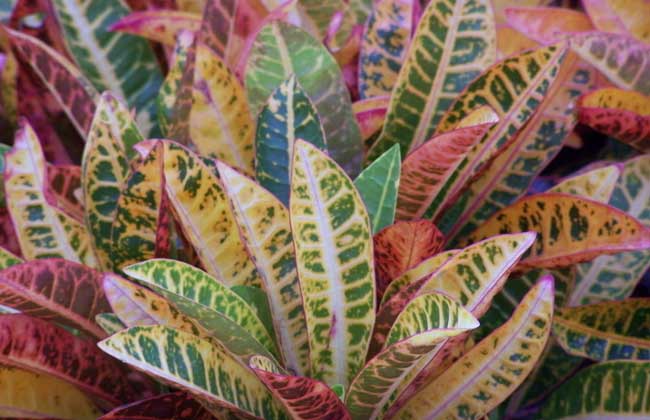
Croton, also known as garden croton, variegated laurel and so on, is a shrub or small tree of the genus Codiaeum in the Euphorbiaceae family. It is native to Malaysia and the Pacific region and is now widely cultivated in tropical areas. It is commonly cultivated in the southern provinces and regions of China. This species is a common foliage plant for courtyards or parks in tropical and subtropical regions, and there are many horticultural varieties. Let's take a look at the cultivation methods for croton below!
Seed propagation of croton
1. Seed selection: Before sowing, the seeds must first be selected. Whether the seeds are selected well or not directly affects whether sowing can succeed. It is best to use seeds harvested in the current year. The longer the seeds are stored, the lower their germination rate. Choose plump seeds with no damage or deformity, and also choose seeds free of pests and diseases.
2. Disinfection: Disinfection includes two concepts: one refers to disinfecting the seeds, and the other refers to disinfecting the sowing substrate. For household seed disinfection, it is common to soak the seeds in hot water at about 60°C for a quarter of an hour, then use warm water to promote germination for 12-24 hours. To disinfect the sowing substrate, the best method is to put it in a pot and heat it by stirring until hot, so that any pests and diseases are killed by the heat.
3. Germination promotion: Soak the seeds in warm water (at a temperature similar to face-washing water) for 12-24 hours, until the seeds absorb water and swell. For very common seeds that germinate easily, this step can be skipped.
4. Sowing: For tiny seeds that are difficult to pick up with hands or other tools, you can moisten one end of a toothpick with water and stick the seeds one by one onto the surface of the substrate, then cover with substrate 1 cm thick, and then place the sowing pot into water with the water depth at 1/2-2/3 of the pot's height, allowing the water to slowly soak upward.
5. Management: When sowing in late autumn, early spring, or winter and encountering a cold wave with low temperatures, you can wrap the flowerpot with plastic film to help keep warmth and moisture. After the seedlings emerge, promptly uncover the film, and let the seedlings receive sunlight before 9:30 every morning or after 3:30 in the afternoon; otherwise, the seedlings will grow very weak and spindly. After most of the seeds have sprouted, appropriate thinning is needed.
Cutting propagation of croton
1. Substrate: For household cuttings, due to limited conditions, it is difficult to obtain an ideal cutting substrate. It is recommended to use the already prepared and sterilized cutting substrate provided by this site. Medium-coarse river sand can also be used, but it should be rinsed several times with clean water before use. Do not use sea sand or river sand from saline-alkali areas; they are not suitable for the growth of flowers and plants.
2. Cuttings: When carrying out softwood cuttings, from late spring to early autumn when the plant is growing vigorously, select robust current-year branches as cuttings. After cutting off the branches, choose the sturdy parts and cut them into sections 5-15 cm long, each section bearing more than 3 leaf nodes. When taking cuttings, note that the upper cut should be made flat about 1 cm above the topmost leaf node, and the lower cut should be made at an angle about 0.5 cm below the bottommost leaf node. Both the upper and lower cuts should be smooth (the knife must be sharp).
3. Temperature: The optimum temperature for rooting of cuttings is 20-30°C. Below 20°C, rooting of cuttings is difficult and slow. Above 30°C, the upper and lower cuts of the cuttings are easily infected by pathogens and rot, and the higher the temperature, the greater the proportion of rot. When encountering low temperatures after cutting, the main measure for keeping warm is to wrap the flowerpot or container used for cuttings with plastic film.
4. Humidity: After cutting, the relative humidity of the air must be maintained at 75-85%. The basic requirement for rooting of cuttings is that before the cuttings root, it is essential to ensure the cuttings remain fresh and tender and can carry out photosynthesis to produce rooting substances. However, cuttings that have not rooted cannot absorb enough water to maintain their internal water balance, so misting must be used to reduce water evaporation from the cuttings.
5. Light: Cutting propagation cannot do without sunlight, because the cuttings still need to continue photosynthesis to produce nutrients and rooting substances to supply their rooting needs. However, the stronger the light, the higher the temperature inside the cuttings, the more vigorous the transpiration of the cuttings, and the more water they consume, which is not conducive to the survival of the cuttings. Therefore, after cutting, 50-80% of sunlight must be shaded, and after the root system grows out, gradually remove the shade net.
Cultivation methods for croton
1. Soil: Croton prefers fertile, moist soil with good drainage. For pot cultivation, use 3 parts garden soil, 1 part compost, and 1 part river sand, or mix 3 parts coarse peat, 3 parts leaf mold, and 2 parts sand as the substrate.
2. Sunlight: Croton has a relatively wide adaptability to light, but sufficient sunlight helps promote its good growth and obtain higher ornamental value. Therefore, apart from appropriate shading under strong summer light, the leaf color becomes more beautiful under open-air light conditions in spring, summer, and autumn. Croton is not very tolerant of shade, and is generally suitable for being placed indoors in a location with strong diffused light, and the time should not exceed 2-3 weeks. If light is lacking for a long time or insufficient, the leaf color will lack luster and leaves will easily drop.
3. Watering: During the growing period from May to October, croton should be given relatively sufficient water, with daily spraying of water on the leaves and ground to maintain relatively high air humidity and clean leaf surfaces. In late autumn and winter, gradually reduce the amount of watering, but be sure to spray water on the leaves to keep indoor air humid, and provide appropriate ventilation.
4. Temperature: Croton likes heat and fears cold. The safe indoor wintering temperature in winter is 10-15°C. Below 10°C, leaf drop is likely to occur, and water-soaked spots or discoloration may also appear on the branches. In summer, it can adapt to high temperatures above 30°C.
5. Fertilization: Croton is generally fertilized once every 2 weeks with decomposed liquid fertilizer. Do not use too much nitrogen fertilizer, otherwise the leaves will turn green and dull rather than colorful. From late autumn to winter, fertilize less or not at all, so as to avoid producing new shoots.
6. Pests and diseases: If the cultivation environment is hot and dry, croton is prone to damage from scale insects, red spiders, and aphids. Red spiders and aphids can be controlled by spraying 1000 times diluted dimethoate solution, and scale insects can be controlled by spraying 100-150 times diluted petroleum emulsion. If sooty mold occurs, wipe with clean water or spray 500-1000 times diluted carbendazim solution.