How to Grow and Care for Sedum hispanicum
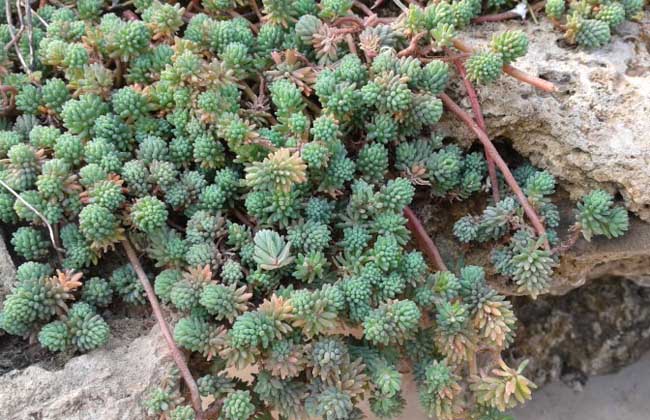
Sedum hispanicum, also known as tiny stonecrop, is a perennial herbaceous plant in the genus Sedum of the family Crassulaceae, widely distributed from southern Europe to Central Asia. Because of its good drought tolerance, it can grow in places with little soil, making it especially suitable for accenting rock bonsai or for planting directly on rocks. It can also be grown in small pots and used as an accent in sunny courtyards, balconies, windowsills and other places. Let us take a look at how to grow Sedum hispanicum!
Propagation Methods for Sedum hispanicum
Sedum hispanicum likes full sun and can also grow in partial sun, but its leaves will be more loosely arranged. It has strong drought tolerance and grows rapidly; it fears heat but tolerates cold, and when cultivated in Taiwan, China it rarely flowers. Propagation can be done by division along with repotting, by separating the clustered plants and planting them separately. It can also be propagated by cuttings during the growing season; there are no strict requirements on the length of the cuttings, and they will take root and survive as soon as they touch soil.
How to Grow Sedum hispanicum
1. Watering: Sedum hispanicum tolerates both drought and moisture, and as long as it is not kept dry or wet for a long time, it will grow very well. You can water it once when the medium is slightly dry. If it is not watered for a long time, the leaves will visibly shrink and look listless; at this point, just water thoroughly and it will generally recover within a few days. If the plant's shape is not compact and shows signs of leggy growth, pay attention to increasing sunlight exposure and reducing watering appropriately.
2. Light: Sedum hispanicum can be grown in full sun except for appropriate shading in midsummer. A loose plant shape, non-compact leaves and lighter color are signs of insufficient light.
3. Ventilation: All succulents like ventilation, which can effectively prevent the breeding of pathogens. During the seedling recovery period, it can be planted in moist soil and placed in a bright, ventilated place for a few days; then light can be gradually increased, even to full light.
4. Temperature: When the summer temperature rises above 35 degrees, appropriate shading should be provided, ventilation strengthened and watering controlled. When the winter temperature is below 5°C, watering should be controlled; if it drops even lower, consider moving it indoors for the winter, choosing a sunny indoor spot as much as possible.
5. Repotting: Sedum hispanicum grows rapidly, so pay attention to promptly pinching off branches that affect its appearance. When it grows too densely, divide it into separate pots to maintain an attractive plant shape. Its fleshy stems are rather brittle and break easily, so be careful when repotting to avoid breaking longer branches and affecting the ornamental effect.
Precautions for Growing Sedum hispanicum
1. During the growing season, Sedum hispanicum can be placed outdoors in a sunny spot for care. Even in the high-temperature season of midsummer, do not shade it, so as to keep the plant shape compact and attractive. Although it can also grow in partial shade, its plant shape will be loose and its ornamental quality will be affected.
2. Insufficient light will cause Sedum hispanicum to grow leggy, lengthening the distance between leaves so that it looks sparse and unattractive. The plant will also grow weakly and easily develop diseases such as black rot, causing the entire pot of plants to rot and die completely. During the growing season, keep the potting soil moist, avoid waterlogging, and do not leave it in long periods of rain; all of these are to prevent the plant from rotting.
3. Sedum hispanicum is tolerant of poor soil, and there are no strict requirements on whether to fertilize during cultivation. In winter, place it in a sunny spot, control watering, and simply keep the soil from freezing. In the high-temperature summer season, good ventilation is required to avoid a stuffy, humid environment, so as to prevent the plant from rotting.
4. Sedum hispanicum grows rapidly, so pay attention to promptly pinching off branches that affect its appearance. When it grows too densely, divide it into separate pots to maintain an attractive plant shape. Its fleshy stems are rather brittle and break easily, so be careful when repotting to avoid breaking longer branches and affecting the ornamental effect.
Summary: That concludes the introduction to how to grow Sedum hispanicum. Overall, Sedum hispanicum is a very easy plant to grow, and some flower enthusiasts sum it up with four key points: outdoor growing with ventilation, plenty of sun, generous watering and appropriate fertilizing, which shows just how easy it is to grow.